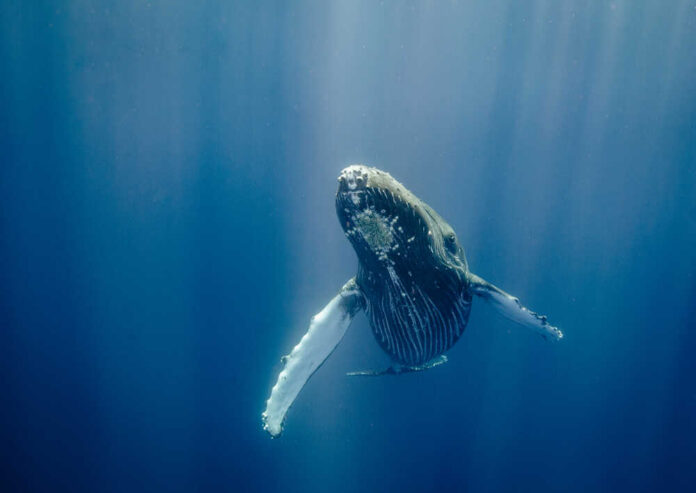
A humpback whale’s tragic fate in Germany’s Baltic Sea underscores nature’s harsh realities when government-coordinated rescue efforts fail and authorities surrender a magnificent creature to die in shallow waters rather than exhausting every possible intervention.
Story Snapshot
- German rescuers abandoned hope for a 12-15 meter humpback whale stranded repeatedly in the Baltic Sea, declaring on Wednesday that it will die in shallow waters near Poel island.
- Despite an excavator-assisted rescue last week at Timmendorfer Strand, the whale was stranded multiple times, exhibiting irregular breathing and severe weakness due to the Baltic’s unsuitable brackish conditions.
- Scientific coordinator Burkard Baschek announced the ethical shift from intervention to letting nature take its course, citing exhaustion and falling tides as insurmountable obstacles.
- The oceanic species rarely enters the low-salinity Baltic, likely chasing herring, but now faces fatal skin disease and starvation in the unsuitable habitat hundreds of kilometers from Atlantic waters.
Repeated Rescue Failures in Baltic Waters
A massive humpback whale measuring up to 49 feet became stranded multiple times off Germany’s coast in Mecklenburg-Pomerania state, frustrating rescuers who initially deployed an excavator to dig an escape channel at Timmendorfer Strand resort.
The whale swam free early Friday after local authorities failed to create sufficient waves using boats, but rescuers lost track of the animal as it struggled to navigate hundreds of kilometers through German and Danish waters back to the Atlantic Ocean.
By Saturday, Greenpeace confirmed the whale had stranded near Wismar, and by Tuesday, it entered a shallow inlet on Poel island, where it remains trapped.
Scientific Assessment Declares Situation Hopeless
Burkard Baschek, scientific director of Germany’s Ocean Museum and rescue coordinator, declared Wednesday that prospects for survival are virtually nonexistent after drone surveillance revealed irregular breathing patterns and minimal movement.
Baschek stated at a televised conference, “We firmly believe the animal will die there,” dismissing slight post-departure activity as insufficient grounds for hope given falling water levels and the whale’s visibly weakening condition.
Authorities had attempted a “peace and quiet” strategy with occasional boat approaches to motivate movement, but the 12-15 meter mammal showed clear signs of exhaustion from repeated strandings and unsuitable environmental conditions in the brackish Baltic waters.
A young humpback whale, named Timmy by rescuers, was struggling to find its way out of shallow bays off the Baltic coast of Germany after a week-long ordeal that has put its survival in doubt pic.twitter.com/rmrkcAPLwY
— Reuters (@Reuters) March 29, 2026
Baltic Environment Creates Fatal Conditions
Humpback whales are migratory Atlantic species that avoid the Baltic Sea due to its dangerously low salinity, insufficient prey, and heightened risk of skin diseases from freshwater exposure.
Experts theorize that this whale entered the Baltic either to chase herring shoals or during male exploratory migration, but the environment cannot sustain long-term survival for oceanic species.
The animal already exhibits visible skin disease and nutritional deficits, compounding its inability to escape the shallow coastal waters where it has repeatedly been trapped.
This case highlights critical gaps in marine mammal navigation and the limitations of human intervention when wild animals venture into fundamentally unsuitable habitats.
Ethical Debate Over Government Intervention Limits
The decision to abandon rescue efforts raises important questions about the proper role of government resources in wildlife emergencies and when authorities should respect natural outcomes rather than indefinitely deploying taxpayer-funded equipment and personnel.
Baschek’s rescue team coordinated with the Mecklenburg-Pomerania Environment Ministry, the Coast Guard, and fire departments, using heavy machinery and boats in initial attempts before determining that further intervention would merely prolong suffering without changing the fatal prognosis.
While the media frenzy and live video streams captivated the German public, the consensus among scientific authorities was clear: continuing active rescue posed ethical concerns when the whale’s condition and environmental factors made survival impossible, regardless of human effort expended.
Sources:
Rescuers lose hope for the humpback whale stranded in the Baltic Sea – WTOP
Humpback whale freed by rescuers in Baltic Sea has become stranded again – ABC News