

The first federal conviction under a law targeting AI-generated sexual abuse material marks a watershed moment in the battle against digital exploitation, validating a measure championed by First Lady Melania Trump against emerging technological threats to personal dignity.
Story Snapshot
- James Strahler II becomes the first person convicted under the Take It Down Act after pleading guilty to cyberstalking and creating AI-generated explicit images
- Columbus, Ohio, man targeted at least six women using over 24 AI platforms and 100 web-based models between late 2024 and mid-2025
- First Lady Melania Trump championed the 2025 legislation as victims of digital abuse gain federal protection against non-consensual AI imagery
- Legal experts say the conviction establishes a critical precedent as courts grapple with rapidly evolving technology, enabling new forms of harassment
Historic Conviction Under New Federal Law
James Strahler II, a 37-year-old Columbus, Ohio resident, pleaded guilty on April 7, 2026, in U.S. District Court to multiple federal charges, including cyberstalking, producing obscene visual representations of child sexual abuse, and publication of digital forgeries.
U.S. Attorney Dominick S. Gerace II confirmed Strahler represents the first individual convicted under provisions of the Take It Down Act, federal legislation passed in 2025 to combat non-consensual AI-generated sexually explicit images.
The guilty plea validates the law’s enforcement viability just over one year after its passage, demonstrating that federal prosecutors now have concrete tools to pursue perpetrators who exploit artificial intelligence for digital harassment.
The first conviction under the federal "Take It Down Act," a new law aimed at combating non-consensual AI-generated sexually explicit images and online harassment, was secured this week.
READ MORE:https://t.co/azXT0B3t4a
— ABC News 4 (@ABCNews4) April 9, 2026
Sophisticated Campaign of Digital Harassment
Between late 2024 and mid-2025, Strahler targeted at least six women through a calculated harassment campaign utilizing both real and AI-generated sexually explicit images.
Federal investigators discovered that Strahler installed more than 24 AI platforms and over 100 AI web-based models on his phone to facilitate the abuse. He deployed phone calls, voicemails, text messages, and web postings to distribute the material and intimidate victims.
The technological sophistication demonstrated in the case underscores the accessibility of AI tools that malicious actors can weaponize against unsuspecting individuals, raising concerns about how easily predators can exploit cutting-edge technology for criminal purposes.
Melania Trump’s Legislative Victory
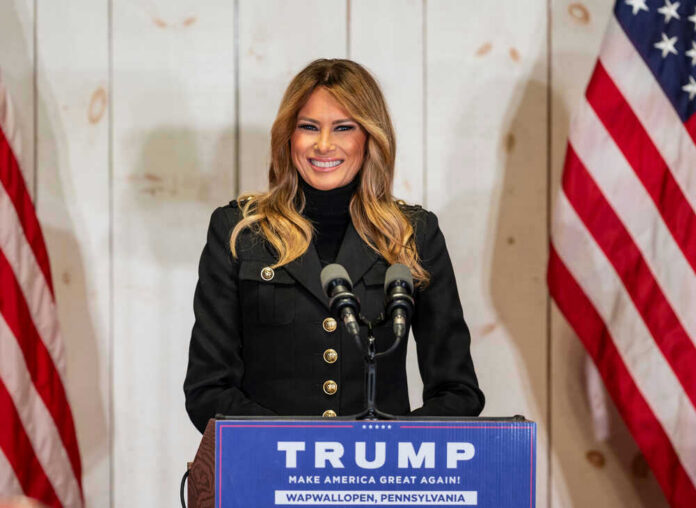
First Lady Melania Trump announced the conviction on the social media platform X on April 8, 2026, declaring the milestone protected victims from non-consensual AI-generated sexually explicit images, cyberstalking, and threats of violence.
She thanked U.S. Attorney Gerace for protecting Americans from cybercrimes in the digital age. White House Press Secretary Karoline Leavitt characterized the conviction as a major achievement for the First Lady at a news conference, calling it a landmark moment in enforcement efforts to address emerging forms of digital abuse.
Melania Trump played a key role in advocating for the passage of the Take It Down Act in 2025, establishing digital safety as a signature policy priority distinct from traditional First Lady initiatives.
Precedent for Future Prosecutions
Legal experts indicated that the conviction could set an early precedent for how prosecutors pursue similar cases nationwide, particularly as courts continue to grapple with rapidly evolving technology.
U.S. Attorney Gerace declared his office will not tolerate the abhorrent practice of posting and publicizing AI-generated intimate images of real individuals without consent, committing to use every tool at their disposal to hold offenders accountable who seek to intimidate and harass others by creating and circulating disturbing content.
The case establishes a legal framework for addressing AI-generated non-consensual intimate imagery and may influence how courts interpret the Take It Down Act’s provisions. Strahler awaits sentencing at a later date.
Broader Implications for Digital Rights
The conviction signals federal commitment to addressing forms of abuse that did not exist when most existing harassment statutes were written.
While the Take It Down Act provides needed protection for victims of AI exploitation, the case also raises broader questions about technology companies’ responsibilities for AI platform safeguards.
The fact that Strahler accessed over 24 AI platforms and 100 web-based models raises legitimate concerns about how easily individuals can obtain tools originally designed for legitimate purposes but weaponized for criminal harassment.
As AI technology advances exponentially, policymakers face mounting pressure to balance innovation with protections preventing malicious actors from exploiting these powerful capabilities against vulnerable individuals who deserve security in an increasingly digital world.
Sources:
First ‘Take It Down Act’ conviction marks win for Melania Trump-backed law – KATV
Melania Trump hails first conviction in US under Take It Down Act – Hindustan Times
Leavitt highlights first conviction under Melania Trump-backed Take It Down Act – Fine Day Radio
Take It Down Act Melania Trump Conviction – The Independent