
A handcuffed suspect inside a hospital emergency room turned a routine medical stop into a deadly reminder that “in custody” never means “in control.”
Quick Take
- Chicago Police Officer John Bartholomew, 38, died after a shooting inside Endeavor Health Swedish Hospital’s ER on the city’s North Side.
- A second CPD officer, 57, remained in critical condition after being shot during the same incident.
- The suspect was already under arrest for robbery, was taken to the hospital for treatment, and was scanned by security before the shooting.
- Police apprehended the suspect shortly after and recovered a firearm; hospital officials said no staff or patients were harmed.
A Hospital ER Became a Crime Scene in Minutes
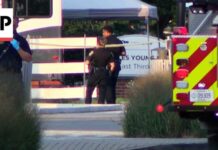
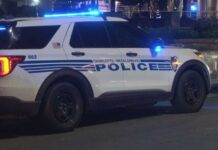
Chicago officers brought a robbery suspect to Endeavor Health Swedish Hospital on the North Side for emergency treatment in the morning, the kind of transport every big-city department does without fanfare.
By late morning, inside the emergency room, the suspect produced a gun, shot two Chicago Police Department officers from the 17th District, and fled. Officer John Bartholomew died at the hospital; the second officer was rushed to another facility in critical condition.
The timeline matters because it exposes the thin seam between “secured” and “catastrophic.” Reports describe officers arriving around 9 a.m., then gunfire erupting around 10:50 to 11 a.m.
That gap is where assumptions live: assumptions about restraints, about room control, about who can get close, and about whether a security scan actually means what the public thinks it means. When those assumptions fail, they fail fast and loud.
How a Scanned, In-Custody Suspect Still Got a Firearm
The most disturbing detail isn’t simply that a suspect fired inside a hospital; it’s that security measures existed and still didn’t stop it. Hospital security scanned the suspect, yet the suspect later obtained a firearm.
That does not automatically prove negligence by any one person, because key facts remain undisclosed: where the weapon came from, when the suspect accessed it, and whether it was missed in a scan or acquired afterward. Those specifics will decide accountability.
Chicago police officer killed in hospital shooting identified, second officer in critical condition https://t.co/pNcgcyLsZW
— WPMT FOX43 (@fox43) April 26, 2026
Common sense says a hospital emergency room is uniquely vulnerable during police custody cases. The ER runs on speed, proximity, and constant movement—nurses leaning in, curtains instead of doors, family members pressing close, clinicians cutting clothing, security juggling multiple entrances.
Add an arrestee who needs treatment and you’ve got an environment where officers must balance public safety, medical urgency, and legal restraint rules, all while trying not to escalate a volatile person.
The Human Cost Behind the Uniform and the Radio Calls
Bartholomew’s death landed hard because it wasn’t a split-second traffic stop or a chase through an alley; it was a controlled setting that still turned lethal. He was 38 years old and had served about a decade with the department.
The wounded officer, 57, had more than two decades on the job and remained in critical condition. Those details matter to anyone over 40 who understands time: ten years and twenty-one years are whole chapters of life.
The public often hears “officer involved” language that scrubs away reality. Two officers from the same district walked into a hospital to handle an unglamorous task and got ambushed by someone they already had in custody. For working families, that’s the nightmare: a routine assignment becomes the last shift.
For police families, it’s worse because it reinforces a brutal truth—danger isn’t limited to the street; it follows you into places built for healing.
What This Reveals About Security, Policy, and Priorities
Chicago police leadership confirmed the basic facts and the quick recapture of the suspect, and the hospital said no staff or patients were harmed and that there was no ongoing threat.
Both statements can be true while still leaving an uncomfortable question hanging: why did layers of procedure fail to prevent a weapon from entering the equation? Americans who value order and responsibility should demand process fixes, not slogans—clear chain-of-custody rules, better screening, and real consequences.
Hospitals and police departments will likely review transport protocols after this. Practical governance starts with doing the obvious things consistently: keep custody cases separated from crowded waiting areas, minimize the number of unsecured interactions, standardize weapon-detection that actually detects weapons, and clarify who holds perimeter control during treatment.
None of that requires political theater. It requires competent management and the willingness to admit that “we’ve always done it this way” isn’t a safety plan.
The Unanswered Questions That Will Shape What Comes Next
Investigators still haven’t publicly detailed the suspect’s identity, how the gun was accessed, or whether any procedural gaps occurred between hospital arrival and the shooting. Even the address reporting showed minor variation, a reminder that early coverage in developing stories can carry small inconsistencies without changing the central facts.
The most important open loop remains the firearm: missed, smuggled, handed off, or retrieved from somewhere inside—each scenario demands a different fix.
Chicago will mourn, the department will grieve, and then the bureaucracy will do what it always does: write new guidance and hold briefings.
The only outcome that honors Bartholomew and protects the next officer is measurable change—audited security performance, updated custody-medical procedures, and a refusal to normalize “rare” failures that keep happening. A hospital should never become a shooting gallery, and “in custody” should mean what it says.
Sources:
Swedish Hospital shooting: Chicago police officer John Bartholomew killed, other critically hurt
1 police officer killed, another wounded in shooting at Chicago hospital
Chicago hospital shooting: suspect in custody kills officer, critically injures another