
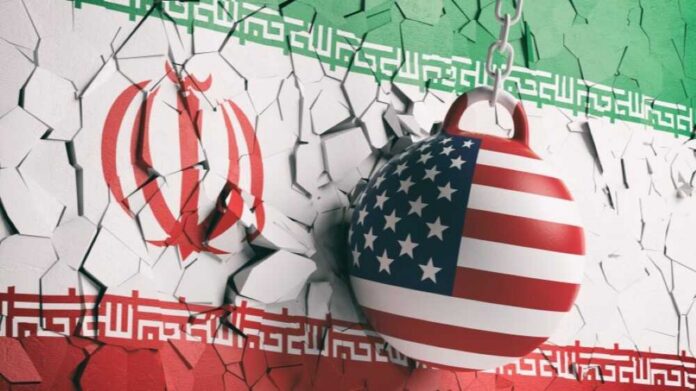
The first American-born pope just delivered his most pointed demand yet for a ceasefire in the Iran war—without naming the U.S. or Israel, but clearly warning that leaders’ choices are driving civilians toward catastrophe.
Story Snapshot
- Pope Leo XIV escalated his rhetoric on March 15, 2026, directly urging “those responsible” for the war to “cease fire” and reopen dialogue.
- The conflict began on March 1 after U.S.-Israeli strikes killed Iran’s supreme leader, Ayatollah Ali Khamenei, and other senior officials, triggering a widening regional crisis.
- Reports cite severe civilian harm, including a disputed U.S. strike on an Iranian elementary school that killed more than 165 people, with an investigation still ongoing.
- Vatican diplomacy is under strain as top cardinals issue sharper moral critiques while the Holy See maintains official channels to all sides.
Pope Leo’s March 15 message moves from general appeals to direct accountability
Pope Leo XIV used his March 15 address to shift from broad pleas for peace to a more direct message aimed at decision-makers driving the conflict.
He appealed to those responsible for this conflict to “cease fire so that avenues for dialogue may be reopened,” framing violence as incapable of delivering justice or stability.
The formulation kept Vatican protocol intact by avoiding country names, yet it clearly emphasized accountability in leadership rather than vague calls for calm.
Pope escalates call for ceasefire in Iran by addressing those responsible for the war https://t.co/u73m0bQmbi
— ABC13 Houston (@abc13houston) March 15, 2026
The Vatican’s approach matters because Leo is the first U.S.-born pontiff weighing in on a war involving American forces. That biographical fact raises the stakes for how his words land both in Washington and abroad.
The Pope also referenced strikes on schools, hospitals, and residential centers without assigning blame publicly, signaling humanitarian concern while preserving the Holy See’s long-standing diplomatic posture of speaking to all parties even when tensions are high.
How the war started, and why the Vatican sees a widening regional emergency
The timeline described in the reporting places the start of the war on March 1, when Israel and the United States launched an attack on Iran that killed Ayatollah Ali Khamenei and other senior military and religious officials.
Since then, the conflict has expanded beyond Iran, with reported effects across multiple countries, including Lebanon, Kuwait, the United Arab Emirates, Iraq, Bahrain, Oman, Qatar, and Jordan. By mid-March, the war had entered its third week with no clear de-escalation.
The humanitarian picture presented is grim and politically combustible. One of the most controversial incidents cited is a U.S. missile strike that hit an Iranian elementary school in the opening days of the war, killing more than 165 people, many of them children.
U.S. officials attributed the strike to outdated intelligence, and the reporting notes that an investigation is still underway. That unresolved status leaves key questions open while intensifying global pressure for restraint.
Lebanon’s displacement crisis and the Vatican’s concern for Christians in the region
Lebanon appears as a focal point for Vatican concern, both for humanitarian and historical reasons. Reports describe nearly half a million people ordered to evacuate from southern Lebanon and southern Beirut, an indicator that the war’s spillover is pushing civilians into mass displacement.
Vatican-linked reporting also emphasizes anxiety about Christian communities in Lebanon, which the Holy See has long viewed as strategically and spiritually significant within a majority-Muslim region.
The Pope’s earlier warnings underscore that this escalation did not begin on March 15. In the first days of the conflict, he cautioned about “the possibility of a tragedy of enormous proportions”. He urged leaders in Israel, the United States, and Iran to assume moral responsibility to halt the spiral before it became an “irreparable abyss.”
Those appeals, according to the reporting, went unheeded—an outcome that helps explain why his language hardened into a direct demand for a ceasefire.
Cardinals sharpen the moral critique while Vatican diplomats keep channels open.
Internal Vatican dynamics also show strain. Reporting highlights stronger statements from senior church leaders than the Pope’s carefully calibrated public language.
Cardinal Robert McElroy called the war “morally unjustifiable,” while Cardinal Blase Cupich criticized the White House’s use of video game imagery in social media messaging about the war as “sickening.” Those comments do not prove official policy shifts, but they do indicate a broader moral backlash as civilian harm mounts.
At the same time, Vatican diplomacy is presented as deliberately pragmatic. Cardinal Pietro Parolin, the Vatican’s secretary of state, said the Holy See “speaks with everyone,” including Americans and Israelis, and seeks to propose solutions through dialogue.
For conservative Americans wary of endless foreign entanglements and information warfare, the key factual takeaway is that the Vatican is trying to function as a mediator while acknowledging that moral language alone has not produced a ceasefire so far.
Sources:
https://www.americamagazine.org/vatican-dispatch/2026/03/08/pope-leo-iran-middle-east-war/