
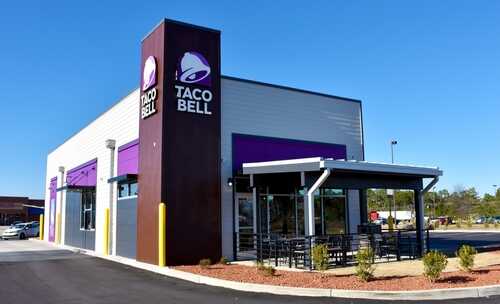
A parasite linked to “explosive” diarrhea is tearing through the Midwest, and investigators keep coming back to one simple question: did the problem start with the lettuce on your Taco Bell taco?
Story Snapshot
- Federal and state officials are probing Taco Bell as a possible link in a huge cyclosporiasis outbreak.
- Michigan health leaders say lettuce and salad greens keep popping up in patient interviews as a likely source.
- Taco Bell denies any confirmed link and says its ingredient pullbacks are purely precautionary.
- History shows fast-food chains and leafy greens have collided before in major outbreaks.
A fast-food favorite in the crosshairs of a parasite outbreak
Federal health investigators are digging into one of the largest cyclosporiasis outbreaks ever recorded in the United States, and Taco Bell now sits near the center of that storm. Cyclosporiasis comes from a microscopic parasite that spreads through food or water contaminated with human feces, most often on fresh produce from certain regions overseas.
Michigan has been hit hardest, reporting more than 3,300 cases in a matter of weeks, a stunning jump from its usual yearly count. That kind of spike forces officials to look for a common source fast, before more people get sick.
Investigators are following a familiar playbook. The Centers for Disease Control and Prevention interview sick patients, look for patterns in what they ate, and then match those clues against supply chains and past outbreaks. In this case, the pattern keeps circling back to lettuce and other salad greens.
Michigan’s chief medical executive, Dr. Natasha Bagdasarian, said early information shows lettuce shows up over and over again in patient food histories. That does not prove lettuce is guilty, but it raises it to the top of the suspect list.
Why lettuce and Taco Bell landed under tough scrutiny
News reports, citing people familiar with the investigation, say federal and state officials are examining whether Taco Bell restaurants played a role in the multistate outbreak. Several Taco Bell locations in Michigan posted signs saying they could not sell lettuce, cilantro, pico de gallo, or guacamole while traceback work continues.
The chain has temporarily stopped serving some fresh ingredients at select restaurants, going further than current federal recommendations as a precaution. For a national brand built on cheap, fast Mexican-style food, pulling lettuce and salsa is not a small move; it signals serious concern inside the company and among regulators.
A new report says health officials are investigating Taco Bell as a potential part of the cyclosporiasis outbreak that’s sickened thousands of people across the U.S., with many suffering from extreme diarrhea. https://t.co/MztWRMIGVa pic.twitter.com/cbwpE12Ctf
— KTLA (@KTLA) July 14, 2026
From a common-sense angle, this looks like the collision of two realities. On one side, you have thousands of sick Americans and a duty for government health agencies to act aggressively to protect the public. On the other, you have a private company that has not been found guilty yet but is already paying the price in reputation, operations, and stock value.
The mere hint of an investigation into Taco Bell and its lettuce knocked shares of its parent company down by about 4.5 percent in one day. Markets respond faster than lab tests, and that should make us cautious about how quickly blame spreads.
What Taco Bell and federal agencies are saying — and not saying
Taco Bell has pushed back on the idea that it is officially tied to the outbreak. The company says public health officials have not confirmed any link to Taco Bell, to any specific ingredient, or to any particular supplier or retailer. It stresses that the removal of ingredients was voluntary and precautionary, not ordered by regulators.
Federal agencies back up at least part of that stance. The Food and Drug Administration has not announced a recall involving Taco Bell, and agency officials have declined on press calls to confirm that any specific restaurant chain is under formal investigation.
That silence leaves a wide information gap. Michigan officials admit they do not have a definite product identified as the source yet. They warn that no single grower or supplier has been pinned down and that more than one contaminated product could be involved.
From a practical viewpoint, it is risky to jump from “lettuce is a leading suspect” to “Taco Bell is to blame” without hard proof. Anonymous sources and social media posts about empty lettuce bins might drive clicks, but they are not the same thing as trace-back documents or lab-confirmed contamination.
The track record: fast food, leafy greens, and unfinished stories
This is not the first time a Mexican-style fast-food chain and leafy greens have formed a dangerous mix. In 2006, federal health investigators clearly linked an outbreak of E. coli infections to Taco Bell restaurants in the northeastern United States.
A detailed case-control study showed shredded iceberg lettuce had a strong statistical association with illness, and investigators concluded that contamination likely happened before the lettuce reached the restaurants. That episode set a powerful precedent in the public mind: Taco Bell plus lettuce can equal trouble.
Cyclospora is having the worst year in American history. 7,000 cases….34 states. 0 answers
CDC counts 1,645 cases. Michigan alone counts 3,309 cases
Taco Bell pulled lettuce but nothing's confirmed….cases currently include people who never ate there.
Restaurants eat the…
— Mike Kudrna (@MichaelKudrna) July 15, 2026
Cyclosporiasis outbreaks show a similar pattern with fresh produce, but often without a neat ending. Past investigations have tied outbreaks to cilantro, romaine lettuce, bagged salads, and even green onions, yet many never found the exact farm or point of contamination.
One investigation of a salad product outbreak identified bagged salads with iceberg lettuce, red cabbage, and carrots as the likely source, but never nailed down a single cause through trace-back.
These half-solved cases show how complex global food chains have become. Contamination can happen overseas in irrigation water, during harvesting, or at processing plants, long before a fast-food worker ever touches the product.
What this tells us about risk, responsibility, and media narratives
For everyday customers, the stakes are simple: nobody wants a quick lunch to turn into days of painful diarrhea. For regulators and companies, the picture is more tangled.
The Centers for Disease Control and Prevention teaches that outbreak investigations rely on three types of data — epidemiologic, trace-back, and food testing — and that many outbreaks are solved only partly, or not at all.
When government falls back on patterns and probabilities instead of clear lab proof, powerful brands can become suspects based largely on customer memories and statistics.
Two points stand out. First, government has a vital role in tracking and stopping real health threats, especially when they cross state lines and involve imported foods. Second, corporations deserve due process, not trial by headline. The history of fast-food outbreaks and the current focus on lettuce make Taco Bell a logical target for questions.
But until investigators identify specific contaminated shipments or find Cyclospora in Taco Bell’s produce, talk of guilt remains a narrative, not a fact. In a country that prizes both safety and fairness, we should demand clear evidence before we decide which lettuce ruined taco night.
Sources:
townhall.com, washingtonpost.com, reuters.com, forbes.com, businessinsider.com, cdc.gov, nbcnews.com, academic.oup.com