
One firefighter survived the flames that killed his crew, fought for nearly a month, and still became the fourth tragic death that tells you exactly how dangerous America’s wildfire wars have become.
Story Snapshot
- A June 27 burnover in Colorado’s Knowles Fire killed three firefighters at the scene and badly burned two more.
- Forty-three-year-old Nathan Matthews of Lincoln, Nebraska, died weeks later from those burn injuries, becoming the fourth fatality.
- The crew was a helicopter attack team dropped into rugged terrain near the Colorado–Utah border when the fire suddenly overran them.
- The cluster of deaths exposes how fast wildfire conditions can turn deadly and how thin the safety margin is for front-line crews.
A deadly burnover on the Colorado–Utah border
On June 27, a helicopter attack crew was working the Knowles Fire on Colorado’s Western Slope, near the Utah border. The team was part of a specialized group that drops into remote areas to hit new fires fast before they explode.
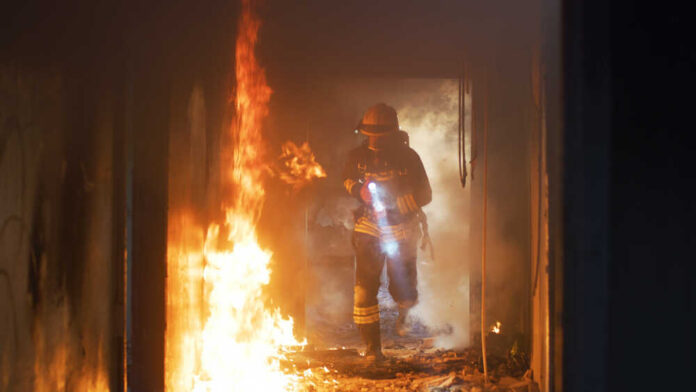
That afternoon, the fire they were attacking turned into their trap. A fast-moving wall of flames overran the crew, a crisis firefighters call a burnover. Five firefighters were caught. Three never made it out alive.
JUST IN: A fourth wildland firefighter died Friday from injuries battling the Knowles Fire near the Utah-Colorado border, according to the United States Department of the Interior. https://t.co/M3zYguemwD pic.twitter.com/tSIpXes3Ri
— ABC4 News (@abc4utah) July 25, 2026
Federal officials say the crew tried one of the last-resort moves every wildland firefighter dreads: they deployed emergency tent-like shelters as the flames closed in. Those thin shelters are meant to reflect radiant heat and buy a few minutes when escape routes are gone. They are not magic shields.
When the fire’s heat and speed are extreme, survival can still come down to luck, terrain, and seconds. For three of the crew members, the shelters were not enough.
The lives lost and the fourth firefighter’s fight
The burnover killed firefighters Emily Barker, 38, Nick Hutcherson, 27, and Sydney Watson, 26, at the scene. All three were part of the United States Forest Service Rifle Helitack crew, the same unit as Nathan Matthews. Matthews and one other firefighter were still alive but badly burned.
Both were rushed out for medical treatment. For Matthews, that meant weeks of intensive care, multiple surgeries, and a daily fight to stay ahead of infection and organ failure, the brutal reality of severe burn trauma.
Federal officials say Matthews kept battling his injuries into late July before his body finally gave out. He was 43 and from Lincoln, Nebraska. The United States Department of the Interior confirmed he died from burns suffered during the June 27 incident. His death did not come with mystery or conflicting stories.
Every official statement, from the Interior Department to the United States Wildland Fire Service, tied his passing directly to the burn injuries from that wildfire attack. The same fire that killed his crewmates eventually claimed him too.
Why this incident hits a nerve beyond Colorado
This was not just another wildfire headline that flashes by on a holiday weekend. The cluster of deaths around the Knowles Fire pushes several hard truths to the surface.
First, the mission profile itself is high risk. Helicopter attack crews are sent to remote slopes, often with few roads, limited escape paths, and rapidly changing wind.
They are there because officials want to catch fires small, before they threaten towns. That aggressive early attack is what taxpayers expect and what politicians praise.
Second, the conditions in the West are making these missions more dangerous. Longer dry spells and hotter summers turn brush and timber into explosive fuel. A shift in wind can turn a “routine” assignment into a survival race in minutes.
Firefighters rely on safety rules, weather briefings, and lookouts, but no system can erase risk when flame fronts move faster than a person can run.
The human cost and the questions that follow
For many Americans, it is easy to cheer air-tankers dropping red slurry on the evening news and then forget the people under those plumes. This incident forces a different view. Five firefighters went in on an initial attack. Three died on the slope. One spent weeks in a burn center and died later.
One is still living with the physical and mental scars. Behind those numbers sit families, small communities, and a “wildland fire family” that has now held four funerals for one incident.
LLCEMA would like to share our deepest condolences to the family and friends of local wildland firefighter Nathan Matthews who made the ultimate sacrifice fighting a fast moving wildfire in western Colorado. https://t.co/pXVjxhonEB
— Lincoln-Lancaster Emergency Mngmt. (@LancasterCoEMA) July 26, 2026
Officials have launched a serious accident investigation to study what went wrong and what can change. That review will dig into radio logs, weather data, and crew decisions. Some might try to turn any error found into a political weapon.
A better response, grounded in basic American values, is to demand honest lessons, real accountability if needed, and practical improvements that protect crews without gutting the mission. Firefighters sign up for risk, not for preventable chaos or avoidable death.
Sources:
cbsnews.com, independent.co.uk, facebook.com