
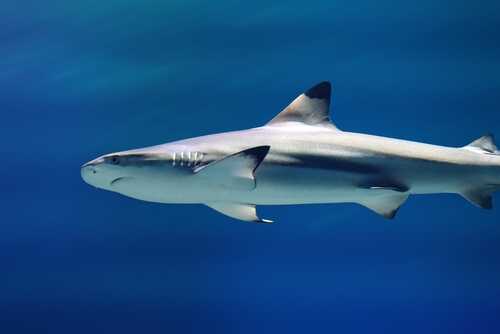
Three friends watched helplessly as a shark killed a 39-year-old spearfisherman in the waters of Australia’s Great Barrier Reef — the country’s second fatal shark attack in just eight days.
Story Snapshot
- Michael Jensz, 39, from Cairns, was killed by a shark at Kennedy Shoal, roughly 40 kilometres off far north Queensland, while diving with three friends.
- His death came only eight days after Perth spearfisher Steve Mattabonni was fatally attacked near Rottnest Island off Western Australia’s southwest coast.
- The back-to-back fatalities have reignited Australia’s heated debate over shark culling and coastal safety measures.
- Spearfishing carries unique risks that set it apart from ordinary swimming or diving — and experts say the activity itself may elevate shark encounter probability.
What Happened at Kennedy Shoal
Jensz was spearfishing from a boat with three companions at Kennedy Shoal on Sunday when the attack occurred. [6] He sustained a critical head injury and did not survive. His friends witnessed the entire incident, and CBS News quoted the scene as a “terrifying thing to see.” [6]
Kennedy Shoal sits within the Great Barrier Reef system, a remote stretch of open water far from the tourist corridors most Australians picture when they think of reef diving.
Shark kills spearfisher in front of friends in Australia: "Terrifying thing to see" https://t.co/LLVfE7X9jr
— CBS News (@CBSNews) May 25, 2026
Remote reef locations like Kennedy Shoal offer little margin for error. Medical evacuation from 40 kilometers offshore takes time that trauma victims simply do not have.
The three companions on that boat faced a scenario no amount of experience fully prepares a person for — watching a friend die in open water with limited ability to intervene. [2] That reality alone deserves more attention than it typically gets in coverage that rushes to fatality counts and species speculation.
Why Spearfishing Draws Sharks More Than Other Water Activities
Spearfishing is not casual snorkeling. Divers actively hunt fish, and the blood, movement, and low-frequency vibrations from wounded prey are precisely the sensory signals sharks are built to detect across long distances.
A spearfisher in the water is, in the bluntest terms, operating inside a food chain rather than observing it from the outside. That does not make the sport reckless — millions of dives happen without incident — but it does explain why fatal encounters cluster disproportionately around spearfishing. [4]
Experienced spearfishers know the protocol: dispatch fish quickly, keep them out of the water, and stay alert for changes in shark behavior. What the record cannot always tell us after a fatal attack is whether any of those protocols failed or whether the encounter was simply unavoidable.
In Jensz’s case, the specific sequence of events remains thin in public reporting, which is typical of early coverage. [5] Investigators and Queensland police will work through those details in the weeks ahead.
Eight Days Apart: Australia’s Brutal Fortnight on the Water
Steve Mattabonni died on May 16 at a coral reef off Rottnest Island, a tourism hotspot near Perth that draws thousands of divers and snorkelers annually. [1]
He was also an experienced spearfisher. Eight days later, Jensz was dead on the opposite side of the continent. Two experienced men, two remote reef environments, two fatal outcomes within a single fortnight.
That statistical clustering is unusual enough to demand a serious look at whether anything systemic is at play — seasonal shark movement patterns, prey fish concentrations, or simply the expansion of spearfishing’s popularity among recreational divers. [4]
Spearfisher mauled on Great Barrier Reef in Australia's second fatal shark attack in a week – ABC News – Breaking News, Latest News and Videos https://t.co/0n9mF4z9xK
Follow @NewsHubGlobe for 24/7 breaking news from around the world. pic.twitter.com/549vZ2IsOF
— News Hub (@NewsHubGlobe) May 25, 2026
Australia averages between one and three fatal shark attacks per year across recent decades, so two fatalities in eight days registers as a genuine spike rather than background noise.
Whether that spike reflects a trend or a tragic coincidence is a question wildlife authorities and researchers will be better positioned to answer once full incident data is compiled. What is already clear is that both victims were doing something they loved in waters they knew well — and that neither fact protected them.
The Culling Debate Resurfaces, as It Always Does
Fatal attacks in Australia reliably trigger calls for shark culling, and this fortnight is no exception. The debate is legitimate and genuinely difficult. Sharks are apex predators performing ecological functions that maintain reef health — the same reef system that draws divers, tourists, and the fishing industry that supports coastal Queensland communities.
Culling programs have a mixed track record of actually reducing attack rates, and the targeted removal of specific animals responsible for attacks is logistically complicated in open-ocean environments. The conversation deserves more rigor than the heat of grief typically allows. [3]
What both families deserve right now is straightforward: accurate information, a thorough investigation, and honest public acknowledgment that the ocean is not a controlled environment.
Michael Jensz went into the water, doing something he freely chose and understood carried risk. That does not diminish the loss. It simply frames it honestly — which is the least the public conversation owes him and his friends who watched from that boat at Kennedy Shoal. [6]
Sources:
[1] Web – Spearfisher mauled in Australia’s second fatal shark attack in a week
[2] YouTube – Spearfisherman killed in Great Barrier Reef shark attack | 7NEWS
[3] YouTube – Spearfisherman dies after shark attack at Kennedy Shoal
[4] Web – Australian spearfisher killed in shark attack off Great Barrier Reef – …
[5] Web – Spear fisherman killed in second fatal shark attack in a week | 7NEWS
[6] Web – Shark kills spearfisher in front of friends in Australia: “Terrifying …