
A sweeping new “One Rule” executive order on artificial intelligence could redefine who really calls the shots on America’s tech future—Washington, the states, or even Beijing.
Story Snapshot
- Trump plans a “One Rule” executive order to federalize AI regulation under a single national standard.
- He warns that 50 competing state rulebooks and “bad actors” in state governments threaten U.S. AI leadership and investment.
- Google CEO Sundar Pichai echoes concerns, citing over 1,000 state AI bills creating a regulatory maze.
- The order raises a core question for conservatives: centralize AI rules in D.C., or preserve state autonomy while beating China?
Trump Moves to Replace Patchwork of State AI Rules with One Federal Standard
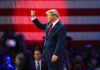
President Donald Trump announced that he will sign a “One Rule” executive order to federalize artificial intelligence regulation this week, putting Washington in charge of a unified national rulebook.
In a Truth Social post, he argued that the United States can only stay ahead in the AI race if there is “only One Rulebook” guiding innovation. He framed the move as necessary to protect American leadership and stop bureaucratic gridlock from killing investment and jobs.
Trump warned that the current landscape of fifty different state regimes risks turning AI development into a regulatory minefield that only benefits America’s enemies.
He wrote that the United States is “beating ALL COUNTRIES” in AI today, but that advantage “won’t last long” if companies must navigate separate approval processes in every state.
For businesses already choking on compliance costs, he argued, forcing them to chase “50 Approvals every time” is unworkable and a direct threat to future growth.
TRUMP:
WILL BE SIGNING A “ONE RULE” AI EXECUTIVE ORDER THIS WEEK
this administration is going to keep making things easier for AI to flourish… pic.twitter.com/G0SWnsweV3
— amit (@amitisinvesting) December 8, 2025
Business Burden and State-Level Overreach in Emerging Technology
Trump’s upcoming order responds directly to mounting concern over the explosion of state-level AI bills, many drafted by lawmakers with little technical background but heavy regulatory impulses.
More than a thousand AI-related proposals are reportedly moving through state legislatures, each with its own definitions, mandates, and penalties.
Companies on the front lines fear that such a patchwork will strangle experimentation, push innovation offshore, and empower the very bureaucratic overreach conservatives have long opposed in environmental and labor policy.
Conservatives who remember how blue states weaponized regulations against energy producers and small businesses will recognize the same pattern now forming around AI.
Trump has repeatedly argued that overregulation at the state level is already threatening expected AI investment and job creation.
By calling some states “bad actors” in the approval process, he is signaling to his base that activist legislators and regulators could use AI policy as a new tool to enforce woke agendas, censor speech, or punish disfavored industries under the banner of “safety” and “ethics.”
Google’s Sundar Pichai Backs National AI Rules to Compete with China
Support for a single national AI framework is not coming only from the political right. Google CEO Sundar Pichai, speaking on “Fox News Sunday,” called for national AI regulation to help the United States compete more effectively with China.
He warned that more than 1,000 state AI bills risk creating confusing and conflicting standards that slow American companies while Beijing races ahead. His core question—how to cope with varied regulations and still compete globally—echoes long-standing conservative concerns about red tape.
Pichai’s comments highlight a rare alignment between a major tech executive and a Trump policy initiative: both see fragmented rules as a gift to foreign rivals. For conservatives, this convergence carries a double edge.
On one hand, a streamlined national standard can prevent hostile regimes like China from exploiting American indecision and regulatory chaos.
On the other hand, any federal framework must be carefully written to avoid becoming a back door for centralized speech controls, data grabs, or surveillance powers that conflict with constitutional protections.
Federal Power, State Sovereignty, and the Conservative AI Dilemma
Trump’s “One Rule” idea raises a classic conservative tension between limited federal power and practical national interests. The Constitution reserves many powers to the states, and Republicans have long used that principle to resist Washington’s overreach on education, gun rights, and family policy.
At the same time, when technology and capital move at digital speed, businesses cannot realistically navigate fifty radically different AI laws without sacrificing growth and competitiveness to foreign adversaries eager to dominate this sector.
For Trump supporters, the key issue becomes who writes and enforces the federal standard, and what guardrails exist to protect freedom.
If the rulebook focuses on clear safety, national security, and basic transparency while explicitly blocking censorship, viewpoint discrimination, and ideological scoring, conservatives may view it as a defensive shield.
If, instead, a future left-wing administration weaponizes that same centralized framework, it could become the most potent tool yet for regulating algorithms, monitoring citizens, and chilling dissent.
What Comes Next for Innovation, Free Markets, and Constitutional Values
Trump has not yet released full text of the executive order, but his public statements emphasize cutting red tape, avoiding duplicate approvals, and keeping America first in AI. That messaging is consistent with his broader record of deregulation and efforts to make the United States the world leader in emerging technologies.
For business owners and innovators, a predictable, single set of federal rules could reduce compliance costs and restore confidence that political crusaders in individual states cannot unilaterally torpedo new products.
Until the final language surfaces, conservatives will be watching closely for concrete protections of free speech, due process, and data privacy. The stakes are high: AI will shape everything from national defense to small-town employment.
If crafted wisely, a “One Rule” framework could secure American leadership while restraining ideological misuse of AI regulations. If written loosely or later hijacked by the left, it risks hardwiring government overreach into the very code of the future.