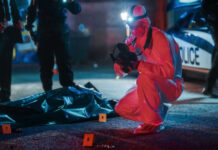

Four people were shot steps from a West Side hospital, and the details paint a tight, urgent picture of urban risk and response.
Story Snapshot
- Chicago Police said four people were shot near Loretto Hospital on the West Side.
- Officers responded to the 600 block of South Central Avenue early Sunday.
- Victims reached local hospitals with chest, neck, shoulder, and face wounds.
- Police described the attack as a drive-by near the hospital entrance area.
Drive-by gunfire hits four people near Loretto Hospital
Chicago Police reported a shooting near the 600 block of South Central Avenue, close to Loretto Hospital, early Sunday. Four people were hit and later arrived at local hospitals. Police-linked reporting described the assault as a drive-by shooting, only steps from the hospital grounds. The scene aligns with a common danger zone in many cities: the streets and sidewalks that feed emergency rooms. The quick flow of victims to care likely helped, but the injuries ranged from serious to critical.
Breaking News! Chicago, IL LOL West Side
A A mass shooting early Sunday left four people injured, one critically, near Loretto Hospital. Officers responded to the 600 block of S. Central Ave. around 2:27 a.m. pic.twitter.com/okZHtW0Ih4— Steve Alert HQ Top 1% Of Influential People (@PrimeTimeAlert) October 19, 2026
Police accounts identified the victims by age and injury. A 45-year-old man was in critical condition. A 39-year-old woman suffered a chest wound. A 30-year-old man had gunshot wounds to the neck and left shoulder. A 28-year-old man took two rounds to the face. These details match four separate shootings, not one person hit multiple times. That matters for both medical triage and the likely path of bullets during a moving attack.
Where it happened, and why “near a hospital” matters
The precise location places the gunfire near Loretto Hospital, not inside it. Early reports often blur that line, but the street is different from a ward or lobby. Decades of data show many hospital-tied shootings take place outside, in parking lots, drop-off zones, or nearby streets. A past national review found 41 percent of hospital-related shootings happened outside buildings from 2000 to 2011, underscoring the risk at the curb as much as the clinic.
Recent research found shootings in health care settings rose from six events in 2000 to 34 in 2024, with nearly half occurring outdoors. That does not mean this event targeted healthcare workers. It does mean the area around emergency care is a pressure point. Victims, families, and potential offenders often meet at the doors of care. Security plans must extend beyond the lobby to the sidewalk. Cameras, lighting, and patrol patterns should reflect that.
What police said, and what they did not
Police and affiliated outlets delivered the core facts with speed: four victims, a drive-by mechanism, and a location tight to the hospital. They did not name a suspect, a vehicle, or a motive. That absence is common in the first hours. It does not change the basic shape of the event. For residents, the practical concern is simple: streets where help is nearby are not automatically safe. Clear lighting, visible patrols, and fast camera pulls can deter and solve these attacks.
Common-sense policing values focus on a few near-term steps. First, lock in the timeline from 911 calls, hospital intake, and street cameras. Second, map bullet paths to confirm the drive-by angle. Third, push out a vehicle description if one exists, even if partial. Communities respond when police share specific, actionable details. Hospitals will do their part with perimeter lighting and escorts, but the street belongs to the city—and the city must own it.