

A remarkable discovery buried in government-funded archives for nearly eight decades reveals how important scientific data has been collecting dust while bureaucrats failed to catalog America’s research heritage properly.
See the video with audio below.
Story Snapshot
- Scientists at Woods Hole Oceanographic Institution discovered the oldest known whale recording from 1949, mislabeled and forgotten for 77 years in their archives
- The humpback whale song, captured near Bermuda, predates famous whale researcher Roger Payne’s discoveries by nearly 20 years
- Recording survived only because it was etched on rare audograph discs rather than deteriorating magnetic tape used for most 1940s recordings
- Discovery highlights the critical importance of preserving scientific data and proper archival management, which government institutions often neglect
Government Archives Finally Yield Hidden Treasure
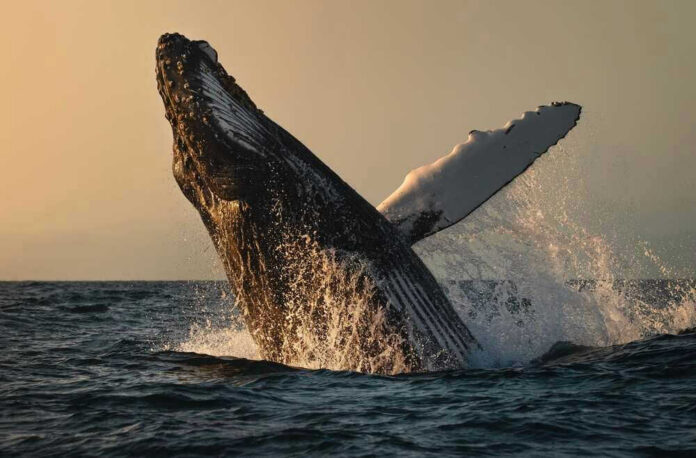
Woods Hole Oceanographic Institution archivists announced in February 2026 that they had identified a one-hour humpback whale recording captured on March 7, 1949, near Bermuda aboard the R/V Atlantis.
The recording languished in institutional storage for 77 years, incorrectly labeled as “fish noises” and never properly catalogued.
Ashley Jester, WHOI’s Director of Research Data and Library Services, discovered the fragile audograph discs during a 2025 archival tour, demonstrating how easily critical scientific heritage can be lost through bureaucratic negligence and poor institutional stewardship.
Researchers say the discovery of the oldest known recordings of whale sounds could open up a new understanding of how the huge animals communicate. pic.twitter.com/eqS7Z5Vv24
— The Associated Press (@AP) March 16, 2026
Technology Preservation Succeeds Where Government Systems Failed
The recording survived only because scientists used audograph disc technology that etched audio onto thin plastic rather than magnetic tape. Most recordings from the late 1940s deteriorated and were permanently lost as magnetic tape degraded over decades without proper preservation protocols.
The National Recording Preservation Foundation awarded WHOI $10,000 to digitize its audograph collection, finally bringing modern technology to bear on historical materials that should have been preserved systematically from the start.
Oldest known whale recording could unlock mysteries of the ocean https://t.co/BTZwuBcQCl
— CTV News (@CTVNews) March 16, 2026
Naval Research Origins and Scientific Oversight
Scientists aboard the R/V Atlantis captured the recording while conducting acoustic experiments funded by the U.S. Office of Naval Research, testing sonar systems and measuring explosive volumes.
At the time, researchers had a limited ability to identify which ocean sounds originated from marine mammals and didn’t understand what they were recording.
The R/V Atlantis was the first ship built specifically for interdisciplinary marine research. Concurrently, WHOI scientists William Schevill and Barbara Lawrence pioneered marine mammal bioacoustics by recording beluga whales in Canada’s Saguenay River, thereby identifying the first marine mammal sounds in the wild.
Baseline Data for Environmental Impact Assessment
Marine bioacoustician Peter Tyack confirmed the recording as a humpback whale song based on pitch and sound patterns. The recording provides critical baseline data from before widespread industrial shipping noise and human-generated underwater sounds became prevalent in ocean environments.
Tyack emphasized that understanding pre-industrial ocean soundscapes is crucial for assessing how human-generated noise affects whale communication, as whales vary their calling behavior in response to environmental noise.
This historical evidence could inform future marine conservation policy by documenting actual environmental changes rather than relying solely on theoretical models or recent data.
Future Research Applications and Accessibility
Tyack noted that scientists will make discoveries from these recordings that cannot yet be imagined, highlighting the importance of preserving data even when immediate applications aren’t apparent.
The discovery predates Roger Payne’s famous whale-song research by approximately 20 years, potentially necessitating a reassessment of the development of marine bioacoustics. WHOI plans to make the digitized collection more accessible to researchers and the public once digitization is complete.
Additional discs from the same period remain in the collection awaiting analysis, suggesting potential for further discoveries if proper resources are dedicated to systematic archival review and preservation.
Oldest known whale recording could unlock mysteries of the ocean https://t.co/WLEciOp6Ot
— What's Up Newp (@WhatsUpNewp) March 16, 2026
This discovery validates arguments for increased investment in archival digitization and preservation projects across scientific institutions. The find demonstrates that careful stewardship of historical data is an investment in future scientific understanding and that preserving research materials at the time of creation prevents irreplaceable loss.
The project may serve as a model for other institutions reviewing their archival collections, showing that systematic preservation efforts yield tangible scientific value beyond bureaucratic record-keeping obligations.
Sources:
Oldest Humpback Whale Recording – Popular Science
Woods Hole Oceanographic Institution Press Release – 1949 Audio Discovery
Oldest Whale Song Recording – Discover Wildlife
Woods Hole Institution Uncovers Oldest Recorded Whale Call – Cape and Islands
Oldest Whale Song Discovered at WHOI – WBUR
Oldest Whale Recording Could Unlock Ocean Mysteries – ABC News
Listen to the Oldest Known Whale Recording – Smithsonian Magazine