

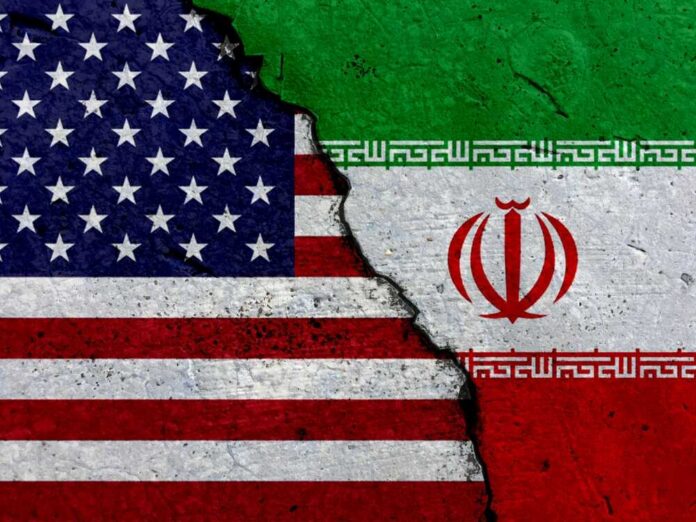
President Trump’s sudden decision to extend the Iran ceasefire indefinitely shows how fast high-stakes foreign policy can pivot—while America still keeps its boot on Tehran’s economic throat.
Quick Take
- Trump reversed course within hours, moving from “no extension without a deal” to an indefinite ceasefire extension announced on Truth Social.
- Pakistan’s top leaders asked for more time, arguing Iran’s “fractured” leadership needed space to form a unified negotiating proposal.
- The U.S. is keeping its naval pressure on Iran through an ongoing blockade of Iranian ports, even as strikes remain paused.
- Iran has not publicly accepted the extension; the IRGC’s vessel seizures in the Strait of Hormuz underscore how fragile the pause remains.
Trump’s about-face: ceasefire extended, pressure maintained
President Donald Trump extended the U.S.-Iran ceasefire indefinitely on April 21, posting the decision on Truth Social just hours before the two-week truce was set to expire.
The move came after Trump had told CNBC earlier the same day that he did not want to extend the ceasefire without a deal and warned U.S. strikes could resume against targets such as power plants and bridges. Even with the pause, the U.S. continued its blockade of Iranian ports.
The whiplash matters because it highlights the administration’s two-track approach: keep maximum leverage while avoiding a rushed escalation that could widen the war.
Trump described the blockade as a major source of U.S. negotiating strength, while framing the ceasefire extension as a tactical window for diplomacy rather than a retreat. For voters tired of endless foreign entanglements, the key question is whether this pause produces enforceable terms—or just buys time for the next round of brinkmanship.
Pakistan’s mediation and Iran’s “fractured” leadership
Pakistan emerged as the surprise middleman. Trump said Pakistan’s Field Marshal Asim Munir and Prime Minister Shehbaz Sharif requested the extension so Iran’s divided government could unify around a peace proposal for talks expected to be centered in Islamabad.
That detail is significant: Washington is effectively betting that Tehran’s internal divisions are real enough to shape outcomes, and that outside pressure—economic and military—can force coherent decision-making.
Iran’s side has been less clear. Reporting indicated Tehran had insisted it had no plans for talks and portrayed the U.S. blockade as a ceasefire violation, signaling the regime may want the benefits of a paused air campaign without conceding anything at the table.
Analysts also flagged Iranian suspicions that the ceasefire extension could be a ploy to buy time for a surprise strike—an accusation that remains an assertion rather than a confirmed plan, but one that reflects the deep mistrust driving this conflict.
Strait of Hormuz risk: shipping intimidation continues
Events in the Gulf show why markets and allies remain on edge. On April 22, the Iranian Revolutionary Guard Corps seized two vessels in the Strait of Hormuz, and Iran showcased missiles in street parades in Tehran.
Those actions, paired with earlier reports of harassment and gunboat activity against commercial shipping, underscore that a ceasefire between governments does not necessarily stop Iran-aligned forces from testing red lines. For the global economy, Hormuz remains the choke point that can turn a regional clash into worldwide price shocks.
What the U.S. leverage strategy signals at home
Trump’s approach blends restraint with hard leverage: pause the strikes, keep the blockade, and hold the threat of renewed attacks if negotiations stall. That mix will appeal to Americans who want strength without another open-ended ground war, but it also invites partisan sniping.
Democrats have criticized Trump’s handling and messaging, while Republicans argue that sustained pressure is what brings adversaries to the table. The broader public frustration—left and right—is that national security decisions often feel opaque and elite-driven, even when the consequences land on families through energy prices and economic uncertainty.
INDEFINITE CEASEFIRE: Trump Extends Iran Ceasefire Indefinitely, In an About-Face pic.twitter.com/OMKzhe5O42
— SEGAMI (@segamihcfund) April 22, 2026
For now, the most concrete facts are limited: the ceasefire is extended, the blockade continues, and Iran’s posture in the Gulf remains aggressive. Whether talks materialize—and whether Tehran can produce a unified position—will determine if this becomes a durable settlement or merely a pause before escalation.
Until then, the administration’s challenge is to keep pressure targeted and credible while protecting U.S. interests and allies in a region where miscalculation can spread fast.
Sources:
Trump extends ceasefire as uncertainty over U.S.-Iran peace talks remains
Iran live updates: Marines, USS Tripoli, seized Iranian vessel