
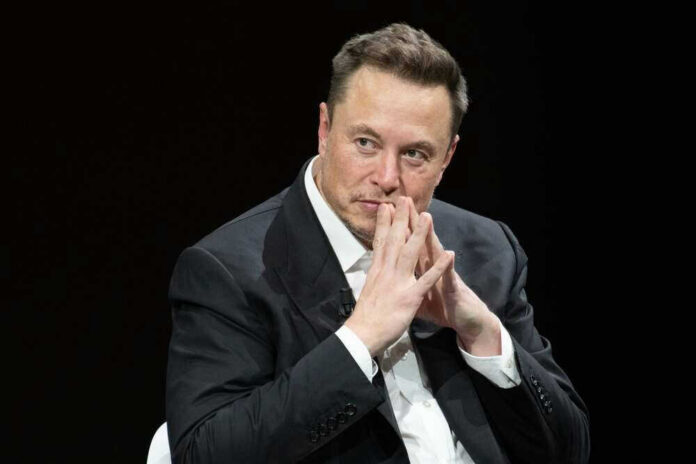
Elon Musk has proposed that the federal government provide “universal high income” payments to Americans displaced by artificial intelligence and robotics, a plan that raises serious questions about government expansion and fiscal sustainability while the tech elite profits from automation.
Story Snapshot
- Musk pinned a post to his X profile calling for federal “universal HIGH INCOME” checks to offset AI-driven unemployment
- Boston Consulting Group forecasts that 17-25 million American jobs could vanish within five years due to AI
- The proposal offers no details on funding sources, eligibility criteria, or payment amounts
- Critics warn the plan could bankrupt governments while undermining the work ethic that built America
Musk’s Vision for Government-Funded Income
Elon Musk posted on X in mid-April 2026 that “universal HIGH INCOME” represents the best response to mass unemployment triggered by AI and robotics. The Tesla and SpaceX CEO argued that AI-driven productivity will generate goods and services far exceeding money supply increases, thereby preventing inflation.
Musk’s proposal goes beyond traditional universal basic income concepts by explicitly calling for substantially higher payments, though he provided no specifics on amounts, funding mechanisms, or eligibility. The post remains pinned to Musk’s profile, where his 200 million-plus followers can view it.
Elon Musk says Universal High Income from the Federal government is the best way to deal with AI-driven unemployment.
"AI/robotics will produce goods & services far in excess of the increase in the money supply, so there will not be inflation." pic.twitter.com/TAmw5QlWM1
— The Crypto Times (@CryptoTimes_io) April 17, 2026
Projected Job Losses Fuel Urgency
Boston Consulting Group projects that AI will eliminate 10-15 percent of US jobs over the next five years, affecting between 17 and 25 million American workers. These losses would hit low-skill sectors particularly hard, creating economic dislocation on a scale not seen since the industrial revolution.
Musk’s proposal emerges as companies like his own Tesla accelerate robotics and AI adoption, raising concerns about whether tech billionaires profiting from automation should dictate how displaced workers survive. The timing also coincides with visible industry restructuring and layoffs already underway across multiple sectors.
Economic Experts Challenge Feasibility
Economists and policy researchers have sharply criticized Musk’s proposal on practical and philosophical grounds. James Ransom of University College London argued that retraining workers to capture productivity gains makes more sense than government checks, while other experts warned that universal high income could bankrupt federal and state budgets without clear revenue sources.
Peter Diamandis, a futurist, suggested that “high income” could mean AI-driven cost reductions making modest payments sufficient, rather than larger checks. Georgetown University’s Karl Widerquist acknowledged AI might lower the GDP cost of such programs, yet no consensus exists on whether Musk’s inflation claims hold up under scrutiny.
The Deeper Problem Government Won’t Address
Musk’s proposal highlights a troubling reality: the same elites driving automation expect taxpayers to foot the bill for the resulting unemployment. Neither major political party has offered serious alternatives beyond platitudes about retraining programs that historically fail displaced workers.
Andrew Yang, who championed a “Freedom Dividend” during his 2020 campaign, supports the concept but offers no roadmap for implementation. Meanwhile, working Americans face the prospect of joblessness while tech executives and shareholders reap AI’s rewards.
This arrangement embodies the cronyism and wealth consolidation that fuels distrust of both government and corporate power. The fundamental question remains unanswered: why should citizens accept economic upheaval engineered by billionaires who then demand government dependency as the solution?
Policy Vacuum Leaves Workers Vulnerable
No legislation, federal endorsements, or concrete policy proposals have emerged from Musk’s statement, leaving it purely conceptual. The Trump administration and Republican-controlled Congress have not signaled support for massive new entitlement spending, particularly without offsets or structural reforms.
Critics note that Musk’s AI companies benefit directly from automation that displaces workers, creating a conflict of interest when he prescribes government checks as the remedy. Alternative approaches like robot taxes, mandatory retraining funding from AI firms, or regulatory limits on automation have gained little traction.
The policy vacuum means millions of Americans face potential job loss with no safety net beyond existing unemployment insurance, which was never designed for permanent technological displacement.
Sources:
Musk Proposes Universal High Income to Offset AI Job Loss
Musk Pushes Universal High Income to Tackle AI Job Loss
Elon Musk says a ‘universal high income’ from the government is the answer to AI-fueled job losses
Elon Musk backs ‘universal high income’ to combat AI job losses