
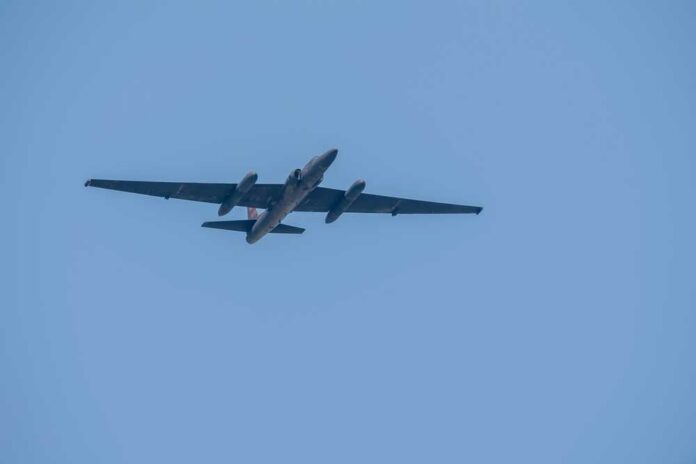
When spy planes start flying close enough to Havana to show up on your phone, the mission isn’t just collecting secrets—it’s sending a message.
Story Snapshot
- At least 25 U.S. intelligence-gathering flights operated off Cuba starting February 4, 2026, a sharp change from earlier “extremely rare” activity.
- U.S. aircraft identified in the surge include the P-8A Poseidon, RC-135V Rivet Joint, and MQ-4C Triton—platforms built for maritime patrol and signals intelligence.
- Some flights reportedly approached within about 40 miles of Cuba’s coast near Havana and Santiago de Cuba, close enough for serious collection.
- The flights coincided with intensified Trump administration rhetoric and pressure tools, including an oil blockade and expanded sanctions.
Visible reconnaissance is a form of pressure, not just a military habit
CNN’s reporting describes a pattern that matters as much for what the public can see as for what Cuba can’t. The U.S. Navy and Air Force reportedly ran at least 25 intelligence-gathering missions from February into May 2026, and the visibility is the point.
When operations are easy to spot on commercial tracking tools, Washington isn’t only listening; it’s also talking—telegraphing capability, interest, and persistence.
The flights reportedly included a P-8A Poseidon, which excels at maritime patrol and wide-area sensing; an RC-135V Rivet Joint, built to vacuum up signals intelligence; and the MQ-4C Triton, a high-altitude drone designed for long endurance.
That mix suggests a layered approach: broad surveillance, focused electronic collection, and sustained presence. The most arresting detail is proximity—some sorties reportedly came within about 40 miles of Cuban shores near major population and command centers.
Why the timing points to deliberate signaling toward Havana
The surge began on February 4, 2026, after Trump returned to office in January and escalated rhetoric about Cuba, including reposted remarks about visiting a “free Havana” before leaving office. The administration also reportedly tightened the screws through a naval restriction on Cuban oil imports and expanded sanctions.
Put those pieces together and the reconnaissance tempo reads like a coordinated campaign: economic pressure to strain the system, paired with intelligence collection to map reactions and vulnerabilities.
U.S. military intelligence-gathering flights have surged off Cuba's coast in recent months, with at least 25 such missions tracked since Feb. 4, according to an analysis of publicly available aviation data. https://t.co/Kob1N5gnWm
— NEWSMAX (@NEWSMAX) May 11, 2026
Americans should keep two thoughts in their head at once. First, the United States has every right to defend itself and to understand military capabilities 90 miles from Florida.
Second, pressure campaigns can slide into escalation when officials convince themselves the other side is weaker, confused, or cornered.
What these aircraft collect, and why “40 miles” matters
Signals intelligence platforms like the RC-135V exist to capture, sort, and analyze communications and radar emissions. Operating closer increases the odds of collecting higher-quality signals and refining geolocation.
Maritime patrol aircraft like the P-8A can monitor shipping, naval activity, and coastal patterns that matter during sanctions enforcement or an oil interdiction regime.
Triton’s endurance gives planners continuity—less about a single dramatic flight, more about building a steady record of who moves, when they move, and how they communicate.
The “public visibility” angle also changes the strategic texture. During the Cold War, reconnaissance around Cuba carried secrecy, denial, and occasional surprises.
Today, when transponder data or other trackable footprints appear on popular aviation sites, the operation becomes both theater and intelligence.
That can deter, but it can also tempt. If policymakers start treating public flight tracks like scoreboard points, they risk mistaking attention for achievement and momentum for strategy.
The Venezuela and Iran parallels raise the stakes, but don’t prove intent
Analysts drew parallels to visible surveillance buildups that preceded heightened tensions around Venezuela and Iran. Parallels are useful as warnings, not verdicts. Intelligence collection often increases when leaders want better answers, not necessarily because they’ve chosen military action.
The more responsible reading is conditional: the U.S. could be preparing options, testing readiness, or reinforcing deterrence. The less responsible reading is to treat aircraft sightings as destiny.
The risk point is miscalculation. Cuba’s military and intelligence services presumably track these flights and may adjust communications, disperse assets, or raise alert levels. Russia and China, both described as maintaining strategic relationships with Cuba, will also watch for signals.
In tight theaters, small moves create large interpretations. One navigational mistake, one overly aggressive intercept, or one political decision made to “save face” can turn surveillance into incident.
What to watch next if you want the real story, not the noise
Three indicators separate a pressure campaign from a glide path to something bigger. Watch whether the operational tempo continues to rise or stabilizes at a new normal.
Watch whether diplomatic channels go silent or become more active behind the scenes; serious governments talk even when they posture.
Watch whether economic measures expand from targeted sanctions and oil restrictions into steps that require broader coalition support. Those shifts, more than any single flight, tell you if strategy is narrowing toward confrontation.
READ NOW: US Spy Flights Surge off Cuban Coast — U.S. military intelligence-gathering flights have surged off Cuba's coast in recent months, with at least 25 such missions tracked since Feb. 4, according to a new report of publicly available…https://t.co/ANj82yCkj5
— Top News by CPAC (@TopNewsbyCPAC) May 10, 2026
Americans over 40 remember what happens when Washington drifts into open-ended foreign policy projects: the mission grows, the rationale blurs, and the bill arrives later with interest.
If the administration’s aim is deterrence and intelligence, the flights make practical sense—know what’s happening close to home, keep pressure on hostile networks, and protect U.S. interests.
If the aim is regime change by squeeze and spectacle, history says the second- and third-order consequences tend to punish everyone except the true insiders.
Sources:
https://english.news.cn/20260511/da7ea7daae6a4c09985acbd25b4e002b/c.html
https://www.khan.co.kr/en/article/202605111832007/