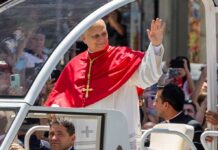

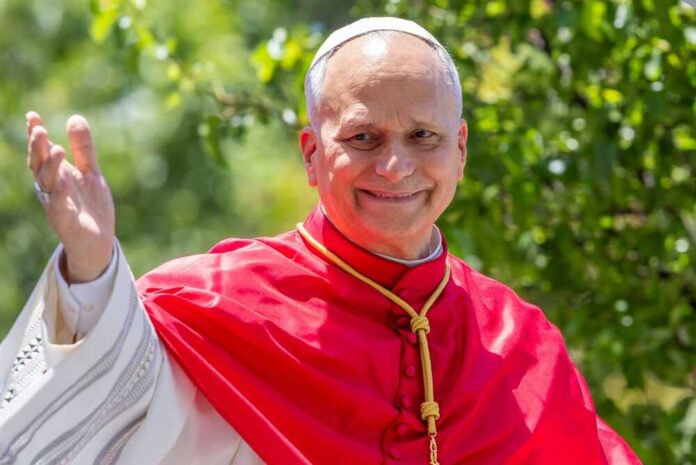
A U.S.-born pope stood on a migrant island on July 4 and told America its pro-life values do not stop at the border.
Story Snapshot
- Pope Leo XIV, the first American pope, urged the U.S. to welcome and defend immigrants as part of a consistent pro-life ethic.
- He spoke from Lampedusa, a migrant landing point marked by shipwrecks and mass graves, to underline the human cost of current policies.
- The appeal clashes head-on with President Trump’s hardline agenda of mass deportations, visa cuts, and refugee suspensions.
- The fight is not just political; it is about what “defending life” really means in American Catholic and conservative terms.
The First American Pope Uses July 4 To Question America’s Conscience
Pope Leo chose the United States’ 250th birthday to remind Americans that many of their ancestors arrived as immigrants, fleeing hunger, war, or simple lack of opportunity. He did not flatter the crowd with nostalgia.
He pushed a hard question: if past immigrants built the country, why are today’s migrants treated as threats, statistics, or bargaining chips? Speaking as a son of Chicago and of immigrant parents, he framed migration not as charity but as a justice issue tied to America’s own story.
Pope Leo marked the 250th anniversary of U.S. independence on Saturday with an appeal to Americans to welcome and protect immigrants. MORE: https://t.co/XXrK11KyP4 pic.twitter.com/CDNkj89xVJ
— NEWSMAX (@NEWSMAX) July 4, 2026
Leo’s words were aimed at Catholics who call themselves pro-life yet back policies that leave families in detention or children sleeping in tents. He argued that defending life must cover the unborn child, the migrant teenager in custody, and the elderly refugee pushed back to danger.
That message strikes at the heart of American conservative rhetoric that often narrows “life” to abortion alone. Leo did not deny the right of nations to control borders, but insisted that control must respect human dignity at every step.
Lampedusa: A Moral Stage Built On Shipwrecks And Silence
Pope Leo delivered his appeal from Lampedusa, a small Italian island that has become a doorway for desperate migrants crossing from Africa toward Europe. The island is ringed by wrecked boats and marked by graves with no names, only dates and numbers.
By standing there on July 4, rather than in Washington or Philadelphia, Leo forced viewers to look at the bodies behind the debate. He spoke about “enormous suffering” and warned against becoming numb to people who vanish at sea or disappear into camps.
For older Americans who remember the Mariel boatlift, Vietnam refugees, or Ellis Island photos, Lampedusa is a brutal update. It shows what happens when nations talk about flows and walls, not faces and names. Leo’s choice of site is a form of moral judo.
It puts the pain of global migration side by side with fireworks and parades in the U.S. The contrast asks: can a country celebrate freedom while ignoring the people drowning just to reach its allies’ shores? For many Catholics, that question cuts deeper than any partisan sound bite.
Trump’s Hardline Blueprint Collides With Catholic Teaching On Dignity
President Trump’s second-term immigration program is built on detention, deportation, and sharp cuts to legal entry. He backed the Laken Riley Act, which forces detention of immigrants tied to certain crimes and widens the net beyond proven guilt.
His team pushed the Secure America Act, sending tens of billions of dollars into enforcement, surveillance, and barriers. A refugee order even paused new admissions for ninety days across the board, arguing that arrivals were “detrimental” to the country.
Supporters of these moves say they protect citizens, reduce crime, and shield strained schools and hospitals. The problem is that the administration has not matched those claims with serious, shared numbers from neutral economists or crime analysts. Much of the case rests on broad warnings rather than detailed studies that voters can check.
From a common-sense view, that is a weakness. Strong policy should offer proof, not just fear. Pope Leo’s challenge lands here: you cannot call a policy “pro-life” if it treats whole groups of people as disposable based on speculation.
What Catholic Tradition Really Says About Borders And The Stranger
The July 4 appeal did not come from a lone, liberal pope chasing headlines. It sits on decades of Catholic teaching about migrants and the right to move.
Pope John Paul II urged the United States to defend people’s natural right to travel within and between nations, even when they lacked perfect paperwork. Pope Francis made migrant protection a central theme, warning Americans against mass deportations and “narratives that discriminate” against refugees. Leo is continuing that line, not inventing a new one.
Catholic teaching does not erase national sovereignty; it limits how power is used. It says governments may set rules for entry, but those rules must honor basic human dignity and keep families together whenever possible.
A border guard may enforce the law, but he may not treat a mother and child as enemies by default. From a conservative lens that values ordered liberty, this is not crazy. It is a reminder that order without mercy slides into cruelty, and cruelty erodes the very moral capital that makes a nation worth defending in the first place.
Why This Clash Matters For American Conservatives And Catholics
Pope Leo’s July 4 message hits a sensitive nerve: many American Catholics vote for strong borders while loving the immigrant stories in their own families. Leo is not asking them to support open borders. He is asking them to demand smarter, fairer policies that defend life at every stage.
That includes due process, humane detention if truly needed, real paths to legal status, and an end to rhetoric that paints all migrants as criminals. Those ideas line up with both Gospel values and serious conservative thought.
For readers on the right, the key test is consistency. If life is sacred, then government cannot treat migrants as numbers or problems to “solve” with simple bans.
If sovereignty matters, then rules must be clear, enforced, and just. The pope’s July 4 appeal challenges Americans to hold both truths at once. Not because Rome says so, but because their own history, faith, and basic decency already do.
Sources:
cnbc.com, vaticannews.va, vatican.va, reuters.com, youtube.com, i24news.tv, aclu.org, nafsa.org, whitehouse.gov, brookings.edu, justiceforimmigrants.org, avemarialaw.edu