

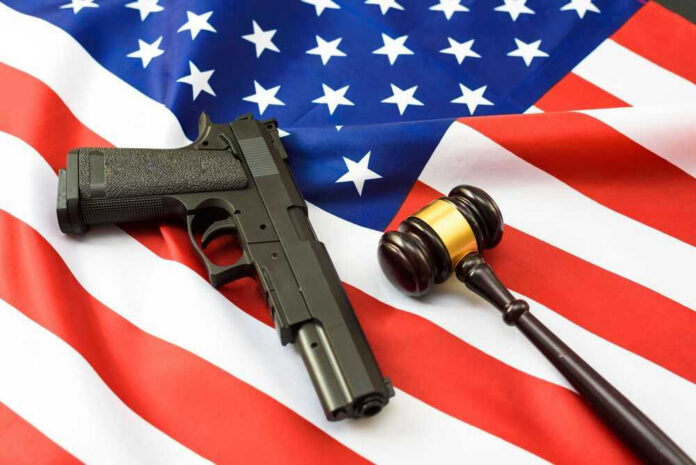
The Supreme Court is set to decide whether states can keep banning AR-15-style rifles, a fight that goes straight to the Second Amendment.
Quick Take
- The Supreme Court will review challenges to assault weapons bans in Connecticut and Cook County, Illinois.
- Lower courts have upheld those bans, but critics say they relied on old balancing tests the Supreme Court rejected in Bruen.
- Supporters of the bans say the laws protect public safety after mass shootings and fit within state police power.
- The case could affect how courts treat AR-15-style rifles, which many gun owners view as common lawful arms.
Why the Case Matters Now
The Supreme Court agreed to hear challenges to laws in Connecticut and Cook County that ban AR-15s and other semiautomatic rifles.
Those laws were upheld below, and that has left gun owners waiting for a clear answer on whether the Second Amendment protects these rifles. The court’s move puts a major test case at the center of a broader national fight over gun rights, public safety, and state power.
US Supreme Court to hear challenge to state-level assault rifle bans https://t.co/FrA8hDV4DX https://t.co/FrA8hDV4DX
— Reuters (@Reuters) July 1, 2026
Supporters of the bans say the laws are common-sense safety measures, not attacks on lawful gun ownership. Connecticut’s law was amended after the Sandy Hook school shooting, and advocates tied that change to life-saving goals.
They also argue that courts have long allowed limits on weapons they see as unusually dangerous or suited for military use. That view has shaped many lower-court rulings for years.
What Lower Courts Have Said
Lower courts have mostly sided with state and local governments. The Seventh Circuit upheld an Illinois ban, and other federal courts have also upheld assault weapons restrictions.
But critics say those rulings leaned on interest-balancing methods that the Supreme Court rejected in Bruen, which told judges to focus on text, history, and tradition instead. That criticism now sits at the center of the new review.
Some legal scholars and gun-rights groups argue that AR-15-style rifles are in common use and are therefore protected arms. They also say the phrase “assault weapon” is a political label, not a technical one, which makes the laws vague in practice.
That argument has gained force because the Supreme Court has said common arms cannot be banned just because lawmakers dislike them.
What Supporters of the Ban Will Argue
Ban supporters will likely lean on public safety and the long record of state gun limits. They point to mass shootings, including Sandy Hook, and say lawmakers had a duty to act.
They also say the Supreme Court has recognized room for “dangerous and unusual” weapons restrictions. That argument matters because it gives states a way to defend bans without admitting they are targeting popular rifles used by millions.
𝐒𝐔𝐏𝐑𝐄𝐌𝐄 𝐂𝐎𝐔𝐑𝐓 𝐀𝐆𝐑𝐄𝐄𝐒 𝐓𝐎 𝐃𝐄𝐂𝐈𝐃𝐄 𝐈𝐅 𝐓𝐇𝐄 𝐂𝐎𝐍𝐒𝐓𝐈𝐓𝐔𝐓𝐈𝐎𝐍 𝐏𝐑𝐎𝐓𝐄𝐂𝐓𝐒 𝐀𝐑-𝟏𝟓 𝐎𝐖𝐍𝐄𝐑𝐒𝐇𝐈𝐏
The Court announced it will take up whether cities and states can ban Americans from owning AR-15s and similar semi-automatic rifles — a… pic.twitter.com/HfbBFwIlm9
— M.A. Rothman (@MichaelARothman) July 1, 2026
The Court’s final ruling could either strengthen the right to keep common firearms or give states more room to regulate them. Three conservative justices have already signaled past concern about letting assault weapons bans stand, and that makes the case one to watch closely.
For Americans who care about the Constitution, this is not a small dispute. It is a direct test of how far state governments can go when they try to restrict commonly owned rifles.
Sources:
apnews.com, youtube.com, supremecourt.gov, reddit.com