
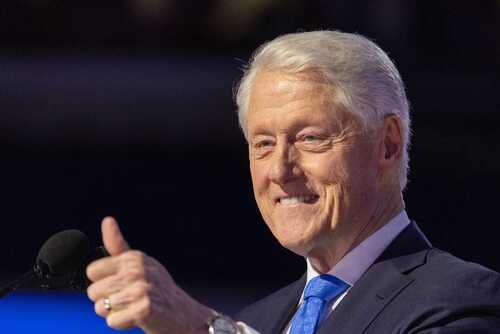
Bill Clinton used the nation’s 250th birthday to praise America’s promise while warning that the people running it now are putting that promise at risk.
Story Snapshot
- Clinton tied America’s 250th anniversary to a sharp warning about deep division and threats to democracy.
- He targeted “the people in charge,” not America itself, arguing leadership is the problem, not the country.
- He mixed tough criticism with optimism, saying there is “nothing wrong with America that cannot be cured by what’s right with America.”
- Conservative media blasted his remarks as anti‑American, showing how partisan framing can drown out the actual words.
How Clinton Turned America’s 250th Birthday Into A Warning Shot
Bill Clinton’s July 4, 2026 message did not read like a standard holiday greeting card. He anchored his comments in America’s 250th anniversary, but he quickly shifted from fireworks and flag talk to a sober warning about the country’s direction.
He said the United States is in “another period of deep division” with “serious threats to our own institutions and to our democracy itself.” That phrase alone tells you his focus: not nostalgia, but the risk that today’s choices could break the system tomorrow.
Bill Clinton calls out 'people in charge' in July Fourth message https://t.co/ZpA1JKWpUY
— Bo Snerdley (@BoSnerdley) July 5, 2026
Clinton did something important with his target. He did not say America is broken beyond repair. He said “the people in charge” have unleashed policies that damage Americans and weaken trust.
In plain language, he blamed the current administration and its allies, not the founding ideals or ordinary citizens. For many conservatives, that sounds like yet another Democrat blasting a Republican White House. For others, it looks like basic accountability: if you break something while in office, expect to be called out.
What He Actually Said About Division, Democracy, And Power
Clinton’s statement, posted by his center and on social media, lays out his case step by step. He argues that the last 250 years prove America “can always do better” when citizens admit mistakes and move toward “brighter tomorrows.”
From that history lesson, he jumps to now. He describes masked agents grabbing people in communities and an “unconstitutional war” started “on a whim” with no clear goals or exit plan, warning that these actions hurt millions and erode democratic norms.
For a reader with conservative values, those claims raise fair questions. Is he overstating what the government is doing? Is he spinning enforcement and foreign policy into crisis language? The answer depends on your view of recent events.
But his logic is clear: when government power turns heavy‑handed, citizens must push back, or the promise of self‑rule fades. That idea actually lines up with limited government and checks and balances, not with blind faith in big state power.
Optimism, Responsibility, And The Call To Ordinary Citizens
Clinton balanced his warning with a repeat of one of his favorite lines: “There is still nothing wrong with America that cannot be cured by what’s right with America.”
He points to people “lining up to vote, no matter how hard some may try to prevent them” as proof that the core of the country is still strong. He turns July 4 into homework, urging Americans to “wake up, and ask yourself what part you will play” in keeping the nation “in the future business.”
That mix of tough talk and hope matters. He is not saying, “Give up, the game is rigged forever.” He is saying, “The game is being rigged now, and you fix it by showing up.”
He frames democracy as “self‑correcting” when citizens act, echoing similar language used by George W. Bush about voting and civic duty. That message should sit comfortably with anyone who believes in personal responsibility, strong communities, and real participation instead of passive complaining.
Why This Dust‑Up Says More About Us Than About Bill Clinton
This fight over Clinton’s July 4 message fits a larger trend: nearly every major anniversary address or high‑profile speech now gets sliced into “patriotic” or “anti‑American” camps within hours.
Studies of media coverage show that outlets on both sides often recast criticism of current leadership as attacks on the nation, especially when the speaker comes from the other party. That habit trains citizens to treat any tough talk about government as treason instead of as a normal part of democratic debate.
From a common‑sense conservative lens, the key question is simple. Do you want leaders who pretend everything is fine, or leaders who say, “We are off course here, and we need citizens to help fix it”?
Clinton clearly chose the second path. You can argue with his policy views or his record. But based on the actual words in his America 250 statement, it is hard to claim he was attacking America itself. He was attacking how it is being run, and urging people to make it better.
Sources:
twitchy.com, abcnews.com, facebook.com, beyondintractability.org