
President Trump ordered the federal government to call artificial intelligence “super intelligence,” and Washington moved fast to make it real policy.
Story Highlights
- Trump signed an executive order directing agencies to use “super intelligence” in place of AI.
- The State Department told diplomats to adopt the new term in all materials.
- Major outlets reported the shift as official U.S. policy across federal documents.
- Tech leaders separately signed a voluntary safety and innovation accord with the White House.
What The Order Does And Why It Matters
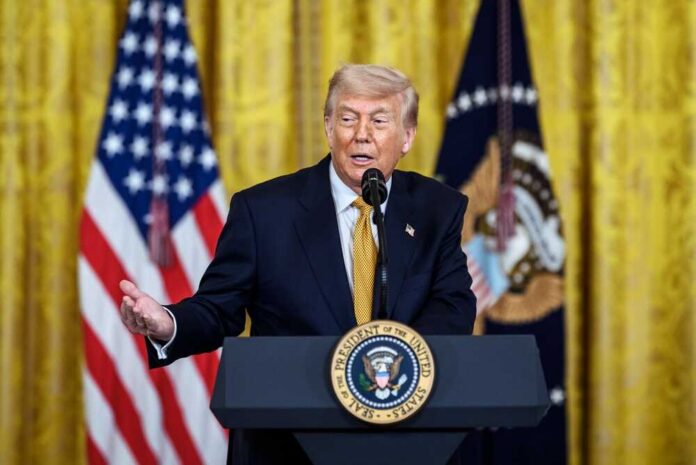
Trump said the United States will use “super intelligence,” or SI, in government documents, websites, and public remarks. Politico reported the order was signed on September 29, 2026, and told agencies to update language across communications and policy papers.
Trump argued the new term better matches the scale of the technology and signals a push for innovation without heavy new rules. This is not a minor word swap. Language in government shapes grants, rules, and how agencies brief Congress.
The Associated Press and CNBC described the shift as official federal policy following Trump’s remarks and signing. Their reporting made clear this was not a trial balloon but a directive to the bureaucracy. Words guide budgets and priorities.
When federal style changes, vendors, contractors, and regulators follow suit. Expect updated glossaries, training decks, and procurement requests to swap in SI. Expect agency leaders to talk about SI safety, SI governance, and SI workforce plans in hearings.
Immediate Uptake Inside Government
Adoption started at the State Department. An email from a deputy assistant secretary told diplomats to change all references from “Artificial Intelligence” to “Super Intelligence,” and to use “SI” in remarks and press lines going forward. That kind of direction ripples fast.
Embassies revise web pages, talking points, and multilateral statements. Once State moves, other agencies often align to avoid mixed messages abroad. That alignment reduces friction in negotiations with allies and tech firms.
The White House also tied the rename to a friendlier stance toward builders. Trump said “artificial” sounds fake, and that “super intelligence” better fits the power on display. He linked the term to a new government website and search product meant to show practical upgrades for citizens and officials, as USA Today reported in its coverage of the rollout.
Even if the tool’s specs stayed vague in early reports, the message was simple: America plans to lead, not scold, on advanced systems.
BREAKING: President Trump says that he and tech leaders have officially changed the name of AI to 'Super Intelligence.' pic.twitter.com/MkuWluXqEu
— Fox News (@FoxNews) September 29, 2026
The Tech Titans’ Parallel Accord
On the same day, top tech leaders joined Trump at the Andrew W. Mellon Auditorium to sign a voluntary safety and innovation accord. Coverage described it as a self-policing pledge that favors fast progress while setting public guardrails. This pairing matters.
A new label reframes risk and hope. A new accord gives the administration a table where industry can commit to testing, watermarking, and rapid fixes.
Some analysts noted that “superintelligence” already has a technical meaning in research circles: systems that outperform humans across most tasks, popularized by philosopher Nick Bostrom. That tension can cause confusion between policy talk and lab jargon.
But governing is about clarity for the citizen, not seminar debates. The goal here is plain speech that rallies investment and sets a north star for schools, defense, and small business adoption. The label is a tool to align the country’s effort.
What To Watch Next
Agencies will revise style guides and roll out training. Federal websites will swap language and create landing pages for SI programs. The Office of Management and Budget will likely nudge procurement language so bids and contracts reflect SI priorities.
Congress will ask whether the accord and the rename change safety oversight. The real test will be outcomes: faster permits for data centers, grants for American chips and models, and clear rules that block abuse without crushing open competition.
Sources:
townhall.com, politico.com, cnbc.com, bbc.com, washingtonpost.com, cnet.com