
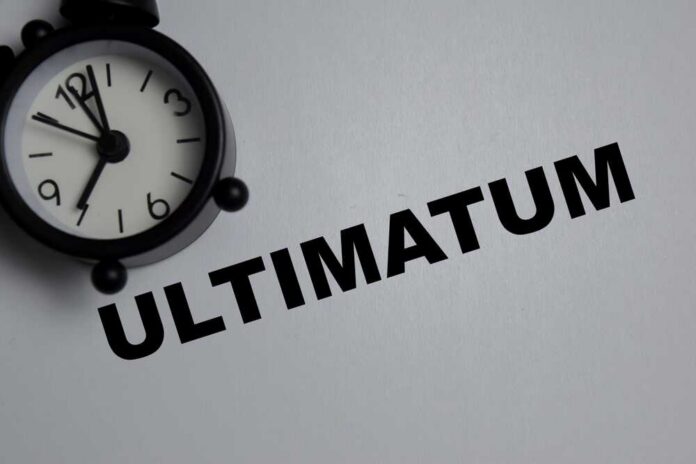
The Democratic National Committee just laid out a 12-debate roadmap for 2028, and it comes with a catch no candidate can ignore: denounce dark money or stay off the stage.
Quick Take
- The DNC unveiled 12 primary debates running from June 2027 through early 2028, with five in 2027 and seven in 2028.
- Candidates must sign a Fair Campaign Practices Pledge denouncing super PAC and dark-money spending to qualify.
- The DNC admits it cannot legally block outside groups from spending independently, even as it demands candidates reject that help.
- Up to 20 candidates can qualify, with a random two-night split if the field gets too big.
What The DNC Actually Announced
CBS News reported that the DNC unveiled a concrete debate calendar for the 2028 race, not just a vague promise of future forums. The plan sets 12 total debates, starting in June 2027 and running through early 2028, split into five events in the first year and seven in the second. That’s a far more structured timeline than past cycles, where scheduling often got hashed out candidate by candidate.
The DNC is requiring 2028 Democratic presidential candidates to swear off dark money as a condition for making the debate stage.
The party released its primary framework on Monday, outlining 12 debates and a new rule that requires candidates to publicly denounce any super PAC or… pic.twitter.com/ggXCiw2Kl0
— Fox News Politics (@foxnewspolitics) November 23, 2026
DNC Chair Ken Martin says the goal is a fair, transparent primary that unites the party and strengthens whoever ends up facing President Trump’s eventual successor fight in 2028. Translation: Democrats got burned by chaotic, sprawling primaries before, and they want control over the stage, the schedule, and who stands on it this time around.
The Dark-Money Catch Attached To Every Invitation
Here’s the part generating headlines: candidates who want a podium must sign the Fair Campaign Practices Pledge, a written commitment to denounce super PAC and dark-money spending made on their behalf. It’s not optional. Sign it or sit out the debates entirely. For a party that has leaned on outside money for over a decade, that’s a notable self-imposed restriction, at least on paper.
The twist is that the DNC openly admits it has no power to stop the spending itself. Party officials told reporters that candidates benefiting from certain super PAC or dark-money ads must publicly reject that support, while acknowledging the outside groups can keep spending regardless. So the pledge doesn’t choke off the money. It just forces candidates to say, on record, that they don’t want it.
That’s the kind of rule that sounds tough in a press release but gets messy in practice. A super PAC can run ads for a candidate without that candidate’s permission under current law. So the DNC is asking candidates to denounce spending they never controlled in the first place. Critics will call that symbolic. Supporters will call it accountability. Both can be true at once.
Handling A Crowded Field Without A Single Frontrunner
With no incumbent Democrat and no clear 2028 favorite yet, the party is bracing for a crowded field. The framework caps debate participation at 20 candidates and allows splitting a bigger field across two nights, with names drawn randomly for each night. That’s meant to keep things orderly, but a 20-person cap and a two-night format also risk diluting the whole point of a debate: letting voters actually compare candidates side by side.
Washington Examiner reporting confirms the same structure, noting the schedule still lacks finalized dates, venues, and media partners this early in the process. That’s normal for a plan announced more than a year before the first debate. Details like broadcast partners and exact locations typically get nailed down closer to the actual events, not at the initial announcement stage.
Why This Fight Over Money Matters To Voters
Party control over debates is a relatively modern development. For decades, media outlets and campaigns negotiated debate terms directly, with parties playing a smaller role. Over the last four decades, national committees on both sides have steadily asserted more authority over who gets on stage and under what conditions. This DNC pledge fits that long arc: parties increasingly treat debate access as leverage to shape candidate behavior, not just a scheduling exercise.
Outside spending has only grown more powerful in that same window. Independent expenditures in federal elections topped $2.6 billion in the 2020 cycle alone, a figure that dwarfs previous cycles and shows why dark money has become such a flashpoint. Whether a voluntary pledge with no enforcement teeth actually slows that tide, or just gives candidates a talking point, remains the real question hanging over this entire framework.
For now, the DNC has set the calendar and drawn the line. What happens when a candidate benefits from an ad buy they never asked for, and whether the party actually enforces consequences, will tell voters a lot more than the press release did.
Sources:
cbsnews.com, us.cnn.com, thehill.com, washingtonexaminer.com