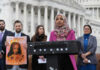

Wheelchair-bound Alabama inmate Charles “Sonny” Burton, 75, faces execution for a 1991 killing he did not commit as the shooter, even as the victim’s own daughter begs Republican Gov. Kay Ivey for clemency.
Story Snapshot
- Burton convicted as accomplice, not shooter; actual shooter received lighter sentence after resentencing.
- Victim’s daughter publicly urges mercy, prioritizing compassion over retribution in stark family shift.
- Gov. Ivey holds sole clemency power; advocates cite recent Oklahoma precedent for non-shooter mercy.
- Burton’s advanced age and illnesses raise botched execution risks, echoing national justice concerns.
Burton’s Case Details
Charles “Sonny” Burton sits on Alabama death row for a 1991 capital murder where he served as accomplice but did not pull the trigger. Convicted and sentenced to death, Burton exhausted all appeals.
The actual shooter later received resentencing to a lesser penalty. Now 75, wheelchair-bound with chronic illnesses, Burton represents Alabama’s potential oldest execution. Advocates highlight this disparity as a clear injustice in capital punishment application.
Charles “Sonny” Burton didn’t kill anyone. The state of Alabama could execute him anyway. https://t.co/a6QKXJohXf
— WTVA 9 News (@wtva9news) February 3, 2026
Governor Ivey’s Exclusive Authority
Alabama law grants Gov. Kay Ivey (R) unilateral power over capital clemency decisions, including commutations to life imprisonment or temporary reprieves. The Board of Pardons and Paroles handles non-death cases only.
This structure, rooted in 1939 legislation, places full responsibility on the governor. Public pressure mounts through calls to her office at 334-242-7100. Ivey faces calls to exercise this authority amid Burton’s deteriorating health.
Victim’s Daughter Leads Clemency Plea
The unnamed daughter of victim Doug Battle publicly advocates for Burton’s clemency, rejecting vengeance in favor of mercy. Her stance shifts the narrative from pure retribution to family-led compassion. National death penalty advocates, including the Death Penalty Information Center, amplify her voice. They frame clemency as an act of strength for conservative leaders upholding traditional values of justice tempered by grace.
Medical experts warn that executing frail, elderly inmates like Burton risks botched procedures, similar to Oklahoma’s 2014 Clayton Lockett case. Such failures erode public trust in fair application of the death penalty.
Oklahoma Precedent Fuels Advocacy
Gov. Kevin Stitt (R-OK) granted clemency in late 2025 to Tremane Wood, another non-shooter, setting a recent Republican precedent. Alabama advocates draw direct parallels, urging Ivey to follow suit. As of January 2026, no stay exists for Burton’s imminent execution. National trends narrow capital punishment to direct killers, reflecting evolving standards of decency. Legal scholars argue non-shooter executions undermine fairness.
Broader Implications for Justice
A botched execution could spark backlash, legal delays, and high costs from litigation in elderly cases. Clemency might establish Alabama precedent, influencing 2026 bills on death penalty reform. Socially, executing non-shooters despite family mercy erodes trust in the system.
Politically, Ivey’s decision shapes her legacy amid anti-death penalty momentum in states with governor-led clemency. Conservatives value precise justice over prolonged, questionable punishments.
Short-term, Burton’s family and death row inmates watch closely. Long-term, this accelerates shifts away from disproportionate sentences, prioritizing individual accountability over blanket penalties.
Sources:
Alabama Clemency, Pardon & Sentence Commutation
Clemency by State – Death Penalty Information Center
Alabama Death Penalty Advocacy – Davis Vanguard
2025 Was Not a Good Year for Clemency in Capital Cases – Justia Verdict
Alabama State Clemency Information – Capital Clemency