
A Japanese historian who spent over 40 years honoring 12 American POWs killed in Hiroshima has died at 88, leaving behind a legacy of reconciliation that challenged wartime hatred and proved that even former enemies deserve dignified remembrance.
Story Highlights
- Shigeaki Mori, an 8-year-old Hiroshima bombing survivor, dedicated four decades to researching 12 American POWs killed in the atomic blast
- Mori self-financed his exhaustive search, contacting all 12 POW families and securing their inclusion in Hiroshima’s official victim registry
- President Obama embraced Mori during his 2016 Hiroshima visit, recognizing the historian’s bridge-building efforts between former enemies
- His work redefined survivor identity from victimhood to empathy, humanizing those once considered enemies worthy of peaceful remembrance
A Child’s Survival Fuels Decades-Long Mission
Shigeaki Mori was walking across a Hiroshima bridge with friends on August 6, 1945, when the atomic bomb detonated approximately 2.5 kilometers away. The blast threw the 8-year-old into a river below, saving his life while one companion perished.
He witnessed charred bodies, raging fires, and lost classmates in the aftermath that killed roughly 140,000 people. This childhood trauma, rather than breeding bitterness, sparked a lifelong quest for truth that would honor even those wearing enemy uniforms.
Shigeaki Mori, the hibakusha survivor of the August 1945 U.S. atomic bombing of Hiroshima who was embraced by then-U.S. President Barack Obama in 2016, died Saturday at the age of 88. https://t.co/cUO49mQVBa
— The Japan Times (@japantimes) March 17, 2026
Uncovering America’s Forgotten Casualties
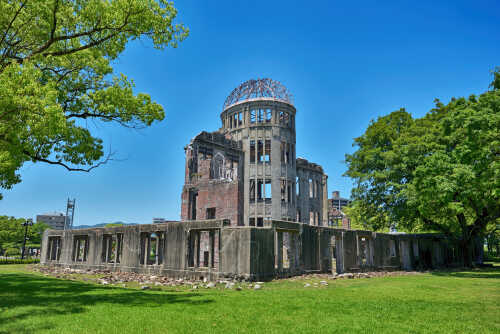
Mori discovered through government documents that 12 U.S. airmen from shot-down B-29 crews were imprisoned at Chugoku Military Police Headquarters, just 400 meters from the bomb’s hypocenter.
These POWs perished instantly in the explosion, their interrogation records destroyed in the blast. Working independently without formal academic support or institutional funding, Mori pursued this overlooked chapter of history for over four decades.
He authored “A Secret History of the American Soldiers Killed by the Atomic Bomb” in Japanese, meticulously tracking down records, survivor accounts, and U.S. archives to piece together their identities.
Personal Outreach and Family Closure
Mori self-financed international phone calls and research expenses through a second job, eventually contacting all 12 POW families across America. Some family members were on their deathbeds when Mori finally reached them with answers about their loved ones’ fates.
He erected a memorial marker honoring these servicemen and successfully lobbied Hiroshima’s Peace Memorial Hall to include them in the official bomb victim registry.
This personal outreach provided closure to American military families who had spent decades without knowing their relatives died in Hiroshima, not in combat elsewhere.
Presidential Recognition and Lasting Impact
Back in time, President Barack Obama made a historic visit to Hiroshima, where he embraced Mori in a moment symbolizing U.S.-Japan reconciliation.
Obama’s speech acknowledged Mori’s painstaking work, bringing global attention to the historian’s decades of bridge-building between former adversaries. Mori’s approach redefined what it means to be a hibakusha—atomic bomb survivor—by transforming victimhood into empathy.
His insistence that all humans, regardless of wartime allegiances, deserve peaceful remembrance challenged the dehumanization that warfare breeds. He returned B-24 bomber fragments to U.S. families and inspired similar reconciliation projects.
BREAKING: Shigeaki Mori, Hiroshima atomic bomb survivor and historian, dies at 88. Mori was a Japanese atomic bomb survivor.
— PopOff News (@PopOffNews) March 17, 2026
Mori lived in Hiroshima with his wife Kayoko, also a hibakusha who shared the lifelong health impacts of radiation exposure. His legacy endures through his published research, the memorial he established, and the families he brought peace to.
Unlike typical survivor narratives focused solely on Japanese victims, Mori uniquely spotlighted Allied POW deaths, demonstrating that truth and human dignity transcend national boundaries.
His work elevated overlooked World War II narratives and fostered empathy across communities once separated by brutal conflict, proving that individual conscience can overcome institutional indifference to history’s inconvenient truths.
Sources:
The Logbook Project – Shigeaki Mori
Hiroshima POWs – About the Author
Hiroshima POWs – Shigeaki Mori’s Story
Nippon.com – Shigeaki Mori’s Painstaking Research
History News Network – Hiroshima Historian Returns Fragments