

A federal judge’s ruling permanently blocks President Trump’s citizenship proof order for federal voter registration, igniting fierce debate over election integrity and the limits of executive power in 2025.
Story Snapshot
- Judge Colleen Kollar-Kotelly permanently blocked Trump’s executive order requiring citizenship proof for federal voter registration.
- The ruling highlights constitutional limits on presidential authority and the separation of powers.
- Civil rights groups claim victory, while the White House signals intent to appeal.
- Decision impacts future federal election law and voter access nationwide.
Federal Court Blocks Trump’s Citizenship Proof Order: Election Integrity Showdown
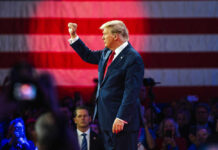
On October 31, 2025, U.S. District Judge Colleen Kollar-Kotelly issued a permanent injunction against President Trump’s executive order, which aimed to require documentary proof of citizenship on federal voter registration forms.
The court’s decision declared that the President exceeded his constitutional authority, reaffirming that the regulation of federal election procedures rests with Congress and the states.
This outcome marks a pivotal moment for election law, directly affecting the Trump administration’s broader efforts to overhaul U.S. voting processes and tighten registration requirements.
The legal battle traces back to March 25, 2024, when President Trump issued the executive order, citing concerns about noncitizen voting and election security.
The move was immediately met with legal challenges, leading to a preliminary injunction in April 2024 and culminating in the permanent block.
Plaintiffs included the Democrat National Committee, civil rights organizations like the ACLU, and other Democrat groups, who argued the requirement would disenfranchise eligible voters and violate constitutional principles.
The White House, meanwhile, defended the order, insisting it was necessary to ensure election integrity.
Constitutional Limits and Precedent: Separation of Powers at Stake
This case centers on the separation of powers—the foundational principle that prevents any one branch of government from overstepping its bounds.
Judge Kollar-Kotelly’s ruling aligns with previous Supreme Court precedent, notably Arizona v. Inter Tribal Council of Arizona, Inc. (2013), which held that states cannot require documentary proof of citizenship for federal voter registration beyond National Voter Registration Act requirements.
Legal experts stress that Congress, not the President, is constitutionally empowered to set federal election procedures, and the court’s decision reinforces this critical balance.
Historically, attempts to mandate citizenship documentation have sparked controversy and legal battles. State-level laws in Kansas and New Hampshire were overturned after they blocked tens of thousands of eligible Americans from registering to vote.
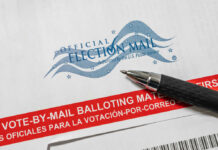
The National Voter Registration Act of 1993 standardized the federal form, requiring only an attestation of citizenship under penalty of perjury. The Trump administration’s push for stricter documentation was part of a broader campaign to address perceived vulnerabilities in the electoral system, despite rare evidence of noncitizen voting.
Federal judge rules Trump can’t require citizenship proof on the federal voting form https://t.co/pDIM5QOTZo
— O.C. Register (@ocregister) October 31, 2025
Immediate Impact: Voter Access and Partisan Friction
The immediate effect of the ruling is clear: the federal voter registration form will not require documentary proof of citizenship, averting potential disenfranchisement of eligible voters, including married women who have changed their names and naturalized citizens.
Election officials avoid new administrative burdens and confusion, while civil rights and Democrat groups celebrate what they call a “clear victory for democracy.” Republicans, however, view the decision as an obstacle to bolstering election integrity and are expected to pursue further legal or legislative responses.
The decision intensifies partisan conflict over voting rights—Democrats focus on expanding access, while conservatives continue to prioritize security and integrity of the ballot box.
The ruling also impacts political strategy, as future executive actions on election procedures will now face heightened judicial scrutiny and constitutional constraints. The Trump administration has indicated plans to appeal, potentially escalating the case to higher courts.
Long-Term Implications: Precedent for Executive Authority and Election Law
In the long run, this ruling sets a precedent limiting presidential power to unilaterally alter federal election law, reinforcing the constitutional system of checks and balances. It will influence future reforms and litigation, shaping the boundaries of election policy for years to come.
For conservatives, the outcome signals the importance of legislative action and judicial appointments in defending election security and constitutional values.
As debates over voter fraud, election integrity, and government overreach persist, the struggle to secure America’s elections continues—this time, under the watchful eye of the courts and Congress.
Despite the setback, the Trump administration remains committed to tightening voting requirements, citing ongoing concerns about vulnerabilities in the registration system.
Conservative voters, frustrated by years of leftist policies and perceived erosion of core values, see this legal battle as emblematic of broader challenges facing the nation.
The coming months will reveal whether legislative efforts or appeals can revive efforts to strengthen voter verification and uphold the integrity of federal elections.
Sources:
Federal judge rules Trump can’t require citizenship proof on the federal voting form