
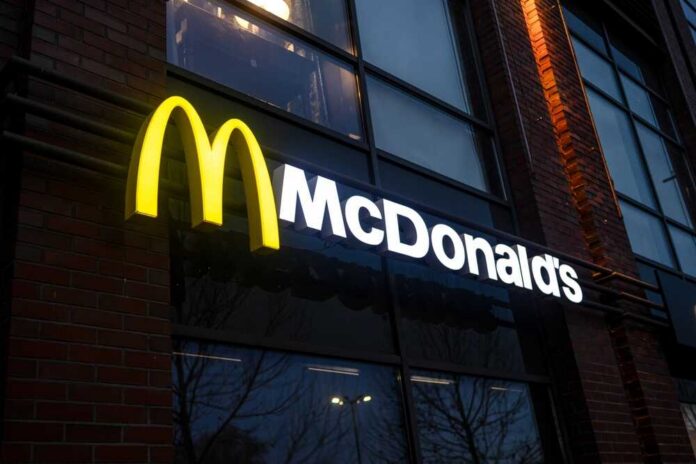
McDonald’s is erasing the self-serve soda fountain from American dining rooms by 2032, ending free refills that defined generations of fast-food freedom.
Story Snapshot
- McDonald’s phases out self-serve soda fountains nationwide in the U.S. by 2032 through gradual remodels.
- Shift prioritizes drive-thru and delivery, where 60%+ of sales occur, over dine-in conveniences.
- Customers lose unlimited refills; staff prepare drinks behind counters for hygiene and efficiency.
- Many locations have already transitioned, aligning with the post-COVID takeout boom and labor shortages.
- New beverages like Refreshers roll out soon, signaling menu evolution amid the change.
Historical Roots of the Soda Fountain Staple
McDonald’s introduced self-serve soda fountains in the 1970s and 1980s. These stations let customers fill unlimited refills and mix flavors, boosting perceived value.
Families lingered in dining rooms, turning quick meals into social events. The model matched McDonald’s push into indoor seating, creating a family-friendly vibe that kept patrons seated longer and spending more.
Fast-forward to today, and those fountains face obsolescence. Post-COVID habits slashed dine-in traffic by 30-50% across the industry. Apps like Uber Eats fueled delivery surges.
McDonald’s “Accelerating the Arches” plan, since 2021, has poured over $1 billion annually into remodels. Dual drive-thrus and kiosks now dominate, sidelining old-school counters.
Strategic Shift to Staffed Drink Stations
McDonald’s Corporation directs the change across 13,500 U.S. locations, 95% of which are franchised. Franchisees fund $1-2 million remodels per site, pacing adoption.
Corporate motives include slashing maintenance costs, controlling portions, and improving hygiene amid labor shortages and rising wages. Over 60% of sales come from drive-thru and delivery, making dine-in secondary.
Employees trade fountain cleaning for drink prep duties. Beverage giants like Coca-Cola adapt to streamlined inventory, though customization drops.
Leaders Joe Erlinger and Chris Kempczinski steer the strategy without direct feedback from the fountain. No franchisee backlash surfaces, as incentives align interests.
Phased Rollout and Current Progress
Pilots started in California and Texas in 2026, replacing fountains with staffed stations. By early 2026, widespread implementation will hit many sites. Full U.S. dine-in phase-out targets 2032, tied to updates.
Media buzz peaked with Fox Business reports, contrasting sensational “shutdown” claims that ignore the timeline.
McDonald’s is quietly ditching a popular in-store feature nationwide https://t.co/pzw2ByW9BJ
— FOX Business (@FoxBusiness) May 4, 2026
McDonald’s told Fox Business it will launch Refreshers and crafted sodas next month, dodging questions about the fountain. This “quiet” pivot reflects modernization, not crisis.
Competitors like Wendy’s and Taco Bell already curbed self-serve, setting precedents. Since 2015, kiosks have cut lines by 20-30%, demonstrating efficiency gains.
Customer Losses Meet Corporate Gains
Families and large groups forfeit free refills first, hiking costs for low-income dine-in fans. Short-term, wait times rise slightly, potentially reducing dine-in by 5-10%. McDonald’s saves $0.50-1 per drink on labor and upkeep. Long-term, standardized portions reduce liability, aligning with 24/7 automation.
Economically, $2 billion in annual remodels sustains 2 million jobs indirectly. Socially, car-centric access triumphs, eroding communal dining.
Industry-wide, the $400 billion sector aims for a 70% drive-thru/delivery mix by 2030. Burger King tests mirror moves, accelerating dine-in fade.
Sources:
McDonald’s quietly ditching popular in-store feature nationwide – Fox Business
McDonald’s is quietly ditching a popular in-store feature nationwide – Grabien