Melania Trump’s office quietly let a CNN reporter in while the White House ban held the door shut.
Story Snapshot
- Melania Trump’s office approved CNN’s Betsy Klein for a New York event.
- The access was for a First Lady event on the United Nations sidelines, not the White House.
- President Trump’s ban targeted CNN, MS Now, and Politico at the White House itself.
- Networks paused the television pool after CNN lost its pool slot at the White House.
What Happened, Where It Happened, And Why It Matters
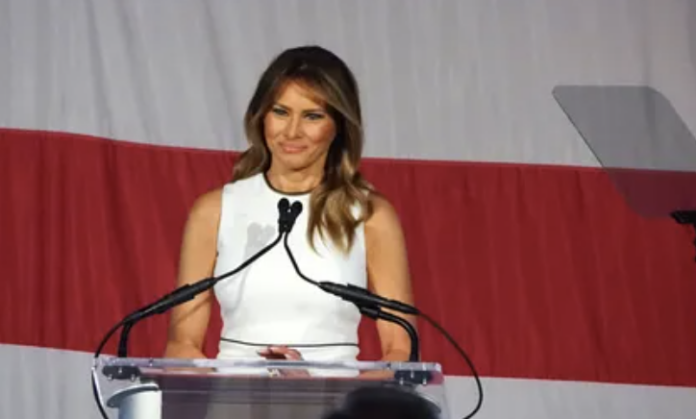
Melania Trump’s office approved CNN reporter Betsy Klein to cover her “Fostering the Future Together” event in New York City. The event sat on the sidelines of the United Nations General Assembly. This was not a White House press pool assignment or a White House grounds entry.
It was a First Lady event with its own credential process. That distinction matters because President Trump’s recent ban focused on White House access and the pool, not every off-site event.
President Trump told a CNN anchor at the United Nations, “You should not be here covering me.” That line echoed his announced ban against CNN, MS Now, and Politico from the White House.
CNN and other outlets have said they would still cover the United Nations using United Nations credentials, which do not come from the White House. The First Lady’s event also used a separate approval track, which her office handled on its own timeline.
Melania makes eyebrow-raising CNN decision as Trump's media ban sparks White House chaos https://t.co/hWc7L0O6OB
— Daily Mail (@DailyMail) September 21, 2026
The Ban, The Pool, And The Carve-Out
The White House television pool is the rotating group that provides shared video of the president’s movements. After CNN was stripped of its turn, the major networks paused pool coverage rather than fill the slot without CNN.
That stoppage deepened the fight over access and put more weight on every exception. Melania Trump’s approval for a single CNN reporter did not restore the pool or change White House rules. It showed that not all events run through the same gate.
Reporters framed Melania’s move as a notable exception. The facts support that label in a narrow sense. The First Lady event had its own credentials, and her office granted one to CNN after the White House ban took effect.
That does not prove open defiance or a policy rift. It shows separate lanes with different deciders. Until someone publishes the written ban terms, claims about violations beyond the White House grounds rest on speculation, not text.
What This Signals About Process And Power
The presidency runs on process as much as on press conferences. Separate offices, venues, and credential pipelines can create short-run relief valves.
A First Lady event at the United Nations will often rely on event organizers and the First Lady’s team, not the White House press office.
That can yield outcomes that look like contradictions but are actually by design. The system’s many gates can blunt blanket restrictions, at least outside the White House fence line.
CNN reporter Betsy Klein has been granted credentials to cover First Lady Melania Trump’s New York event. The approval comes just after President Donald Trump barred CNN and two other outlets from the White House. The event, titled ‘Fostering the Future Together’, is being held… pic.twitter.com/sXhtly36Xc
— India Today Global (@ITGGlobal) September 22, 2026
Melania Trump’s team seems to have followed its own event process the same way any competent host would. That aligns with common sense: set clear rules for your venue, apply them evenly, and let the work speak louder than the drama.
The Open Questions That Decide The Next Chapter
Two documents would settle most debates. The first is the written text of the White House ban and any implementation memo. The second is the credential policy for the First Lady’s New York event.
If the ban covers only the White House complex and pool, then the New York approval fits the rules. If it claims reach beyond that, litigation will test it fast. Until those texts surface, the clean read is simple: separate venue, separate process, narrow exception, not rebellion.
Sources:
bbc.com, cnbc.com, commondreams.org, thedailybeast.com, axios.com, thehill.com, nytimes.com, pbs.org