

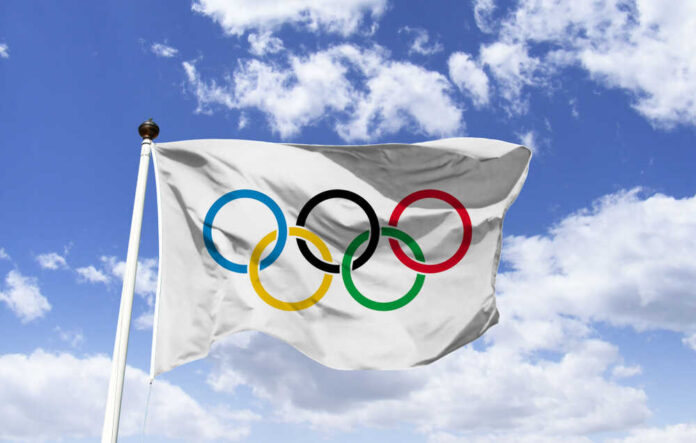
The International Olympic Committee just banned transgender women from competing in female Olympic events, marking a major policy shift that protects fairness in women’s sports.
Story Highlights
- IOC announced mandatory genetic testing for SRY gene to determine eligibility for female Olympic events, effectively excluding transgender women starting with the 2028 Los Angeles Games
- Policy aligns with President Trump’s February 2025 executive order threatening federal funding cuts and visa denials for organizations allowing biological males in women’s sports
- New rules also restrict female athletes with differences in sex development (DSD), potentially affecting competitors like two-time Olympic champion Caster Semenya
- Decision reverses previous IOC guidelines that permitted transgender women to compete with reduced testosterone levels, though policy is not retroactive and excludes grassroots sports
IOC Implements Biological Sex Testing for Female Athletes
The International Olympic Committee published a 10-page policy document on March 26, 2026, fundamentally changing eligibility requirements for female Olympic competition.
Eligibility for any female category event at the Olympic Games or any other IOC event is now limited to biological females, determined through mandatory genetic testing for the SRY gene.
The IOC describes this DNA segment, typically found on the Y chromosome, as initiating male sex development in utero and indicating the presence of testes. The policy takes effect at the 2028 Los Angeles Olympics in July 2028.
Trump Administration Pressure Shapes International Sports Policy
President Trump signed the executive order “Keeping Men Out of Women’s Sports” in February 2025, threatening to rescind federal funds from organizations allowing transgender athletes in women’s sports and pledging to deny visas to some athletes attempting to compete at the 2028 Los Angeles Olympics.
Within months, the U.S. Olympic body updated its guidance to national sports bodies, citing an obligation to comply with White House directives.
The IOC’s decision aligns international Olympic policy with U.S. federal mandates, raising concerns about American political influence over global sports governance.
Transgender women athletes are now excluded from women's events at the Olympics after the IOC agreed to a new eligibility policy on Thursday which aligns with U.S. President Donald Trump's executive order on sports ahead of the 2028 Los Angeles Games. https://t.co/1YIz86Oqsh
— ESPN (@espn) March 26, 2026
Policy Reverses Previous Transgender Inclusion Standards
This decision marks a dramatic departure from previous IOC guidelines that allowed transgender women to compete in female categories under testosterone suppression requirements.
Weightlifter Laurel Hubbard competed at the 2021 Tokyo Olympics as a transgender woman under those earlier standards, though she did not win a medal.
No transgender women competed at the 2024 Paris Summer Games, making the immediate practical impact unclear.
The IOC justifies the policy as protecting “fairness, safety and integrity in the female category,” though the committee acknowledges it remains unclear how many, if any, transgender women are currently competing at an Olympic level.
Broader Impact on Female Athletes and Sports Governance
The new policy extends beyond transgender athletes to also restrict female athletes with differences in sex development, a medical condition affecting sex characteristics. This affects competitors like Caster Semenya, a two-time Olympic champion runner.
Mandatory gender screening has already been implemented by governing bodies in track and field, skiing, and boxing, suggesting a broader trend across international sports.
The policy is not retroactive and does not apply to grassroots or recreational sports programs.
Human rights experts and activist groups are likely to criticize the mandatory genetic screening requirements, though the IOC claims the SRY gene test represents the most accurate and least intrusive method currently available.
Transgender women athletes banned from female Olympic events by new IOC policy.
A victory for common sense.https://t.co/Xi141XPqTB
— José Cuadriello ✞🇻🇦 (@JACuadriello) March 29, 2026
Many conservatives who fought against biological males competing in women’s sports now find themselves questioning whether this victory came at the cost of American sovereignty in international affairs.
The Trump administration’s use of funding threats and visa denials to force the IOC’s hand mirrors the same federal overreach and bullying tactics conservatives criticized under previous administrations.
While protecting fairness in women’s sports aligns with common sense and biological reality, the mechanism of achieving this outcome sets a troubling precedent that could be exploited by future administrations to advance agendas hostile to American values and constitutional principles.
Sources:
Transgender women banned from Olympics by new IOC policy – ESPN