
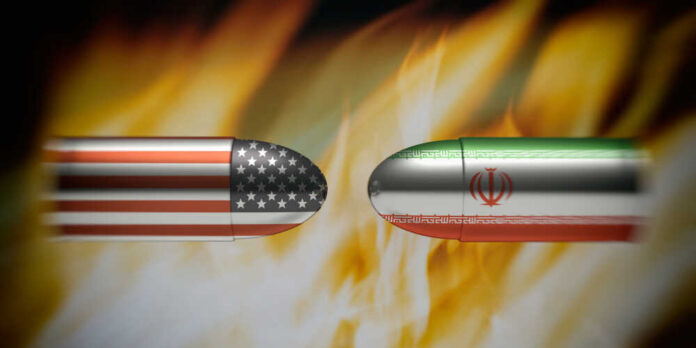
The most powerful military on earth just bombed targets inside Iran and told the world it was “self-defense” — and that single phrase is doing more work than any missile they launched.
Story Snapshot
- U.S. Central Command called strikes inside Iran “self-defense” aimed at missile sites and mine-laying boats.
- The attacks hit near the Strait of Hormuz and Bandar Abbas during a fragile ceasefire and ongoing peace talks.
- Public evidence of an imminent threat is thin; nearly everything rests on classified intelligence and trust.
- The way this story is framed now will shape the next round of war-or-peace in the Gulf — and your oil bill.
What The Pentagon Says It Did And Why That Matters
The United States Central Command announced that American forces carried out airstrikes in southern Iran, describing them as “self-defense strikes to protect our troops from threats posed by Iranian forces.”[1][2][3] Officials said the targets included missile launch sites and Iranian boats trying to lay naval mines off the coast near Bandar Abbas, home to one of Iran’s main naval hubs and gateway to the Strait of Hormuz.[1][2][3] That location choice signals this was about more than a random skirmish.
BREAKING: US military says it carried out ‘self-defense’ strikes in Iran
https://t.co/xCKasilZR9— FOX5 Las Vegas (@FOX5Vegas) May 26, 2026
These strikes did not occur in a vacuum. They came while a ceasefire was in effect and as negotiators were reporting progress toward a broader peace deal.[1][2][3] Media coverage repeatedly described the truce as “fragile” and raised the question of whether bombing inside Iran would undermine talks that the Trump administration publicly claimed were “proceeding nicely.”[1][2][3] That contradiction alone should make any citizen pause before taking the word “self-defense” at face value.
Mine-Laying Boats, Missile Sites, And The Missing Evidence
Television reports and online coverage echoed the official line that the United States targeted “missile launch sites and boats attempting to place mines” near the Strait of Hormuz.[1][2][3] Some accounts added that explosions were heard around the port city of Bandar Abbas and that two Iranian vessels were “thought to be” or “allegedly” planting mines in the waterway.[3] Those qualifiers—thought to be, allegedly—signal that public reporting is repeating claims, not verifying them.
Despite confident rhetoric, the record available to ordinary Americans contains no released imagery, intercepted communications, or independent maritime tracking data proving that those boats were in the act of laying mines.[2][3] There is also no detailed description of what made the threat “imminent” rather than hypothetical.[1][2][3] In plain language, citizens are being asked to trust that whatever the Pentagon saw on its classified screens justified crossing into Iranian territory during a ceasefire.
Ceasefire, Escalation, And The Conservative Question Of Prudence
Reporters emphasized that the strikes took place “amid a fragile ceasefire” and that analysts did not yet know how this would affect peace talks.[1][2][3] From a traditional American conservative perspective that values both peace through strength and clear limits on government power, that matters. Self-defense is a core right, but so is restraint, especially when negotiations have inched toward ending a war that already drains U.S. resources and risks wider conflict.
Conservatives who remember how quickly “limited strikes” can morph into open-ended interventions will recognize the pattern. Officials frame an attack as narrowly defensive; the press blasts out the talking point; hard evidence stays behind classified doors; and by the time facts dribble out, the strategic course has already shifted. That does not mean the military lied here. It does mean citizens should demand more than a press release before accepting that bombing another country during a ceasefire was the only reasonable option.
Strait Of Hormuz, Oil Flows, And Why This Hits Your Wallet
The Bandar Abbas area sits by the Strait of Hormuz, the narrow chokepoint through which a large share of the world’s seaborne oil must pass.[2][3] Any hint of mines or missile threats there instantly raises alarms for global energy markets. Even limited strikes, if miscalculated, can trigger Iranian retaliation against shipping, drive up insurance costs for tankers, and send fuel prices higher. That chain reaction lands not in think tank papers but in American gas stations and utility bills.
🇺🇸 The First Order Consequence: Renewed U. S. strikes in southern Iran heightened investor concerns about regional instability, lifting oil prices and dampening near-term expectations for a durable peace, reducing the likelihood that energy-market participants price in quick… https://t.co/KBlgShVlsB
— U.S.A.I. 🇺🇸 (@researchUSAI) May 26, 2026
The United States has a legitimate interest in keeping the Strait open and safe. At the same time, repeated “defensive” raids inside Iran risk normalizing a state of permanent, undeclared war in the Gulf. A common-sense conservative approach asks whether Washington is genuinely protecting American troops and commerce or sliding into a pattern where each classified threat assessment justifies another step toward a conflict that Congress never fully debated.
Trust, Secrecy, And What Responsible Citizens Should Watch Next
Public reports note that Iran had not immediately responded or offered its own detailed account when many of these stories first ran, leaving the U.S. version to dominate the early narrative.[2] That information imbalance is standard in fast-moving crises, but it also means the first framing—“self-defense strikes” during a ceasefire—can harden into accepted truth before competing evidence emerges. Some transcripts already show captioning errors and muddled details, reminding us how messy breaking-news coverage can be.[3]
Americans who care about sober foreign policy should therefore watch for three things: whether the Pentagon eventually releases more concrete evidence of imminent danger; whether Congress presses for the legal rationale behind striking inside Iran; and whether these “limited” operations begin to expand in scope or frequency. Self-defense is an essential right of any nation. But in a republic built on checks and balances, that right works only if citizens insist on seeing the facts behind the phrase.
Sources:
[1] YouTube – US Strikes Iran Missile Sites & Boats Amid Shaky Ceasefire …
[2] YouTube – US launches new strikes on Iran, targeting missile sites …
[3] YouTube – US Military Strikes Iranian Boats, Missile Launch Sites