
More than 200,000 people fled the wildfires in France and Spain, and some even escaped by boat along France’s Atlantic coast.
Quick Take
- France and Spain both faced fast-moving wildfire emergencies that forced mass evacuations.
- Reporting placed the French evacuations around Bordeaux and Gironde, while Spain moved on a national emergency footing.
- Some evacuees in France left by boat when flames cut off land routes.
- Counts varied by outlet, but the scale of the crisis was large in both countries.
Why This Fire Wave Stood Out
The most striking detail is not just the size of the evacuations. It is the way the fire closed in on ordinary life so fast that people in coastal France had to leave by boat, while authorities in Spain rushed to treat the crisis as a national emergency. This was not a single local blaze. It was a cross-border emergency that stretched firefighters, soldiers, and emergency planners at the same time.
Wildfires in Spain are completely out of control. More than 300.000 people across Spain and France have been evacuated.
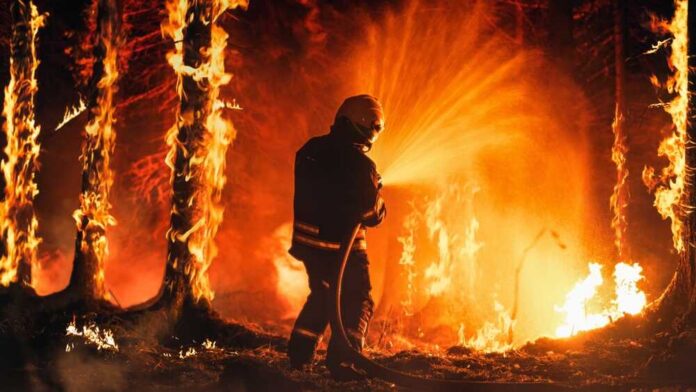
Heroic firefighters are fighting day and night to prevent it from spreading further.
Thank you for your immense service. pic.twitter.com/EmH4t5JHq8
— France Safety Travel (@francesafetytra) July 26, 2026
France’s hardest-hit zone centered on Gironde and the Bordeaux area, where officials said tens of thousands were forced from their homes and responders tried to keep the flames away from the city.
News reports said people fled homes, campsites, and holiday areas, and one French interior ministry count put the total at about 141,000 in France alone. Other reports raised the French total higher as the fire situation changed hour by hour.
Spain’s Emergency Response
Spain’s side of the crisis moved quickly from local fires to a broader national response. Reports said several blazes near Madrid merged, forcing large evacuations and prompting a national emergency declaration. The emergency was not framed as a routine regional fire fight.
It was treated as a major public safety event, with military units and outside help brought in as the flames spread across dry land and overloaded local crews.
That matters because wildfire response depends on speed, not just power. Once multiple fire fronts start joining together, roads close, smoke clouds spread, and the window for orderly evacuation shrinks.
That is why the reports keep returning to the same images: police going door to door, towns emptied fast, and firefighters trying to hold the line while weather and terrain worked against them. The public sees the evacuation number first, but the deeper story is the collapse of normal time.
The Numbers Moved, But the Scale Did Not
Different outlets gave different totals, and that is normal in the first hours of a fast-moving disaster. The figures in the reporting ranged from about 141,000 in France to more than 200,000 across both countries, with some later accounts going even higher as the fires spread and more people were moved out. The exact total changed because the fire did.
That uncertainty should not be confused with doubt about the event itself. The reports all point to the same core facts: major evacuations, dangerous fire fronts near Bordeaux and Madrid, injured firefighters, and emergency reinforcements from other countries.
The number is important, but the pressure on families was more important. People were not debating statistics in the moment. They were packing, driving, and running from smoke.
What the Response Reveals
This crisis showed how quickly a summer fire can become a state test. France relied on heavy firefighting support and military help, while Spain moved into a formal emergency posture and called on broader reinforcements. That kind of response is not just about hoses and aircraft. It is about command, communication, and the ability to move people before the fire does.
🚨 BREAKING: 360,000+ evacuated as wildfires rage across France and Spain. 42,000 ha burned in Gironde alone – worst since WWII. Flames advancing toward Bordeaux wine region. Spain declares national emergency. $WEATHER $EURO #Wildfires #ClimateEmergency
— GlobalFlash (@GlobalFlash_Cam) July 27, 2026
The public record also shows how hard it is to pin down a clean final story during a live disaster. Counts changed. Fire lines shifted. Some reporting described the Bordeaux fire at different distances from the city, which suggests different timestamps and fire fronts rather than one fixed perimeter.
What stayed constant was the scale of fear, the speed of evacuation, and the sense that both countries were fighting the same kind of enemy: wind, heat, and time.
Sources:
youtube.com, wsj.com, whmi.com, abcnews.com, straitstimes.com, smh.com.au