
A telescope made of Antarctic ice just won physics’ top prize because it caught “ghost particles” from deep space.
Story Snapshot
- Francis Halzen won the 2026 Nobel Prize in Physics for IceCube and high-energy neutrinos.
- IceCube turned a cubic kilometer of South Pole ice into a working space telescope.
- The discovery unlocked a new way to trace cosmic engines across the universe.
- A vast global team built the result over years of patient work.
The Award: What The Academy Recognized
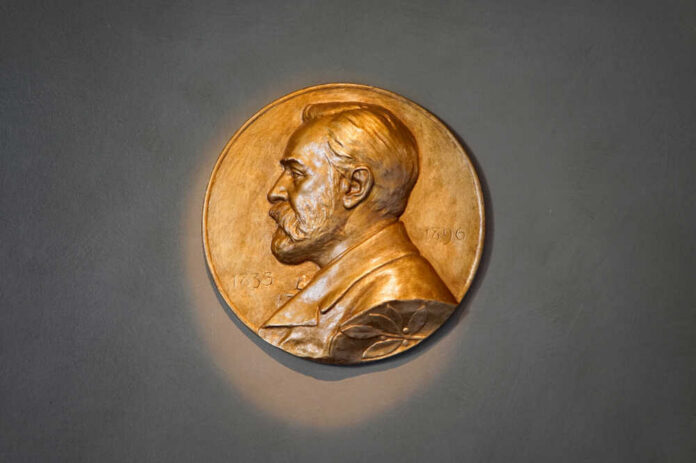
The Royal Swedish Academy of Sciences awarded the 2026 Nobel Prize in Physics to Francis Halzen for decisive contributions to the IceCube Neutrino Observatory and the discovery of high-energy neutrinos of astrophysical origin. The citation is straightforward and historic. It credits leadership that turned a wild idea into a functioning observatory. The prize spotlights a decisive shift in astronomy. Instead of only using light, scientists can now map the universe with particles that fly through planets like wind through a screen.
High-energy neutrinos are nicknamed “ghost particles” because they almost never interact with matter. That makes them hard to catch and priceless to study. They come straight from violent places in the cosmos, like black hole jets and shredded stars. Light can scatter and bend. Neutrinos point back to their source like a straight arrow. IceCube’s job is to wait in the dark and watch the South Pole ice flash when a rare neutrino finally bumps into an atom and makes a blue streak.
The Machine: How You Turn Ice Into A Telescope
IceCube is a grid of more than five thousand light sensors frozen deep under the South Pole. The array fills a volume of ice about one cubic kilometer. The ice is clear, stable, and cold. It acts as both the target and the lens. When a neutrino hits, it makes a charged particle that outruns light in ice and leaves a cone of blue light. The sensors time those faint flashes to trace direction and energy, like a 3D trail in the dark.
Halzen pushed the concept for decades, then led the team that drilled holes, lowered strings of detectors, and tuned the system until it worked. The observatory began full operations in 2011. In 2013, the collaboration announced the first solid evidence of high-energy neutrinos from beyond our solar system. That paper moved neutrinos from a theory side note to a front-row seat in astronomy and earned major field honors long before Stockholm weighed in.
The Breakthroughs: From First Signals To Galactic Maps
The IceCube team reported the first batch of high-energy astrophysical neutrinos in 2013, with 28 events that did not fit known backgrounds. That result opened a new channel to study the universe’s most extreme engines. A decade later, IceCube reported evidence of high-energy neutrino emission from our own Milky Way, giving us a new map of our galaxy drawn in ghost particles rather than starlight. These steps showed the method works at both cosmic and local scales, which is rare in frontier physics.
🔭 “Ghost particle” hunter Francis Halzen wins the 2026 Nobel Prize in Physics for pioneering IceCube, the Antarctic observatory detecting elusive high-energy neutrinos from the cosmos.
🔗 https://t.co/ACTXQcyayA#NobelPrize #Physics #Neutrinos #IceCube pic.twitter.com/bcaDfhzZQi
— MSN (@MSN) October 6, 2026
Conservative common sense says results like this do not come from slogans or fads; they come from patience, math, and measurable signals. That is what IceCube delivered. The project demanded long-term funding, clear goals, and strong accountability. It also needed the humility to share credit. Hundreds of scientists across many nations built and analyzed the data. The win went to a leader, but the engine was the team. That balance is how big science should work.
Why It Matters: A New Sense For Dangerous Places
Neutrino astronomy answers an old question: what makes the highest energy particles in nature? These particles hit Earth with far more punch than any human machine. They likely come from black hole jets, exploding stars, and tidal shredding of unlucky suns. Light alone could not settle the case. Neutrinos travel in straight lines from deep inside those engines. With IceCube online, theory is now testable. The field is young, but the map is growing event by event.
The next steps are clear. IceCube is being upgraded to sharpen its vision. New detectors in the ocean and lakes will add reach and resolution. More events mean better source matches and stronger links to known objects in the sky. The method also pairs well with gravitational waves. Together, they make a fuller picture of violent space. That is the promise Stockholm honored: a permanent new sense added to human astronomy.
Sources:
bbc.com, sciencedaily.com, biz.chosun.com, icecube.wisc.edu