
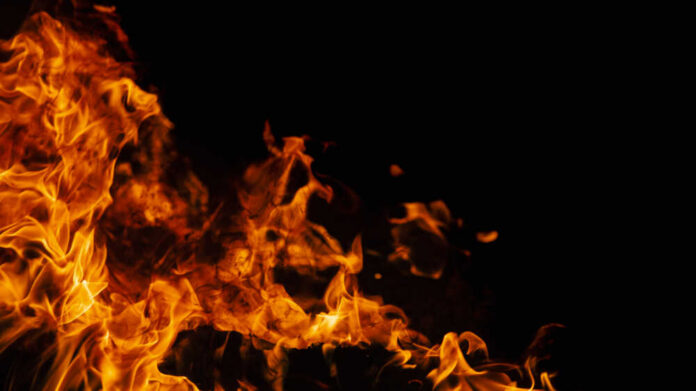
Four Canadian soldiers died and dozens more were hurt when a wind-whipped grass fire tore through a live-fire training exercise at one of Canada’s largest military bases.
Quick Take
- Four Canadian Armed Forces members died at Canadian Forces Base Wainwright in Alberta on October 17.
- Prime Minister Mark Carney confirmed the deaths after next of kin were notified.
- Thirty-nine people were hospitalized, with 19 listed in critical condition.
- The fire broke out during live-munitions training ahead of a planned deployment to Latvia.
- The exact cause of the fire remains under investigation.
What Happened At Canadian Forces Base Wainwright
The fire broke out the afternoon of October 17 inside a training area at Canadian Forces Base Wainwright, a sprawling military installation in Alberta. Troops were running a high-intensity combat exercise using live munitions when the blaze ignited and spread with alarming speed. Major-General Wade Rutland, commander of 1st Canadian Division, said the flames moved roughly a kilometer in just 30 to 60 seconds as strong winds pushed the fire across dry grassland.
Prime Minister Mark Carney addressed the nation directly, confirming that four Canadian Armed Forces members had died and that their families had already been informed. The dead were identified as Sergeant Morgan Wong of the Loyal Edmonton Regiment and Privates Shaun Farrell, Aidan Goulding, and Hayden Lykkemark, all three serving with the 3rd Battalion, Princess Patricia’s Canadian Light Infantry. Officials said the unit had been preparing for an upcoming deployment to Latvia.
Hospitals Strained By Scale Of The Injuries
Alberta Premier Danielle Smith said 39 people were hospitalized after the fire, with at least 19 of them in critical condition. Dr. Sayeh Zielke, chief executive of Acute Care Alberta, broke the numbers down further, reporting 19 critical patients, eight listed as stable, and 12 others classified as ambulatory. Hospitals in Edmonton and nearby communities took in the wounded, with patients spread across four separate Alberta facilities to handle the sudden surge.
The injury count reported by officials shifted slightly depending on the source and the moment it was recorded, which is typical in the early hours of a mass-casualty event. Some updates used the general word “dozens,” while hospital officials offered harder numbers as patients were triaged and transferred. What stayed consistent across every official account was the severity: nearly half of the injured were fighting for their lives in critical care.
Investigators Still Working To Pin Down The Cause
Rutland told reporters that soldiers were conducting live-fire training, including grenade range work, as part of routine preparation before overseas deployment. He confirmed multiple training activities were happening across the area at the same time the fire broke out, but he stopped short of naming an exact ignition source. The cause of the fire remains under formal investigation, and the Canadian Armed Forces has announced a board of inquiry to dig into how it started and why soldiers were unable to escape the flames in time.
Officials Rule Out Foul Play As Questions Continue
Canadian military officials moved quickly to tell the public there was no sign of terrorist activity connected to the fire, treating it instead as a training accident tied to weather conditions and live-munitions exercises. That distinction matters for a community already grieving. Families, fellow soldiers, and a watching public deserve a straight answer, not speculation, and Canadian officials have so far kept their public statements measured and fact-based rather than feeding rumor.
Canadian Forces Base Wainwright is one of the country’s busiest training grounds, hosting thousands of soldiers each year for exercises meant to prepare them for real combat conditions. A tragedy like this one puts a spotlight on how militaries balance realistic training against the inherent dangers of live ammunition, dry terrain, and fast-changing weather. The investigation now underway will determine whether existing safety protocols failed or whether this was an unavoidable convergence of wind, fuel, and fire that outran every precaution in place.
Sources:
cbsnews.com, cbc.ca, abcnews.com, cnn.com, cp24.com