

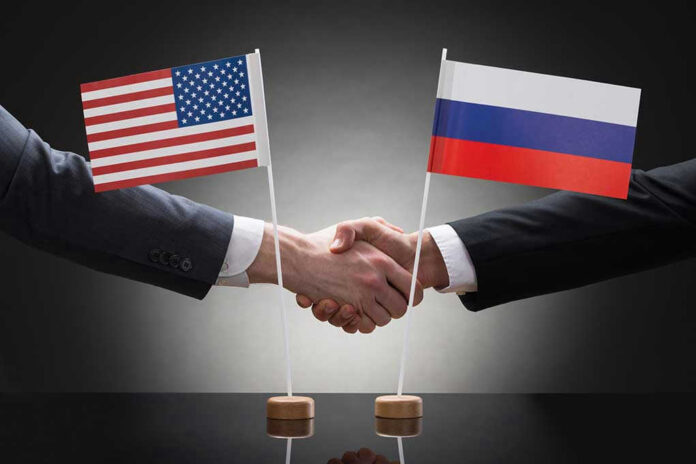
One word—“humanitarian”—turned a detainee’s homecoming into a political firestorm that now tests how America negotiates with adversaries.
Story Snapshot
- Steve Witkoff praised Vladimir Putin as a “humanitarian” right after Russia freed American Stephen Hubbard.
- The release came without a swap, and followed a direct appeal from President Trump, according to reports.
- Critics in both parties blasted the praise as morally wrong while Russia’s war in Ukraine continues.
- The clash spotlights a hard choice: flatter for results or hold the line on public norms.
The On-Camera Remark That Lit The Match
Steve Witkoff sat across from Vladimir Putin in St. Petersburg and thanked him for sending a 74-year-old American home. He added the word that set off alarms: “You are a humanitarian also, sir.” The Kremlin readout tied the exchange to Stephen Hubbard’s release and said Hubbard was taken to the airport. The New York Times reported President Trump directly appealed for Hubbard’s freedom, and that Russia released him without a prisoner trade.
Witkoff framed the praise as cause and effect. He said Putin’s action meant a grandfather would go home to his family. That narrow link matters because it points to a tactic, not an endorsement of a war record. Yet public video clips add no qualifiers or an “in this instance” caveat. The wording therefore reads broad, and in politics, broad words become blunt weapons fast.
Why A Single Word Carried So Much Weight
Russia’s invasion of Ukraine shapes the entire reaction. Many Americans hear “humanitarian” and think of bombed apartments, mass graves, and an arrest warrant from an international court reported in coverage. That moral frame swallows any tactical aim in seconds. News outlets highlighted the label rather than the release method, and coverage paired the quote with wartime images. The narrative moved from one man’s return to the meaning of legitimizing an adversary on camera.
Senators Thom Tillis and John Cornyn condemned the remark, with Cornyn calling Putin a “stone-cold killer.” Senator Mark Kelly cited assassinations and bombed hospitals in rejecting the label. Senator Chris Coons described Putin as a killer and a thug. These statements did not dispute that Hubbard was freed; they argued the word “humanitarian” misleads the public about the broader record and risks normalizing coercion during war.
Did The Flattery Work—And Does It Matter?
Hubbard’s release is the key fact. Reports say Russia freed him after more than four years in custody, with no exchange, and close in time to Witkoff’s meeting. The same reports say President Trump personally asked Putin to let Hubbard go. That mix supports a practical read: personalized appeals may help, but the decisive cause remains unclear from public records. Diplomacy often stacks nudges until one push tips the scale.
The Kremlin’s spokesman said the release followed an American request and cited “humanitarian considerations,” language that dovetails with Witkoff’s praise. That phrasing likely aimed to give Moscow face-saving cover. It also gave critics a clean shot at the word choice. A narrower thank-you—“thank you for releasing him”—would have reduced the opening. The lesson is simple: be precise when cameras roll, because adversaries and allies both weaponize adjectives.
The Conservative Test: Results, Leverage, And Moral Clarity
Conservatives value bringing Americans home, deterring future grabs, and speaking moral truth about adversaries. The Hubbard outcome checks the first box. The second and third hang in the balance. Public praise can cut two ways. It may help free hostages today, but it can also raise the price tomorrow if regimes learn they earn global validation by taking and trading people. That is the central danger of modern hostage diplomacy.
Russia releases American Stephen Hubbard as US envoy Witkoff calls Putin a ‘humanitarian’
Stephen Hubbard’s release is a rare concrete outcome from renewed US-Russia engagement, but the diplomacy around it is proving just as striking as the freedom itself. Steve Witkoff’s praise…
— Research, News & Analysis (@RNA_NewsMedia) October 22, 2026
A common-sense bar for future missions is tight language that thanks a discreet act without branding the actor. Use private flattery if needed, not public labels that outlive the moment. Tie any praise to specific, verifiable steps and stack it with clear red lines on wrongful detention and attacks on civilians. That approach honors the family at the airport and the principles that keep the next American off a tarmac far from home.
Sources:
youtube.com, nytimes.com, abcnews.com, cbsnews.com, thehill.com