

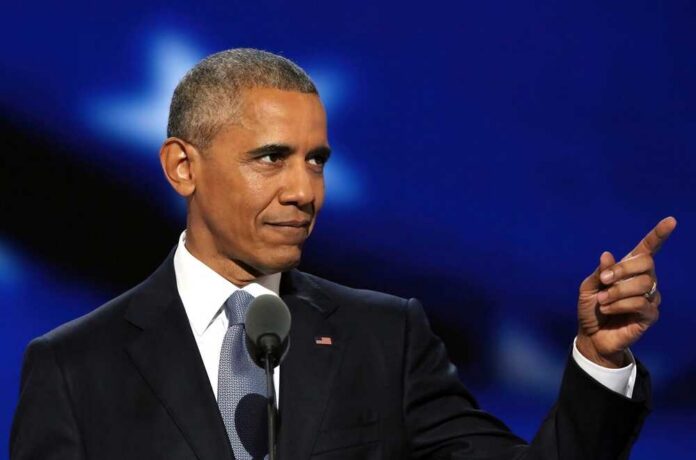
Barack Obama’s Ohio broadside turned a single campaign ad into a statewide test of decency, judgment, and what voters will reward.
At a Glance
- Obama condemned Vivek Ramaswamy’s ad featuring Amy Acton’s estranged mother, calling it a new low.
- The Ramaswamy campaign took credit and planned a $4 million buy to air it widely.
- Reporters identified the on-camera speaker as Acton’s birth mother, Donna Arthur.
- Republican leaders in Ohio and national outlets flagged bipartisan backlash and a rushed cutdown edit.
What Triggered The Firestorm
The ad put Donna Arthur, Amy Acton’s birth mother, on camera to accuse Acton of lying about her past. National Public Radio identified Arthur and quoted her charge, which the spot echoed in blunt phrases like “She is a liar”. The Ramaswamy campaign stepped forward after the video spread online and said it produced the ad. A campaign spokesperson said they would spend millions to push it on television and streaming platforms. Obama then attacked the ad at an Ohio rally, amplifying the fight.
Obama tears into Vivek Ramaswamy over his attack ad saying no political office is worth sinking that low and calling it an affront to basic decency#Europost pic.twitter.com/H3DYSi8sTA
— EuroPost Agency (@EuroPostAgency) October 25, 2026
The core claim in the ad is sharp but thin: it labels Acton dishonest without laying out a specific, testable falsehood in public records. Reporters did not cite documents or witnesses to back up Arthur’s charge. That leaves the ad resting on a personal allegation that voters cannot easily verify. For a message this explosive, the lack of disclosed evidence becomes the story’s soft underbelly. Voters sniff that out fast, and so do party elders.
Obama’s Charge And The GOP’s Bind
Obama told Ohio voters the ad crossed a moral line, tying it to Acton’s own public account of childhood abuse, neglect, and homelessness. He framed the spot as a breach of basic decency expected from officials and candidates. That message landed because it named a norm most people share: do not weaponize a person’s trauma for votes. When a national figure spells that out, it hardens swing-voter reactions and pressures local allies to distance themselves quickly.
Ohio Republicans faced a fast choice: defend the tactic or urge a reset. Coverage described calls from GOP leaders for the ad’s removal and noted the campaign’s shift from a 60-second version to a 30-second cut after the backlash. That move signaled damage control more than confidence. Shortening a controversial ad often means stripping the risky lines and trying to hold onto the punch. It rarely calms a storm already raging.
What The Campaign Says It Was About
Ramaswamy said the ad was about honesty, not Acton’s abuse history. He argued the point was character, and that a close relative’s view matters to that question. The problem is that the speaker’s relationship is inseparable from the family history that shaped the estrangement. When the ad omits that context, people assume the worst motives. If you claim character is the issue, you must show receipts. Character attacks without facts feel like a cheap shot to middle-of-the-road voters.
There is also the mental health insinuation that multiple outlets flagged in their descriptions of the ad. That line of attack demands real evidence, which was not presented in the public material. Without clinical backing, it reads as stigma, not scrutiny. That kind of swipe offends both conservatives who value personal responsibility and privacy, and moderates who want campaigns to talk about jobs, schools, and safety. The knife cuts both ways when it looks like innuendo.
The Strategic Math: High Heat, Low Yield
Negative ads can grab attention, but research shows they do not always move votes more than positive ones, and they can boomerang on the sponsor. Two major reviews found little proof that going harsh is a winning bet on average. The attacks may inform, but they also raise the attacker’s negatives. In close races, that trade can be fatal. When the message is personal, unverifiable, and repeated at scale, backlash risk spikes even more.
The $4 million buy locked the Ramaswamy campaign into the outcome. Big frequency means big consequences if the ad feels unfair. Once Obama framed it as indecent, every airing became a reminder of that frame. The smarter play for any campaign is simple: state the specific claim, prove it with records, and link it to a policy choice that affects people’s lives. Facts beat innuendo, and voters reward clarity over cruelty.
Sources:
cbsnews.com, nbcnews.com, pbs.org, annualreviews.org