
Russia lost a Cold War workhorse in minutes, and six airmen with it.
Story Snapshot
- A Tu-95 strategic bomber crashed during a training flight in Russia’s Amur region.
- Six crew members died; one survivor was hospitalized, officials said.
- The crash site was in an unpopulated area; no weapons were aboard, per reports.
- An investigation team was sent to the site; early focus points to technical failure.
A Fatal Training Flight In Russia’s Far East
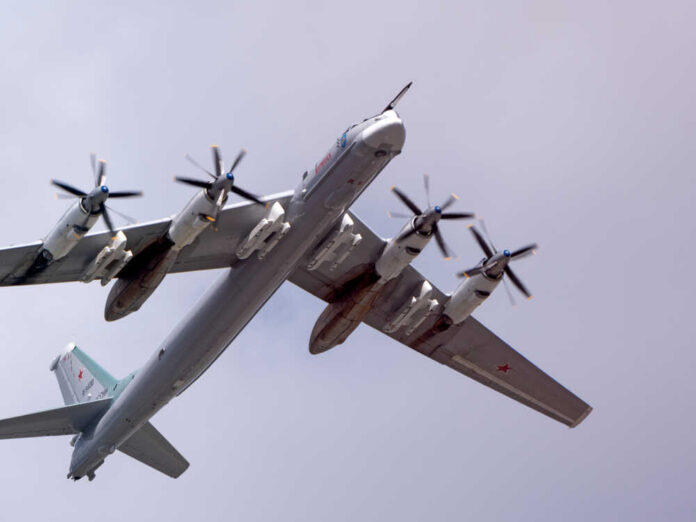
Russia’s Defense Ministry said a Tu-95 strategic bomber went down during a training flight in the Amur region on September 29, killing six crew members and injuring one. The ministry said the bomber crashed in an unpopulated area. The survivor was taken to a hospital.
Russian state outlet TASS carried the formal statement, which confirmed the aircraft type and location. Associated Press and ABC News matched these details and added that the aircraft was not carrying weapons during the sortie.
A Russian Tu-95MS Bear heavy bomber crashed on takeoff in Amur this evening during a training flight.
The airframe is a total loss, with no survivors reported. pic.twitter.com/tbujV6RVP5
— OSINTtechnical (@Osinttechnical) September 29, 2026
The Tu-95, known for its four roaring turboprop engines and long range, has served since the Cold War. It remains a backbone of Russia’s long-range aviation, able to launch cruise missiles from far outside hostile airspace.
Moscow often uses the type for patrols and training that can last many hours. The Amur region hosts major bomber bases, so training flights there are routine. Officials said an aerospace forces commission flew to the site to start the investigation.
Why The Tu-95 Keeps Flying
Russian commanders keep the Tu-95 in service because it does three hard jobs well: it carries heavy payloads, flies far, and loiters for hours. Modern avionics and new missiles let the old airframe stay relevant. The bomber’s long history also carries a record of accidents.
Past losses often trace to engine issues or onboard fires, a known risk with aging but heavily used aircraft that push powerplants hard during takeoff and climb. A pattern like that shapes today’s early suspicions.
Russia’s initial releases on accidents tend to be short, then expand over time as probes advance. That does not hide the core facts here, which many outlets with different leanings have reported the same way: a training flight, a crash in an unpopulated area, six dead, one survivor, and no weapons onboard.
The through-line matches earlier Tu-95 incidents and broader Russian aviation reporting norms. A criminal case and technical review usually follow, which officials have already signaled in this case.
What The Crash Signals For Readiness
Every strategic bomber is scarce and crew expertise takes years to build. Russia can ill afford losses like this while it leans on long-range aviation for deterrence and combat roles.
A crash on a training flight raises obvious questions about maintenance loads, spare parts, and sortie tempo. If the cause proves to be technical failure, it would line up with prior Tu-95 events and with the strain of flying older airframes often and hard to meet operational goals.
BREAKING: Russian Tu-95 Bomber Crash Kills 6 in Amur Oblast
Read more : https://t.co/djh5z1ZwHz
A Russian Tu-95 strategic bomber crashed during a training flight in the Amur region on September 29, killing six crew members. One crew member survived and was hospitalized.
The… pic.twitter.com/Ebpj6L0BIq
— AirMedia24 (@AirMedia24) September 30, 2026
From a common-sense view, readiness rises from discipline: sound gear, steady training, and honest assessments. When a mature fleet keeps flying, the checklist must be ruthless.
If Russia’s investigation confirms a preventable failure, leaders face a choice between fewer flights with higher safety or continued pace with rising risk.
Nations that keep bombers for deterrence invest in engines, inspections, and crew rest first. Skipping that bill only shifts the cost to a later, harsher ledger.
Sources:
nbcnews.com, abcnews.com, apnews.com, aljazeera.com, migflug.com