
A U.S. strike that killed 2 men and left 6 survivors floating in the Pacific is raising hard questions about how Washington is waging its new war on “narco‑terrorist” boats.
Story Snapshot
- The Pentagon says the boat was tied to drug cartels and terrorist groups but has shared no public proof.
- This strike is part of a larger campaign that has killed more than 210 people in over 60 boat attacks.[4]
- Survivors’ fate is unclear even though the Coast Guard was notified for search and rescue after the blast.[4]
- A Pentagon watchdog review and lack of evidence fuel worries about rules, transparency, and possible mission creep.[23]
What We Know About The Latest Deadly Strike
According to the Defense Department, American forces hit an alleged drug-smuggling boat in the eastern Pacific on a Sunday, killing two people on impact and leaving six survivors in the water.[4] U.S. Southern Command said the vessel was on a known smuggling route and that intelligence confirmed it was engaged in narcotics operations, but it did not release evidence that drugs were on board.[4]
The command said it notified the U.S. Coast Guard to activate search and rescue, yet public reports do not confirm whether the survivors were ever picked up.[4]
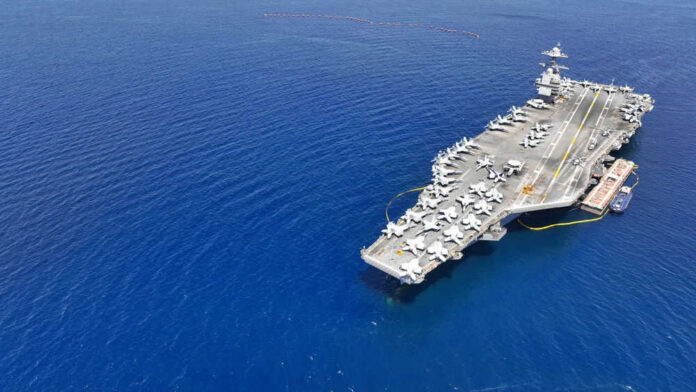
Coverage based on Associated Press reporting notes that this strike is one more in a long-running effort under the Trump administration to hit what the Pentagon calls “narcoterrorists” using small boats across Latin American waters.[4] The eastern Pacific and Caribbean Sea have been the main focus, and U.S. officials argue these routes feed deadly drugs into American communities.
For this latest case, however, neither the identities of the dead nor the survivors are public, and there are no cargo records, photos of seized drugs, or partner-government reports to back up the trafficking claim in open sources.[5]
US strike on an alleged drug boat kills 2, leaves 6 survivors, in the eastern Pacific Ocean https://t.co/sZVYkxLv82
— O.C. Register (@ocregister) June 22, 2026
A Growing Campaign With A Rising Death Toll
The Sunday blast did not happen in isolation. Reporting based on Pentagon figures says the campaign has now passed 60 strikes on alleged drug boats since it began in early September, with more than 210 people killed so far.[4] Earlier in the same week, U.S. forces reportedly hit another suspected drug vessel in the eastern Pacific, killing one man and leaving two survivors.[6]
As with the most recent action, Southern Command said the boat was on a known smuggling route and posted a short video clip of the strike, but again offered no public proof that the vessel carried narcotics.[6]
In story after story, the public pattern looks the same. Southern Command releases a brief statement and tightly edited video saying intelligence confirmed the vessel was run by a “designated terrorist organization” and was engaged in narco‑trafficking.[2]
Independent outlets then repeat that language while also noting that no underlying intelligence, legal memos, or chain-of-custody records have been released.[4]
A broader review of the months-long campaign finds at least 200 deaths across the Caribbean and eastern Pacific, almost all on small civilian-style boats, with only a handful of known survivors rescued after strikes.[21]
Evidence Gaps And Oversight Concerns
For many, the most troubling part is not that the United States is taking on murderous cartels, but that Washington is asking the public to accept life-or-death designations on trust alone. Reports on this latest strike and earlier ones stress that the military has not provided proof that any of the targeted vessels were actually carrying drugs at the moment they were destroyed.[4]
Names of those killed are almost never given, which means citizens cannot independently check whether they were cartel gunmen, forced couriers, or something else entirely.[22]
US military kills 3 in latest strike on suspected drug-smuggling boat in eastern Pacifichttps://t.co/Zx7G0qssyz
— KTXS News (@KTXS_News) June 19, 2026
That secrecy has now drawn formal scrutiny. The Pentagon’s own watchdog has opened a review into whether the U.S. military followed an established targeting framework when it carried out these attacks on alleged drug-smuggling boats.[23]
Separate investigations trace the campaign back to Trump-era orders to treat some Latin American criminal networks as “narco‑terrorist” threats, including groups like the Venezuelan organization Tren de Aragua, and to hit their boats along coasts from Venezuela to Peru.[24]
A running tally compiled from public strikes counts more than 60 vessels hit and over 210 deaths by mid‑2026, with critics warning about possible “extrajudicial killings” at sea.[2]
Sources:
[2] Web – US strike on alleged drug smuggling boat kills 3 in eastern Pacific
[4] Web – US military strikes alleged drug boat in eastern Pacific, killing 2 – …
[5] Web – US military strikes alleged drug boat in eastern Pacific, killing 2 – …
[6] Web – US military strikes alleged drug boat in eastern Pacific, killing 2 – …
[22] Web – US military kills three in new Eastern Pacific boat strike – Al …
[23] Web – U.S. military strike on alleged drug boat in Pacific Ocean kills 3 …
[24] Web – US military kills three ‘narco-terrorists’ in latest lethal strike on …