

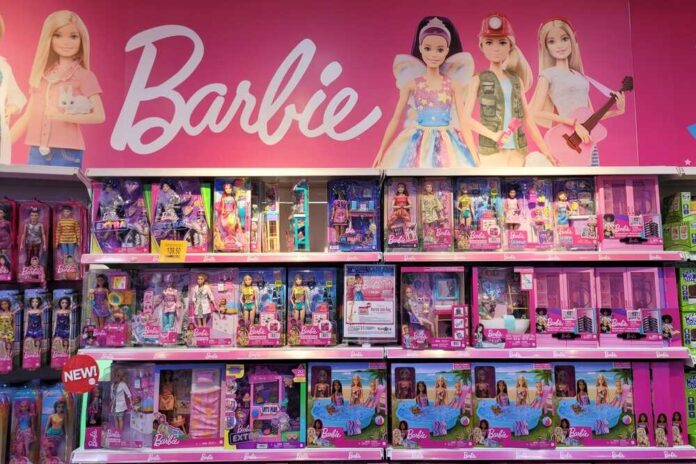
Mattel’s latest diversity push, an autistic Barbie, sparks debate about the direction of American values.
Story Snapshot
- Mattel introduces an autistic Barbie, aiming to promote diversity and inclusion.
- The doll was developed in partnership with the Autistic Self-Advocacy Network.
- Critics argue that such moves distract from traditional values and childhood innocence.
- The doll exhibits traits of autism, such as averted eye contact and joint rigidity.
Mattel’s New Autistic Barbie: A Step Towards Inclusion
Mattel Inc. has announced the launch of a new Barbie doll designed to represent individuals with autism. This latest addition to their Fashionistas line aims to celebrate diversity and foster inclusivity.
Developed in collaboration with the Autistic Self-Advocacy Network, this Barbie attempts to mirror the unique ways autistic individuals perceive the world. The doll features subtle design elements, like slightly averted eyes, to reflect common autistic traits.
Mattel unveils autistic Barbie as the newest member of its line intended to celebrate diversity and inclusionhttps://t.co/3iPHcaB1lj pic.twitter.com/uWY3dXVDKs
— The Washington Times (@WashTimes) January 12, 2026
This initiative is part of Mattel’s broader strategy to diversify its toy offerings, which includes dolls with Down syndrome, hearing aids, and other disabilities.
According to Noor Pervez, the community engagement manager at the Autistic Self Advocacy Network, the aim is to illustrate the varied manifestations of autism, which can be pretty challenging due to the disorder’s complexity and invisibility. By introducing this Barbie, Mattel hopes to provide a more representative toy for children with autism and their peers.
Concerns Over Traditional Values
Despite Mattel’s intentions, some critics question whether such initiatives detract from traditional family values and childhood innocence. There’s a growing concern among conservative circles that the constant push for diversity may overshadow fundamental principles that many hold dear.
The emphasis on creating toys that represent various disabilities could be seen as a distraction from more critical issues facing American families today, such as economic stability and moral education.
Further, critics argue that the focus on diversity in toys might inadvertently contribute to the erosion of traditional play, where imagination and creativity should take precedence over socio-political statements.
The question remains whether such efforts genuinely benefit children’s development or serve as a marketing strategy to align with politically correct trends.
The Broader Impact on Society
As society continues to navigate the balance between inclusivity and tradition, the introduction of the autistic Barbie serves as a microcosm of larger cultural debates.
While some praise Mattel for its progressive stance, others worry about the implications for societal values and priorities. The conversation around this new Barbie highlights the ongoing tension between embracing diversity and maintaining core conservative principles.
Ultimately, the impact of Mattel’s decision will be gauged by consumer reception and the broader cultural dialogue it sparks. As the toy becomes available at major retailers, it prompts a reflection on the role of toys in shaping children’s perceptions and the values they learn through play.
The introduction of the autistic Barbie could either enrich the toy landscape or prompt further scrutiny of the direction societal values are heading.