
A 27-year-old from Gainesville walked into what he thought was an AIPAC office with an AR-15 and a silencer — and found no one there.
Story Snapshot
- Federal grand jury indicted Forrest Kendall Pemberton for an alleged attempted mass shooting of Jewish victims.
- Prosecutors say he brought an AR-15-style rifle with a silencer to a pro-Israel lobbying office on December 23, 2024.
- The building was empty, so no one was harmed, but he now faces a possible life sentence if convicted.
- The case sits at the tense intersection of rising antisemitism, gun violence, and debates over hate crime laws.
An alleged plot aimed at a pro-Israel office
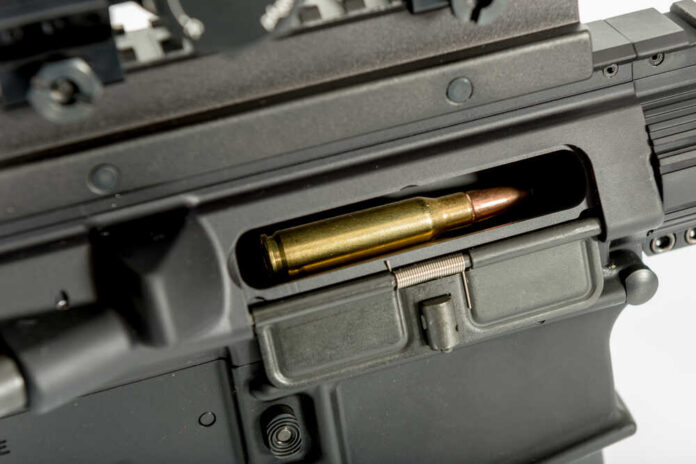
Federal prosecutors say Forrest Kendall Pemberton armed himself with an AR-15-style rifle fitted with a silencer and drove to the South Florida office of a nonprofit that lobbies the United States government in support of Israel.[2] Reports identify the target as the American Israel Public Affairs Committee, one of the most influential pro-Israel advocacy groups in the country.[7][10]
Court records state that on December 23, 2024, he allegedly aimed to carry out a mass shooting of the organization’s Jewish employees because of their race and religion.[2][6]
A federal grand jury in the Southern District of Florida returned an indictment charging him with attempted hate crime, using and carrying a firearm during a crime of violence, and possession of a short-barreled rifle.[2][6]
If a jury finds him guilty, the hate crime count alone carries a maximum of life in prison, with up to 30 additional years for the firearm offense and five years for possessing the short-barreled rifle.[2][4][6] The case number in federal court is 25-cr-60040, signaling that this is not social media theater but a live criminal file.[6]
A loaded rifle, an empty building, and a legal line
Local coverage adds one detail that changes the emotional punch of the story: the building was empty when he allegedly arrived.[4] No shots were fired and no one on site was injured or directly threatened.
Yet according to the indictment, he had already crossed a serious line by bringing a silenced rifle to the doorstep of a specific, Jewish-identified workplace with an alleged plan to kill its staff.[2][6] That is where federal hate crime law comes in — it does not wait until bodies are on the floor to treat targeted violence as a national concern.[17]
The Justice Department’s own press release stresses a point many people forget in heat-of-the-moment reactions: an indictment is an allegation, not proof.[6] Pemberton is presumed innocent until prosecutors convince a jury beyond a reasonable doubt.
From a rule-of-law lens, that presumption matters, especially in emotionally charged hate crime cases. At the same time, ignoring detailed allegations of a silenced AR-15 at a pro-Israel office would be reckless toward public safety and toward Jewish communities that are already on edge.[19]
Why a hate crime charge raises the stakes
To bring a federal hate crime case, prosecutors must show the planned violence was driven by bias against protected traits such as race or religion.[19] Here, they say Pemberton targeted “Jewish victims” at a pro-Israel advocacy office because they were Jewish, not just because it was a random building.[2][6]
That framing lines up with a grim pattern. Jewish people face one of the highest per-capita rates of hate crime victimization in the United States, and since 2018 several deadly attacks have hit synagogues and other Jewish spaces with similar rifle-style weapons and explicit antisemitic rhetoric.[19]
From a common-sense perspective, it matters whether this was just a disturbed man with a gun or a man intentionally aiming at Jews. Hate crime law tries to capture that extra layer of harm.
When someone chooses targets based on religion and race, the message is meant for every member of that group, not just whoever happens to be in the room. That is why Jewish advocacy groups and many law-and-order Americans support strong enforcement against proven, bias-driven attacks.[17][19]
Open questions, mental crisis, and due process
Publicly available records do not yet show direct quotes from Pemberton expressing antisemitic beliefs, such as social media posts or written manifestos.[2][4]
Some reports describe him telling investigators he did not know if he would end his own life and that getting caught might be “the way out,” suggesting a severe personal crisis mixed with whatever his political or religious views might be.[4][21] There is mention of a note to his family about “living in a flawed system” and “breaking the loop,” but the full context has not been released.[4]
These gaps matter for anyone who cares about both safety and civil liberties. If digital forensics later show a long trail of antisemitic content, that would strongly support the hate-crime motive. If they do not, defense lawyers will likely argue that prosecutors stretched the definition of hate crime too far.
Research on mass shootings shows many attackers blend personal grievance, suicidal thinking, and ideological themes.[21] Sorting those threads is hard work. That is why forensic analysis, psychological evaluation, and witness testimony at trial will be crucial before the public reaches a fair judgment.
Guns, hate, and a pattern we would rather ignore
National data show that more than 25,000 hate crimes each year in America involve a firearm, roughly 69 incidents every day.[19]
Jews, along with other religious minorities, face a disproportionate share of this violence. In that bigger picture, a silenced AR-15 pointed at an office believed to be AIPAC does not look random; it looks like part of a lethal trend where ideological anger and easy access to weapons make certain communities permanent targets.[19][24] Many attackers study previous shootings and seek the same sick notoriety.[21]
Florida Man Indicted for Attempted Mass Shooting Targeting Jewish Victims
A federal grand jury in the Southern District of Florida has returned an indictment charging a Florida man with federal hate crime and firearm offenses for allegedly attempting a mass shooting targeting…
— DOJ Civil Rights Division (@CivilRights) June 18, 2026
For those who care both about the Second Amendment and about protecting churches, synagogues, and community institutions, this case is a test of balance. The gun itself did not commit a crime sitting in a safe.
The alleged choice to bring it, with a silencer, to a specific Jewish advocacy office at a specific time turned it into the centerpiece of a federal indictment.[2][6] Respecting due process while taking such targeted plots seriously is not “political correctness”; it is basic responsibility in a free society.
Sources:
[2] Web – Florida Man Indicted for Attempted Mass Shooting Targeting Jewish …
[4] Web – Grand jury indicts Florida man in alleged hate crime targeting …
[6] Web – U.S.–Israeli Citizen Extradited from Norway Is Arraigned in Orlando …
[7] X – Thank you to @TheJusticeDept, @AAGDhillon, @FBI, and …
[10] Web – AIPAC ATTACK THWARTED: The FBI says it foiled an apparent plot …
[17] Web – United States Department of Justice | Hate Crimes | Case Examples
[19] Web – the Deadly Intersection of Guns and Hate-Motivated Violence
[21] Web – Public Mass Shootings: Database Amasses Details of a Half Century …
[24] Web – Gun Violence Facts About Anti-Religious Violence and Hate Crimes