

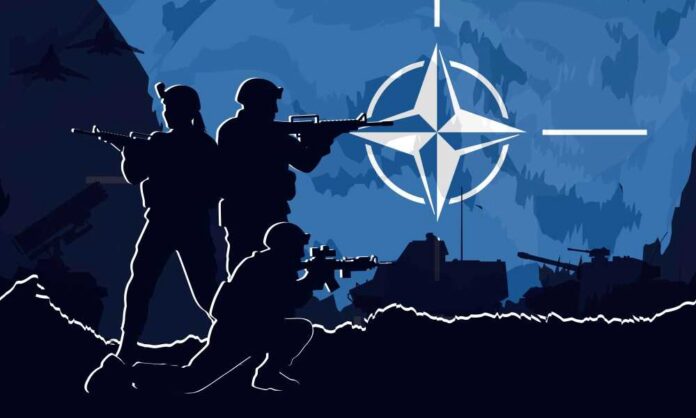
At the NATO summit in Turkey, President Trump warned he could pull every American soldier out of Europe if Denmark refuses to hand over Greenland, turning decades of foreign policy on its head and putting allies on notice that the free ride is over.
Story Snapshot
- Trump tells NATO leaders the U.S. “could remove all of our soldiers out of Europe” over Denmark’s refusal to give up Greenland.
- The administration is already cutting forces and long‑range weapons in Europe, while experts outline a wider drawdown plan.
- European leaders, used to U.S. protection, are shocked and scramble to talk up their own defense spending.
- NATO officials and media try to downplay the changes, even as their own reports admit U.S. support is shrinking.
Trump’s Greenland Ultimatum Shakes NATO
President Donald Trump used the NATO summit in Ankara, Turkey to issue one of his toughest warnings yet to America’s European allies. Speaking alongside Turkish President Recep Tayyip Erdogan, Trump said the United States could “remove all of our soldiers out of Europe” if Denmark refuses to give up control of Greenland.
He argued that U.S. taxpayers spend heavily to defend Europe from Russia, while key partners ignore American concerns and block U.S. strategic interests tied to Greenland’s location near Arctic sea lanes and rival warships.
Trump renews Greenland threats at NATO summit, says U.S. could remove troops from Europe https://t.co/UU16k4XkS7
— CNBC (@CNBC) July 7, 2026
Trump’s comments land on top of real troop cuts that are already underway, not just talk. The Pentagon has confirmed that about 5,000 American troops will be withdrawn from Germany, a move that surprised European leaders and came amid a public clash with German Chancellor Friedrich Merz over U.S. policy in the conflict with Iran.
Some forces have already left Romania, and NATO officials admit they are now working with Washington to “clarify the specifics” of a broader reduction in Germany and elsewhere.
A Longer-Term Drawdown Of U.S. Firepower In Europe
Defense analysts say Trump’s hard line at the summit matches a deeper shift in how the U.S. is positioned across Europe. One detailed review describes a plan to withdraw the 2nd Cavalry Regiment from Germany, cancel planned brigade rotations to Poland, and pull several fighter squadrons by 2030, reshaping the conventional forces that have guarded Europe for decades.
Other reports note U.S. decisions not to deploy a long‑range fire unit, to cancel the deployment of 4,000 troops, and to remove key long‑range military capabilities from NATO, including an aircraft carrier and support ships in a crisis.
NATO’s own leadership is trying to calm fears while quietly adjusting to a future with less automatic U.S. muscle. Secretary‑General Mark Rutte has stressed that the United States “is not in the process of pulling additional troops from Europe” right now, and that current moves focus on who does what if NATO’s defense plans are activated.
At the same time, he admits the Pentagon has notified allies of reduced support and says the NATO supreme allied commander, an American officer, is already drawing up contingency plans to safeguard Europe with fewer promised U.S. assets. That means European governments are being pushed to take more responsibility for their own defense, rather than counting on Washington by default.
Europe Scrambles To Spend More While Media Mocks Trump
Trump’s pressure campaign is having an effect on allied wallets, even as many politicians and media outlets complain loudly. Rutte cites an extra 139 billion dollars in core defense spending by Europe and Canada in the last year alone, a jump of about 20 percent as governments rush to meet long‑ignored NATO pledges.
European leaders admit the timing of Trump’s Germany troop decision caught them off guard and see it as a signal that they must “prioritize their own defense,” instead of assuming the U.S. will always pick up the tab. Academic research backs this up, finding that clear U.S. threats of withdrawal make European voters far more willing to raise defense budgets.
NATO Meets in Ankara. Trump Is Already Threatening to Walk.
NATO leaders will gather in Turkey this week with the alliance under more strain than at any point since its founding. Trump has threatened to withdraw from NATO, pulled troops from Germany, and is furious that most…
— RANE (@RANEnetwork) July 6, 2026
At the same time, the usual chorus of experts and outlets is working hard to paint Trump’s approach as “misguided” or empty. A War on the Rocks analysis slams his troop policy as misunderstood, while still confirming major cutbacks and a long‑term reduction of U.S. conventional forces.
Euronews runs video commentary insisting Trump’s withdrawal order “does not change anything for NATO’s deterrence and defense,” even though NATO’s own planners are now rewriting backup plans around fewer guaranteed U.S. assets.
Other think tanks warn that America’s step‑back is an “accelerating decoupling” from European security, showing that the real shift is happening even as critics mock the messenger.
Sources:
cnbc.com, euronews.com, warontherocks.com, defensepriorities.org, washingtonpost.com, youtube.com, reuters.com, aljazeera.com, apnews.com, pbs.org, thehill.com, cfr.org, bbc.com, facebook.com