
U.S. forces hit Iran’s Islamic Revolutionary Guard Corps units after two American troops were killed in Jordan, and Washington says the punishment has only begun.
Story Snapshot
- Two U.S. service members were killed and one remains missing after strikes in Jordan.
- U.S. Central Command said it targeted Revolutionary Guard forces tied to the attack.
- Iran’s Revolutionary Guard claimed strikes on U.S. sites across the region.
- Officials framed U.S. airstrikes as swift punishment and deterrence against future attacks.
What Happened And Why It Matters
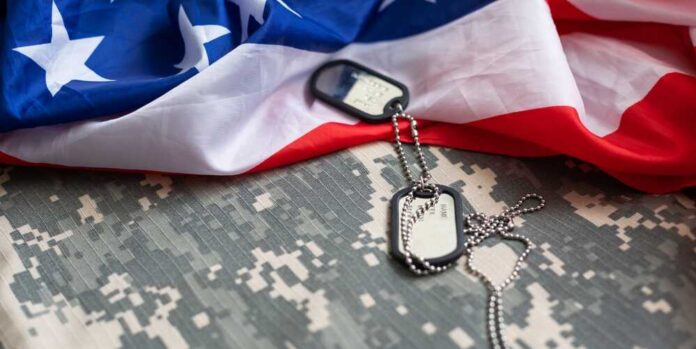
U.S. Central Command confirmed that two American service members died and one is missing after missile and drone strikes hit U.S. and partner forces in Jordan on July 17, 2026. The United States answered with new airstrikes inside Iran and against Iran’s Islamic Revolutionary Guard Corps units believed to be behind the Jordan attack.
Senior officials said the goal was to degrade Iran’s ability to target U.S. forces and to swiftly punish the units that spilled American blood. The clear message: hit Americans, expect hard and fast payback.
The U.S. conducted a new round of airstrikes early Monday targeting Iran after announcing the death of another American service member, hitting around a northwestern city believed to be home to underground missile bases. https://t.co/7MSQmyv3Da
— NBC10 Boston (@NBC10Boston) July 20, 2026
Iran’s Revolutionary Guard publicly claimed attacks on U.S.-linked targets in Jordan and other regional states as retaliation for earlier American strikes. State media and allied outlets described missile and drone volleys at air bases and air defenses, boasting of damage to fuel storage and aircraft shelters.
These claims fit a familiar cycle: Iran signals resolve and reach, while the United States restores deterrence by striking back at the fighters and the gear that enabled the hit. Each side wants the last word, and neither wants to look weak.
How The U.S. Targeted The Response
Defense officials described a broad target set designed to blind and disarm, not just to make headlines. Strikes hit coastal surveillance nodes, air defense systems, maritime assets, and storage for missiles and drones that threaten U.S. forces and shipping lanes.
Central Command said it also focused on the specific Revolutionary Guard elements linked to the Jordan attack. This is classic counterstrike logic: remove sensors, burn stockpiles, and wreck the hands that launched the blow. It signals precision, not a blank check for war.
Public reports also noted a sustained tempo, with repeated nightly raids to keep pressure on Iran’s military network. Officials framed the pace as a way to cut the risk of follow-on attacks, to deny regrouping time, and to show American staying power.
That choice aligns with long-standing common sense in American strategy: peace through strength only works if the other side believes you will act, again and again, until the shooting stops.
Claims, Proof, And The Pattern Of Blame
The Revolutionary Guard’s claim of responsibility for the Jordan strike simplifies attribution, but it does not remove every question about timing or methods. The region has seen fast claims and fast counterstrikes before. Between late 2023 and early 2024, nearly 190 attacks hit U.S. sites in Iraq and Syria, many claimed by Iran-linked groups.
Washington often responds based on its own intelligence rather than public forensics. That pattern fits here: a public claim from Iran’s Guard, a U.S. statement tying specific Guard units to the attack, and targeted blows in return.
This cycle has risks. Each strike can trigger the next, and misreads travel fast. But the core facts in this episode align: Americans were killed in Jordan, Iran’s Guard claimed regional strikes, and the United States hit back at Guard units and military infrastructure tied to the threat.
What To Watch Next
Three questions drive the next phase. First, does Iran try another high-profile hit to prove it can absorb punishment? If yes, expect the United States to widen the target deck to include more command, control, and logistics nodes.
Second, can Washington keep partners on board? Jordan, Gulf states, and Israel watch for signs that U.S. strikes reduce risk to their soil, not raise it. Third, does U.S. pressure bite? If missile and drone stockpiles shrink and surveillance goes dark, the Guard has fewer cards to play.
🇺🇸|US Military Strikes Iran for Eighth Consecutive Night
On July 18, 2026, U.S. Central Command (CENTCOM) announced the completion of another round of airstrikes against Iran. This marks the eighth consecutive night since July 11 that U.S. forces have conducted military strikes… pic.twitter.com/vYvtze8L5O
— Aprajita Nafs Nefes 🦋 Ancient Believer (@aprajitanefes) July 19, 2026
Americans will also look for clarity on the missing service member and the condition of wounded personnel. The human cost sets the tone for public resolve. When troops are killed, patience for half-measures fades.
That is why the administration stressed both speed and focus: swift punishment for the units that fired, and smart hits that keep the broader war contained. That balance is hard, but it aligns with basic common sense: be firm, be clear, and keep the mission tight.
Sources:
apnews.com, irishtimes.com, en.mehrnews.com, caliber.az, timesofisrael.com, reuters.com, cptik.org