

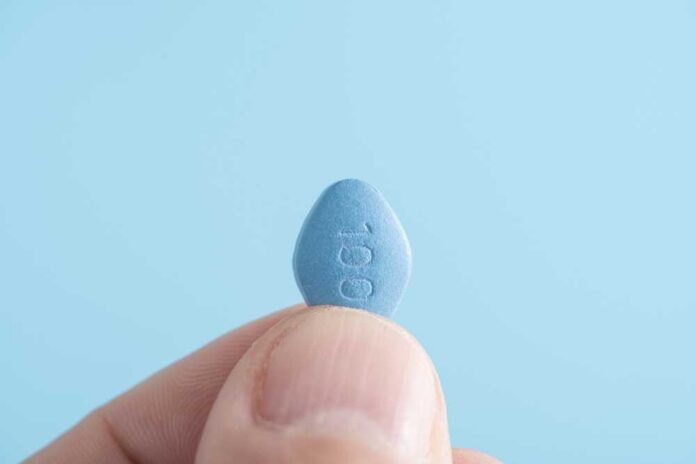
A popular erectile dysfunction drug just showed a surprising new trick in the lab: it helped aging muscle cells survive longer.
Quick Take
- Italian researchers found tadalafil, the active ingredient in Cialis, boosted survival of muscle precursor cells in a seven-day mouse study.
- The same drug also slowed those cells from maturing into full muscle fibers, a trade-off scientists flagged directly.
- The study used mouse cells in a lab dish, not human patients, so real-world muscle benefits remain unproven.
- Earlier research on related erectile dysfunction drugs has already tied them to bone and blood flow changes in older men.
What The New Study Actually Found
Researchers at the University of Rome Foro Italico treated mouse muscle cells, called C2C12 myoblasts, with a steady dose of tadalafil for up to seven days. They tracked how the cells grew, survived, and changed over time. The results appeared in Molecular Biology Reports on October 10, 2026. The drug clearly changed how these cells behaved in the dish.
Cells treated with tadalafil multiplied faster and died less often than untreated cells at every time point the team measured. Muscle precursor cells matter because they are the raw material the body uses to build and repair muscle tissue throughout life. More of them surviving longer could, in theory, mean more repair potential, especially as natural muscle-building capacity fades with age.
The Catch Buried In The Same Data
The study did not stop at good news. Tadalafil also delayed these precursor cells from finishing their job, turning into mature, working muscle fibers. In plain terms, the drug seemed to keep cells in an earlier, less specialized stage longer than normal. That is not automatically a win. Having more raw material sitting around does not guarantee the body converts it into stronger, functional muscle.
This kind of trade-off shows up often in muscle biology. A cell pool can expand while differentiation slows, which sometimes signals a controlled, protective pause rather than straightforward improvement. Researchers framed the finding as worth exploring further, not as proof the drug builds muscle in people.
Why Scientists Are Not Ready To Call This A Fix For Aging Muscle
Every part of this experiment happened in a laboratory dish using mouse cells, not inside a living human body. Mouse cell cultures are a standard first step in biomedical research, useful for spotting a signal worth chasing. They are not a substitute for trials in actual aging men losing muscle mass and strength. That gap between a cell dish and a human body is where plenty of promising drug stories have stalled before.
A Pattern With Erectile Dysfunction Drugs And Aging Bodies
Tadalafil belongs to a drug class called PDE5 inhibitors, which widen blood vessels by boosting a molecule called cGMP. That same mechanism has already been linked to other effects beyond the bedroom. One study found tadalafil and a related drug, vardenafil, increased bone mass in animal models through combined effects on the body and brain. Another line of research found a related PDE5 inhibitor improved oxygen delivery to working muscle in older men, but not in younger men, hinting the effect may depend heavily on age.
That older-human research offers a useful comparison point. It shows the vascular boost from these drugs can produce measurable changes in exercising muscle among aging men specifically. But measurable blood flow changes did not always translate into every expected physical benefit in those same studies. A real mechanism in the body does not guarantee a broad performance upgrade just because the biology is plausible.
What This Means For Men Already Taking The Drug
Millions of men already take tadalafil, sold as Cialis, for its approved use treating erectile dysfunction. This study gives no indication the drug should be taken for muscle health, and no dosing or safety data support that use. The honest takeaway is narrower and more interesting than a miracle pill headline: a widely used drug may have biological effects on aging muscle tissue that scientists are only beginning to map out.
Conservative-minded readers who value sound evidence over hype should welcome that caution. A cheap, already-approved drug showing any unexpected biological activity is worth studying seriously, especially for a population facing age-related muscle loss with few good treatment options. But jumping from a seven-day mouse dish experiment to recommending the drug for muscle preservation would get far ahead of what the data actually shows.
UNEXPECTED UPSIDE: Researchers in Italy discovered that tadalafil — the active ingredient in the erectile dysfunction drug Cialis — boosted the growth and survival of muscle precursor cells in a lab study using mouse skeletal muscle cells.
The seven-day experiment, published in… pic.twitter.com/oetqIkfY0S
— Fox News Health (@foxnewshealth) October 13, 2026
For now, the honest headline is modest. A common erectile dysfunction pill nudged mouse muscle cells toward survival while slowing their maturity, a mixed result that earns more lab study, not a prescription change.
Sources:
foxnews.com, wfin.com, us.headtopics.com, pmc.ncbi.nlm.nih.gov, link.springer.com