
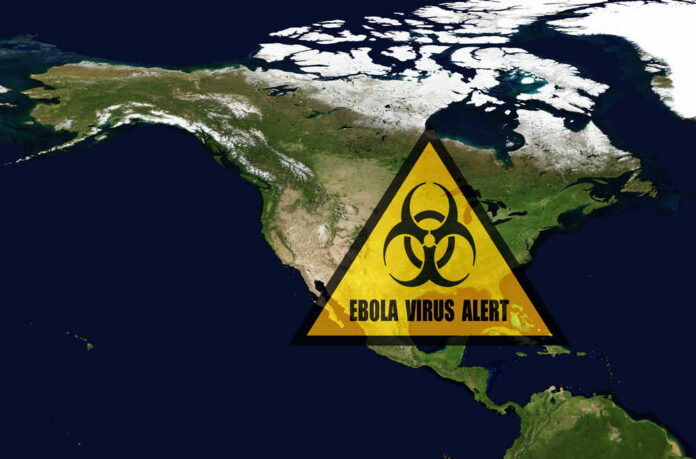
The fastest-moving Ebola story is not the virus itself, but the moment the World Health Organization decided the outbreak had crossed a line that demanded global attention.
Quick Take
- The World Health Organization declared the Ebola outbreak in Congo and Uganda a public health emergency of international concern.
- Officials cited confirmed spread, suspected deaths, and the risk of regional transmission across porous borders.
- The current strain is the Bundibugyo virus, which has no approved drug or vaccine, raising the stakes immediately.
- Health workers, border communities, and crowded transport routes are now the front line of containment.
Why WHO Escalated Now
The declaration reflects more than case counts. The World Health Organization said the outbreak had already produced at least 88 suspected deaths, including health workers, with hundreds of suspected cases under investigation [1].
That matters because Ebola spreads through close contact, not casual exposure, so every uncontained cluster becomes a multiplier. The agency’s message was blunt: if transmission keeps moving through eastern Congo and into Uganda, the region could lose its narrow window to stop it.
WHO’s concern is rooted in geography as much as virology. The outbreak sits in a borderland where people move for markets, family, work, and medical care. Reporting from Goma showed a confirmed case tied to travel from Bunia, and Ugandan authorities were already sanitizing travelers and checking temperatures [1]. That is how Ebola escapes a local headline and becomes a regional crisis: not with a dramatic leap, but with ordinary movement through ordinary crossings.
A Rare Strain With No Easy Backstop
The strain behind this outbreak is the Bundibugyo virus, and the coverage notes there are no approved drugs or vaccines for it [1]. That fact changes the equation. When a disease has no reliable pharmaceutical safety net, public health officials must lean harder on case finding, isolation, tracing, and border vigilance. This is where common sense and American instincts line up neatly: preventable spread is cheaper, safer, and more humane than waiting for hospitals to get overwhelmed.
Health authorities are also dealing with uncertainty about the real size of the outbreak. WHO said there are significant unknowns about how many people are infected and where the virus has already traveled [2]. That is exactly why emergency declarations exist. Critics often hear “emergency” and imagine panic. In practice, it usually means the data are incomplete, the margins are thin, and delay would be reckless. Waiting for perfect information during Ebola is how outbreaks outrun response.
Border Health Is Now the Deciding Battlefield
Uganda’s immediate response shows the logic of containment. Officials have not closed the border, but they are monitoring closely, screening travelers, and telling the public to stay alert [1]. That is the right balance. Broad shutdowns can damage livelihoods and panic the public, while targeted screening can catch risky movement without wrecking trade. WHO’s job is to push countries toward disciplined coordination, not theatrical gestures that look tough and accomplish little.
The bigger worry is that the outbreak may already be hiding in communities beyond the first few confirmed sites. WHO warned that limited understanding of the transmission chain leaves open the possibility of more infected people still moving through affected areas [2]. That is the nightmare scenario in Ebola: the visible case is often only the tip of a larger chain. Once families, caregivers, and local clinics get pulled in, the outbreak can accelerate before administrators even finish counting.
Why This Declaration Carries Weight
WHO has used this emergency tool before when Ebola threatened to cross borders and expose weak health systems [4]. That history matters because the agency does not reach for this language lightly. The point is not to dramatize disease for its own sake. The point is to force coordination, funding, surveillance, and disciplined public messaging before small failures become regional failures. A serious reading of this move would judge it by usefulness, not by whether it sounds alarming.
WHO declares global health emergency over Ebola outbreak in Congo and Uganda pic.twitter.com/bJtyF8dUH8
— Surender Kumar (@Surender_10K) May 17, 2026
The hard truth is that outbreaks like this punish hesitation. Ebola rewards speed, clarity, and institutional seriousness, while confusion gives the virus room to move [2][4]. The WHO declaration does not mean the whole world is in immediate danger, but it does mean the region cannot afford complacency. The next few days will show whether border screening, isolation, and contact tracing stay ahead of the virus or merely chase it after the fact.
Sources:
[1] Web – WHO declares Ebola a public health emergency | CIDRAP
[2] Web – World Health Organization declares Ebola outbreak an international …
[4] Web – Ebola outbreak in the Democratic Republic of the Congo declared a …