

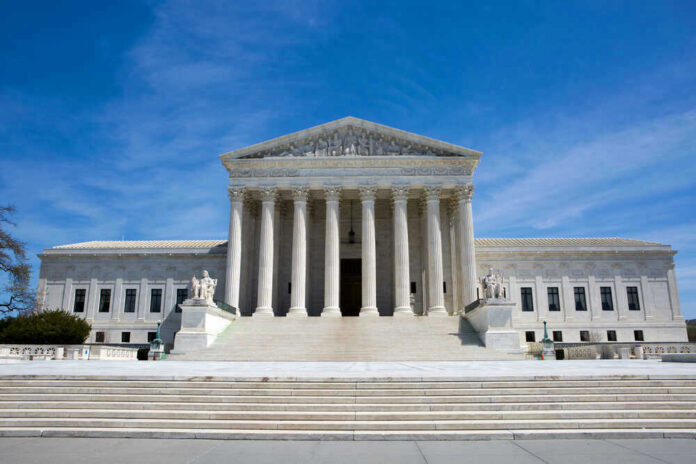
Justice Samuel Alito told the Supreme Court on Monday that he will sit out one of the biggest climate cases the Court has taken up in years.
Quick Take
- Supreme Court Clerk Scott S. Harris notified both sides on September 28, 2026, that Alito would not take part in Suncor Energy Inc. v. County Commissioners of Boulder County.
- The case decides whether Boulder can sue Suncor Energy and Exxon Mobil in state court over climate damage claims.
- Oral arguments are set for October 5, 2026, just one week after the recusal notice went out.
- Reports say Alito owns stock in oil and gas companies, though not specifically in Suncor or Exxon Mobil.
A One-Sentence Letter Changes the Lineup
The announcement came in a single sentence. Clerk Scott S. Harris wrote that Alito “has determined that he will not continue to participate in this case.”
No further explanation followed. Reuters and several other outlets confirmed lawyers for both the oil companies and Boulder County received the notice the same day, giving them barely a week’s notice before arguments begin.
Alito bows out of blockbuster Supreme Court climate case https://t.co/w6l6i5s4Zo
— POLITICO (@politico) September 28, 2026
News of the recusal spread fast. ABC News, CNBC, The Hill, USA Today, SCOTUSblog, CBS News, Politico, and CNN all ran the story within hours of each other on September 28 and 29.
That kind of near-simultaneous coverage tells you this wasn’t a quiet procedural footnote. It’s a signal that the case itself, and who decides it, matters a great deal to a lot of people watching energy policy and the courts.
What the Case Is Actually About
Boulder County sued Suncor Energy and Exxon Mobil years ago, arguing the companies should pay for climate-related damage tied to their fossil fuel operations. The oil companies want the fight moved out of Colorado state court and blocked entirely under federal law.
The Supreme Court agreed to hear the dispute, and how the justices rule could decide whether dozens of similar climate lawsuits filed by cities and counties across the country survive.
Coverage described the legal question a bit differently depending on the outlet. Some framed it around federal preemption. Others called it a jurisdictional fight over whether state courts can even hear the claims.
Either way, the outcome will shape whether local governments keep any real path to sue energy companies over climate harm, or whether the federal level closes that door.
Why Stock Holdings Are at the Center of This
Reuters and other outlets reported that Alito holds stock in several oil and gas companies, just not Exxon Mobil or Suncor Energy, the two companies named in the lawsuit. That detail matters.
Federal law requires judges to step aside when they have a financial interest in the “subject matter in controversy,” not only when they own stock in the exact company being sued. Broader energy holdings can still trigger the same conflict rules.
The Court’s clerk letter didn’t spell out the reasoning. That’s normal for the Supreme Court, which rarely explains recusal decisions and treats them as final, with no appeal and no public accounting of the analysis behind them.
Legal scholars have long flagged this as a transparency gap unique to the nation’s highest court, since lower federal judges typically face more disclosure pressure than the justices do.
A Familiar Pattern at an Unusual Court
This isn’t the first time a justice’s financial holdings have drawn scrutiny in a high-stakes case, and it won’t be the last. What sets the Supreme Court apart is that recusal decisions rest entirely with the individual justice, with no outside review and no requirement to publish reasoning.
That structure protects judicial independence, but it also leaves the public connecting dots from financial disclosures and news reports rather than an official record.
For conservatives who value clean process over political theater, Alito removing himself before a case with clear energy-sector stakes is exactly what the system should produce.
A justice recognizing a potential conflict and stepping back, without waiting for a formal challenge, reflects the kind of self-policing critics of the Court often say is missing. Whether Boulder’s case succeeds or fails, eight justices will now decide it with no cloud hanging over the ruling.
U.S. Supreme Court Justice Samuel Alito announced his recusal from the major climate change case Suncor Energy Inc. v. County Commissioners of Boulder County, stepping aside following intense public scrutiny over his personal financial holdings in oil and gas companies#News pic.twitter.com/iIl0D5Sj7E
— PEER COMMUNITY HUB, Our Empowerment Zone! 🇨🇦✌️ (@p_communityhub) September 29, 2026
Arguments proceed October 5 with Alito off the bench for this case. The remaining eight justices will decide whether Boulder’s climate lawsuit against Suncor and Exxon Mobil moves forward, a ruling likely to ripple through similar cases nationwide regardless of which way the Court leans.
Sources:
abcnews.com, thehill.com, nytimes.com, dailycaller.com