

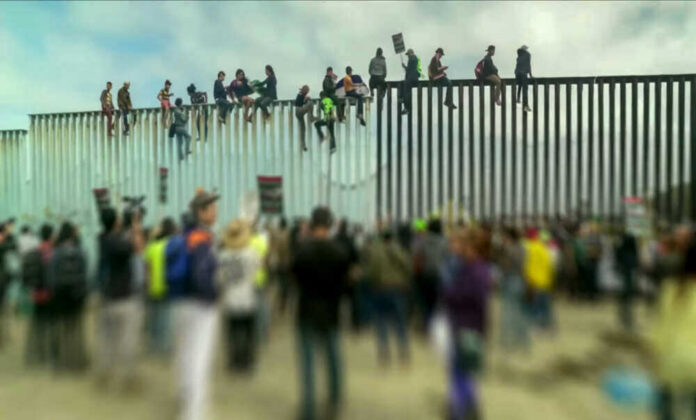
A caravan called “Faith and Hope” left Honduras, crossed into Mexico, and is marching north toward the United States border.
Story Snapshot
- Organizers and reports say the group grew from hundreds to several hundred as it traveled through southern Mexico.
- Departures traced to San Pedro Sula on September 20 with movement through Guatemala into Chiapas, Mexico.
- United States and Mexican authorities are tracking the caravan’s progress toward the border.
- Past caravans have surged into the thousands, drawing sharp political debate in Washington.
Caravan Route, Size, And Pace
Witness accounts and outlet reporting state the “Faith and Hope” caravan left San Pedro Sula, Honduras, on September 20, moved through Guatemala, and entered Mexico near the Suchiate River crossing into Chiapas.
Early counts put the group at several hundred, with numbers climbing past 600 as more joined on the road, according to summaries citing on-the-ground video and local monitoring.
Newsweek reported that the Department of Homeland Security said the United States Border Patrol is tracking the group’s northbound movement.
🚨Alert: Invasion Coming!! Thousands of illegal aliens march from Honduras through Mexico towards the US southern border, in hopes of entering the United States illegally!! Reports are coming out from southern Mexico!! pic.twitter.com/vNkQCei2Nb
— US Homeland Security News (@defense_civil25) September 27, 2026
Organizers and local media often report fast-changing totals as people join or fall away. Some outlets and analysts have noted prior caravans that swelled into the thousands across southern Mexico, underscoring how quickly these groups can expand once in motion.
That variance matters for logistics and for policy. A few hundred people can move in a loose column. Thousands turn into a mobile camp that strains small towns, roadways, and border posts along the route.
Who Is In The Group And Why They Travel Together
Regional outlets say the caravan includes people from Honduras and other countries in the region, with some adding travelers from the Caribbean and South America in similar past flows.
Caravans form because moving in numbers can add safety, lower costs, and force decisions from officials who slow-walk permits. Tapachula in Chiapas has become a bottleneck where many migrants wait months for paperwork, work authorization, or asylum decisions, fueling caravan departures when patience and savings run out.
Research from past years shows that caravans spike when people feel trapped in southern Mexico and see no legal path forward soon. Policy signals also shape behavior. When rules look tight and waits get longer, people band together and walk.
When policies lower risk or speed processing, groups disperse. The Baker Institute counted at least 30 caravans between 2017 and 2022, with many forming in 2021 as rules and enforcement shifted across the region.
How Authorities Respond Along The Route
Mexico’s federal and state agencies monitor caravans, sometimes escorting, sometimes dispersing them, depending on local capacity and national policy goals. The United States monitors from the start.
Newsweek reported that the Department of Homeland Security said the United States Border Patrol is tracking this caravan’s march through Mexico. That tracking feeds resource moves at ports of entry and in remote crossing zones where small towns cannot absorb sudden waves.
#News A migrant caravan of about 400 migrants is marching through Mexico on their way to the United States.
They left San Pedro Sula, Honduras, on Sept. 20 and are now in Tapachula, Chiapas, Mexico.#honduras
The caravan is reportedly being funded American NGOs that operate out… pic.twitter.com/5MjsSwldco
— Christina Aguayo (@ChristinaNewstv) September 29, 2026
Claims that caravans can grow fast deserve attention because large, organized arrivals can overwhelm border agents, local hospitals, and schools.
When officials act early, set clear rules, and close loopholes that pull people north, crossings tend to drop. When rules blur, people read that as a green light. The pattern is not subtle, and the incentives are obvious to anyone watching the border.
What This March Signals Next
This caravan shows three near-term pressures. First, southern Mexico remains a choke point where backlogs push people to walk in groups rather than wait alone. Second, northern border towns must prepare for a surge that may arrive unevenly, sometimes in a single day.
Third, Washington’s choices will echo far south. Clear, enforced policy matched with humane processing cuts chaos. Mixed signals breed caravans. That is the lesson of recent years, and it is repeating in real time.
Sources:
foxnews.com, kratko.news, newsweek.com, bbc.com, ground.news, bbc.co.uk, tandfonline.com, bakerinstitute.org