

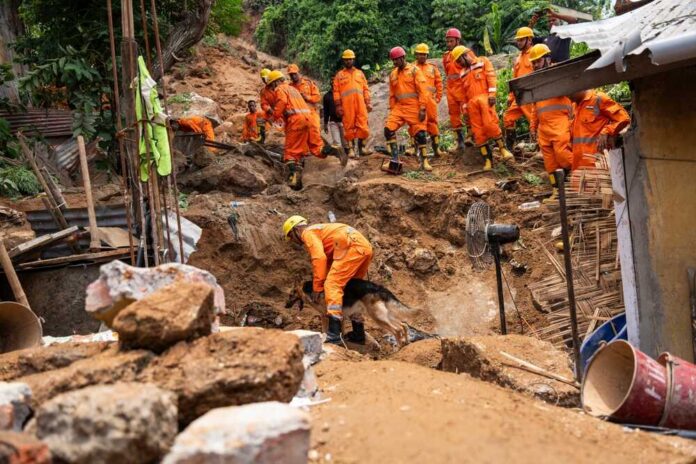
A wall of mud and floodwater roared out of the Himalayas, leaving hundreds dead and nearly 1,500 unaccounted for on both sides of the Nepal–China border.
Story Snapshot
- China reports three dead and 265 missing at Tibet’s Gyirong border hub.
- Nepal’s border districts count scores of deaths and hundreds missing as rivers surge.
- Bridges, roads, and power lines were torn out, slowing rescue efforts and raising the risk of a toll.
- Officials and analysts point to repeat Himalayan flood patterns and glacial hazards.
Border hub shattered as mudslide rips through Gyirong
Chinese officials said a mudslide struck Gyirong Port, a key crossing with Nepal, on Wednesday morning. State media put the toll at three dead and 265 missing by 8 p.m., calling the figures preliminary while rescue teams pushed in through broken roads and unstable slopes.
Crews moved heavy gear and used helicopters where they could land. The priority was on trapped workers and travelers at the port, where trade buildings and parking yards took direct hits.
Pray for Nepal Hundreds missing and many feared dead after massive flash flood hits Nepal-China border pic.twitter.com/ua4GpSZKYT
— AhMad 𝕏 Ansari (@Ahmadansari2233) August 27, 2026
Authorities staged emergency shelters uphill from the slide zone and cleared debris to reopen a single-lane lifeline for ambulances. Local officials warned of fresh slides as rain bands lingered over steep terrain.
The count will likely shift as signal returns to cut-off valleys and teams survey buried structures. China’s planners also began checking nearby slopes for barrier lakes that can burst without warning, unleashing new floods downstream.
Nepal’s river valleys swallowed by flood and debris
Nepal reported heavy losses across Rasuwa and nearby districts as flood surges swept into towns, camps, and project sites. Early tallies listed at least nine killed, with many more unaccounted for as torrents lifted bridges and snapped power lines, stalling search runs and inflating the number of missing.
Police posts and road crews worked to clear landslides that cut the highway toward the border, a choke point that slowed medics and fuel deliveries needed for nonstop rescue work.
Officials ordered people near riverbanks in multiple districts to move to higher ground and stay alert for after-surges. Mountain streams can spike again as upstream debris dams fail. Field teams used drones and community radio to spot stranded groups on islets and rooftops.
Helicopter lifts were limited by weather windows and narrow canyons. Local leaders pushed for water, food, tarps, and satellite phones to keep scattered villages connected as the night cold set in.
Why this disaster spread so fast across a border
Himalayan disasters move along rivers, not passports. A slide or lake burst high on one side can thunder into the other within hours. That cross-border cascade can ruin power projects and roads, block rescue routes, and make early counts shaky for days.
Reporters and responders have seen this pattern before, where first numbers are low and rise as access improves in steep country with fragile roads and weak signals. That is why early warnings and shared data matter more than headlines.
Regional climate bodies have tied past lethal floods on Nepal’s Bhote Koshi River to drainage from glacial lakes in Tibet. When these lakes crack or spill over, they can dump vast water and ice into narrow gorges, hit dams and bridges like battering rams, and carry boulders the size of cars.
Teams now watch satellite feeds for new lake growth, slump scars, and blocked channels that could trigger another surge day or night.
What effective response looks like right now
Rescuers need three basics to save lives: passable roads, clear air corridors, and reliable comms. Bulldozers must punch through slide piles to open at least one two-way lane. Air crews need marked landing zones and fuel caches close to the front.
Radios and satellite links must connect district posts with river watchers upstream. When those parts mesh, search teams can move faster than the water recedes.
How to cut the next toll
Cross-border disasters call for cross-border readiness. Nepal and China can pre-stage joint drills, share live river and lake data, and test siren-to-cell alerts in both languages.
Power projects and roads must harden their weakest spans with real-world design loads that match debris floods, not averages from milder years.
That is cheaper than rebuilding a washed-out bridge three times. Families downstream deserve early warnings that buy an hour to climb, not a minute to pray.
Sources:
wfsb.com, thestandard.com.hk, english.news.cn, news.sbs.co.kr, reuters.com