
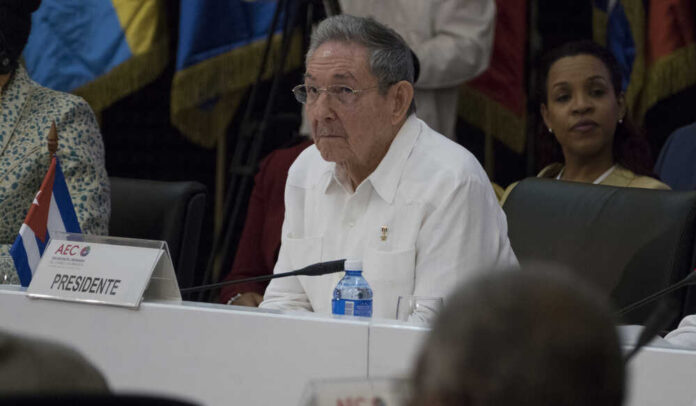
When a 94-year-old revolutionary icon becomes the potential target of a United States criminal indictment, you are not just watching a case—you are watching an entire Cold War chapter try to drag itself into a courtroom.
Story Snapshot
- United States prosecutors are reportedly preparing charges against former Cuban president Raúl Castro over the 1996 shootdown of two small civilian planes.[1][2][5]
- The case revives the “Brothers to the Rescue” incident, where four people died after Cuban jets destroyed the aircraft over the Florida Straits.[1][3][5]
- Fidel Castro publicly accepted responsibility for the shootdown, while families of the victims already won a massive civil judgment in a United States court.[3]
- The timing, under a pressure-heavy Trump-era Cuba policy, fuels debate over whether this is justice, geopolitics, or both.[1][2][5]
Why A 30-Year-Old Shootdown Still Haunts Washington And Havana
February 24, 1996, looked at first like just another skirmish in the long feud between communist Cuba and its exiles in Miami. Brothers to the Rescue, a group flying small planes to spot rafters fleeing the island, sent aircraft toward Cuba once again.
Cuban fighter jets intercepted and shot down two of those planes over the Florida Straits, killing four men whose names still echo in Miami: Armando Alejandre, Mario de la Peña, Carlos Costa, and Pablo Morales.[1][3][5]
Trump administration prepares to seek Raul Castro indictment as it pressures Cuba, AP sources say https://t.co/uEz3A3Jcmb
— The Washington Times (@WashTimes) May 16, 2026
United States authorities quickly concluded the planes were destroyed in international airspace, not inside Cuban territory, and a federal judge later described the act as the murder of four human beings in international airspace.[3]
Cuban officials answered that sovereign airspace had been violated and warned they would not allow recurring flights near Havana.[2] That split-screen—Washington saying murder, Havana saying defense—froze the case in place for decades. Now, talk of indicting Raúl Castro threatens to unfreeze it in dramatic fashion.[1][5]
From Civil Judgments To Criminal Charges: Why The Ground Just Shifted
The families of three victims did not wait for diplomats. They sued the Cuban government and the Cuban Air Force in United States federal court, winning a landmark 187 million judgment just months after the shootdown.[3]
Years later, the United States allowed them to collect tens of millions from frozen Cuban assets.[3] That civil judgment told the world a clear story: Cuba, as a state, had committed an unlawful killing. What it did not do was put a specific Cuban commander in the dock.
The reported plan by the United States Department of Justice to seek a criminal indictment against Raúl Castro tries to bridge that gap.[1][2][5] Prosecutors in South Florida have reportedly revisited radar tracks, intercepts, and audio that once helped map the attack.[1][3][5]
News outlets describe officials exploring charges tied directly to the 1996 shootdown, while acknowledging that no indictment has yet been unsealed and no official speaks on the record.[1][2][5]
That combination—serious allegations, anonymous sourcing, and decades-old evidence—virtually guarantees a political firestorm the moment any indictment appears.
How Fidel’s Admission Complicates Raúl’s Alleged Responsibility
Fidel Castro did something rare in a televised interview with a major American network in 1996: he accepted responsibility for the shootdown decision.[3]
He described giving an order that flights could not be allowed to continue, said the air force acted with full awareness of that order, and stated plainly, “I assume responsibility for that.”[3]
Later reporting adds that both Fidel and Raúl Castro took responsibility for the order, though neither faced prosecution.[3] That statement is political dynamite for any Cuban leader’s legacy.
From a criminal-law standpoint, however, Fidel’s admission is a double-edged sword for any case targeting Raúl. On one hand, it reinforces the idea that the attack came from the top of the state, not from rogue pilots improvising over the Straits.[3]
On the other, it raises a hard question: if Fidel publicly said “I ordered it,” how do prosecutors prove beyond a reasonable doubt that Raúl personally possessed the necessary intent and authority? The available public record does not yet show an authenticated order with his signature or voice attached.[1][2][3][5]
Justice, Deterrence, Or Just Another Sanction In Disguise?
Reports place the indictment push squarely inside a broader Trump-era strategy to squeeze Havana: fuel restrictions, tightened sanctions, and harsher rhetoric about Cuba’s role in Venezuela and regional security.[1][2][5][6] The move to charge Raúl Castro, a retired head of state, fits that pattern of pressure.
By JOSHUA GOODMAN, ALANNA DURKIN RICHER and ERIC TUCKER MIAMI (AP) — The Justice Department is preparing to seek an indictment against former Cuban President Raúl Castro, three people familiar with the matter told The Associated Press on Frid… https://t.co/VEJAMjmw8W
— Capital Gazette (@capgaznews) May 15, 2026
American values say that if you murder citizens in international airspace, you eventually face a courtroom, even if you once ran a country.
Yet those same values demand that criminal prosecutions rest on more than symbolism and election-year signaling. The heavy reliance on unnamed sources, the absence of visible charging documents, and the sheer age of the case invite skepticism about timing and intent, even for those who believe the shootdown was a grave crime.[1][2][5]
What To Watch Next As History And Law Collide
The next decisive step will not unfold on cable news but in a federal grand jury room in South Florida. Any indictment of Raúl Castro would require grand jury approval, followed by public unsealing in a United States court, where defense lawyers could demand disclosure of intercepts, audio evidence, and intelligence assessments that have remained behind classification walls since 1996.[1][3][5]
That process could finally test whether the case rests on hard proof or on layers of inference hardened by years of exile politics.
If prosecutors can produce authenticated recordings linking command responsibility to specific individuals, along with flight data and expert testimony consistent with the existing civil judgment, those who prize the rule of law will see a long-delayed but principled act of deterrence.[1][3][5]
If the case turns out thin or dies quietly after headlines fade, many will conclude it was yet another example of Washington using justice language to wage policy wars. Either way, one thing is clear: the ghosts of two small planes over the Florida Straits are not done shaping United States–Cuba relations yet.
Sources:
[1] Web – DOJ Seeks Raúl Castro Indictment Over 1996 Brothers to the …
[2] Web – U.S. reportedly preparing criminal charges against Raúl Castro over …
[3] Web – Raúl Castro’s indictment expected to be unsealed in Miami
[5] Web – US Considers Indicting Former Cuban President Raúl Castro Over …
[6] Web – Shoot-Down of the Brothers to the Rescue Planes – House.gov