

Millions of Virginians thought they had just redesigned their political future, only to have two courts tell them their votes were cast on the wrong paperwork.
Story Snapshot
- Virginia voters approved a constitutional amendment and new congressional map that would have added multiple Democrat-leaning seats.[2][3]
- The Virginia Supreme Court threw out the amendment on procedural grounds, calling the referendum’s defect incurable.[3][4]
- Democratic leaders claimed the ruling nullified millions of votes and misread federal election law.[1]
- The United States Supreme Court refused to step in, leaving the old map—and a stinging civics lesson—intact.[2][1]
How Virginia’s “People’s Map” Died In Two Courthouses
Virginia’s story starts the way modern reformers like it: with a ballot box victory. More than 3 million Virginians voted on a constitutional amendment that authorized a new set of congressional lines, and a majority said yes.[1][2] Supporters sold the plan as a way to counter partisan gerrymanders in states like Texas and Florida, and the resulting map would likely have given Democrats four additional House seats.[2][3] On paper, it looked like a triumph of people power over backroom cartography.
Days after voters ratified the amendment, the Virginia Supreme Court lowered the boom. In a 4–3 decision, the court held that the General Assembly had not followed the Virginia Constitution’s required process before sending the amendment to the ballot.[2][4] Lawmakers had pushed key steps after early voting for the general election had already begun, violating timing rules that exist to keep constitutional tinkering from becoming a last-minute ambush.[3][4] The court declared the amendment—and with it, the map—“null and void.”[3]
BREAKING: The Supreme Court rejects Virginia's bid to restore a congressional map favoring Democrats. https://t.co/WrcexMohCv
— The Associated Press (@AP) May 15, 2026
Democrats Cry Nullification, Republicans Say “Rules Are Rules”
Virginia’s Democratic leadership did not quietly accept that verdict. Attorney General Jay Jones and top legislative Democrats raced to the United States Supreme Court with an emergency request, accusing the Virginia court of “overstepp[ing] its authority and nullif[ying] the votes of millions of Virginians.”[1]
Their legal argument rested partly on federal election law: they said the state judges misread rules about what counts as “Election Day” by treating early voting as part of the election itself.[1] If early voting is not the election, they argued, the timing problem vanishes.
Republicans replied with a simpler message that resonates with conservative instincts: the state followed its own constitution, and Democrats did not follow it.[2] Republican lawyers argued that the case turned entirely on state law, not federal law, and that Democrats “have no case on the merits.”[2]
From that vantage point, the procedural defect was not a technicality; it was the whole ballgame. If the rule says you may not change the ground rules once early voting has started, the legislature’s late action made the referendum illegitimate before the first “yes” was tallied.[3][4]
Why The United States Supreme Court Stayed Out Of The Fight
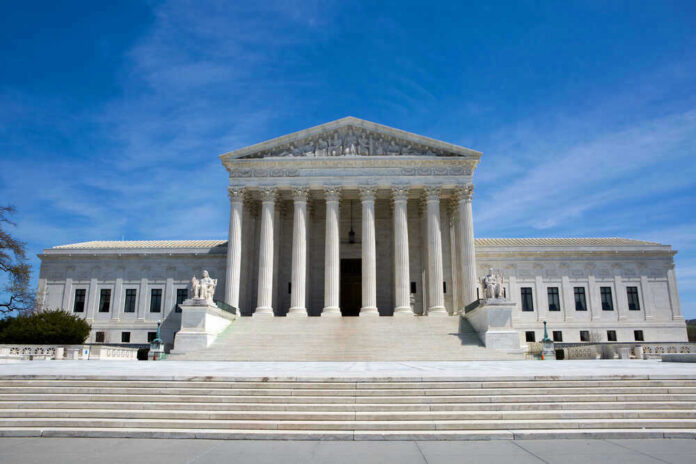
The United States Supreme Court answered with one sentence. In an unsigned order, the justices refused to revive the new map, leaving the Virginia Supreme Court’s decision untouched.[2][1] No justice noted a dissent. For constitutional lawyers, that silence speaks volumes about judicial restraint.
The Court typically declines to second-guess a state’s highest court on purely state-law questions, and the Virginia decision framed the timing defect as just that: a violation of the state constitution’s own process.[2][4]
This restraint aligns with long-standing conservative principles: federal judges should not act as a national super-legislature for state election minutiae. The justices have recently let Republican-led maps in Alabama and Louisiana move forward after separate fights, but the Virginia case fit a different pattern.[3]
Here, the national Court did not bless the old lines as fair, nor did it condemn the new ones as unlawful gerrymanders; it simply refused to rescue a map that depended on a procedurally tainted amendment.[2]
Democracy, Procedure, And The Price Of Cutting Corners
The hard question this saga leaves is uncomfortable: when millions vote for something that was put on the ballot the wrong way, what should prevail—popular will or constitutional discipline?
Democratic leaders insist the referendum’s outcome should have carried the day, pointing to the high turnout and framing the map as a necessary counterattack against Republican gerrymanders elsewhere.[1][3] Yet news accounts also concede the map was drawn “to advantage the party,” not as some neutral technocratic cure.[2][3]
Common sense says both things can be true at once. Voters can sincerely support a change, and politicians can still use that support to lock in their own advantage. The Virginia Supreme Court’s majority effectively told the state, “Follow your own rules first, then ask the people.”[2][4]
The United States Supreme Court added a quieter coda: “Do not expect Washington to bail you out when you do not.”[2][1] For anyone tired of courts rewriting election law on the fly, that message may be the most encouraging part of the entire fight.
Sources:
[1] Web – Supreme Court refuses to restore Virginia redistricting plan …
[2] Web – Supreme Court rejects Virginia Democrats’ bid to revive … – CBS News
[3] YouTube – Virginia Supreme Court strikes down gerrymandered redistricting plan
[4] Web – Supreme Court rejects bid to restore Virginia’s redistricting map …