
Six unnamed Americans, a remote African province, and a virus that kills half the people it infects: that is all it took for headlines to sprint ahead of the facts.
Story Snapshot
- At least six Americans in Congo were reportedly exposed to Ebola, with several high-risk contacts and one possible symptomatic case.[1][3][5]
- Health officials admit heightened concern but refuse to confirm exposure or identity, stressing that the risk to Americans at home remains low.[1][3]
- The World Health Organization declared the Ebola outbreak in Congo and Uganda a public health emergency of international concern.[1][4]
- The episode exposes how anonymous sources, cautious bureaucrats, and dramatic headlines collide whenever deadly disease and American citizens intersect.[1][3][5]
What “At Least Six Americans Exposed” Really Means
CBS News told viewers that at least six Americans in the Democratic Republic of Congo were exposed to the Ebola virus, with three classified as high-risk contacts and one reportedly symptomatic.[1]
The health news outlet STAT reported that a source believed a number of Americans had exposure to suspected cases and that at least one may have developed symptoms, but no test results were available.[3]
Times Now in India echoed the same core figure of six Americans.[5] The phrase “at least” signaled both urgency and uncertainty.
The World Health Organization declared the Congo–Uganda outbreak a “public health emergency of international concern,” after reports of roughly 80 suspected deaths and hundreds of suspected cases tied to the Bundibugyo strain of Ebola.[1][3][4]
That language matters: it is the highest alarm before the world uses the word “pandemic.”
The U.S. Centers for Disease Control and Prevention responded by activating its emergency operations center and preparing to deploy additional personnel to Congo and Uganda for contact tracing, lab testing, and surveillance.[3][4]
Why Officials Talk Like Lawyers When Viruses Move Fast
As media outlets ran with anonymous claims of exposed Americans, federal health officials chose their words like attorneys reading from a deposition.
The Centers for Disease Control and Prevention declined to confirm whether any Americans had been exposed or infected, saying only that it was “actively working” with partners and the embassy to assess the situation.[3]
The U.S. Embassy in Kinshasa acknowledged the World Health Organization emergency declaration and the outbreak but did not mention exposed Americans, much less confirm infections.[4]
On the other hand, they recognize that medical privacy and operational security limit what can be responsibly disclosed in real time. The absence of a government roster or incident report does not prove the media wrong, but it does mean the number six rests almost entirely on unnamed sources.[1][3][5]
Exposure, Infection, and the Media’s Favorite Shortcut
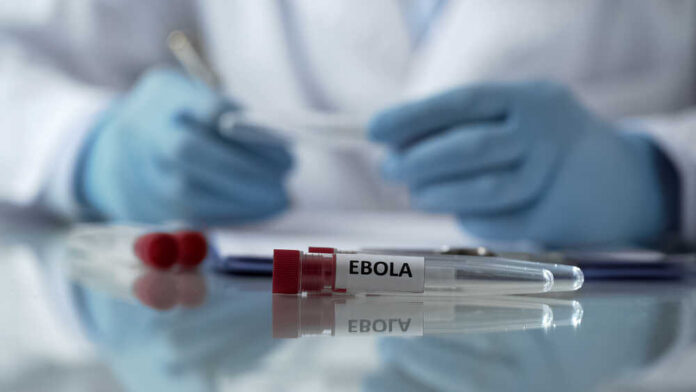
Ebola is not a ghost in the air; it spreads through direct contact with bodily fluids from a symptomatic person.[1] That detail changes the meaning of “exposed.”
A high-risk exposure usually involves unprotected contact with blood, vomit, or other infectious fluids, or a significant breach in protective gear.
Low-risk exposure can mean being near patients in clinical settings. News reports did not specify how these Americans encountered suspected cases or whether proper equipment failed.[1][3][5]
🚨 POTENTIAL EBOLA EXPOSURE IN DRC 🇨🇩
At least six US CITIZENS have reportedly been exposed to EBOLA in the DEMOCRATIC REPUBLIC OF CONGO with one person currently showing SYMPTOMS. Authorities are likely tracking movements to contain any further spread of the virus. …
— OSN – Observer Security Network (@OSN_Reports) May 18, 2026
Federal officials repeatedly reminded reporters that the risk to the American public remained low.[1][3] That statement aligns with both scenarios: six exposed but ultimately negative, or six exposed with one or more infections detected and tightly contained. It also reveals a communications habit that often backfires.
Agencies speak to 330 million people as a single audience and emphasize reassurance, while citizens care intensely about six individuals whose names they will never hear. The result is a sense that someone must be downplaying something, even when that is not clearly supported by the evidence.
What This Episode Reveals About Risk, Trust, and Responsibility
The most honest reading of the record is unsatisfying: multiple outlets converged on the claim that at least six Americans were exposed, based on anonymous sources close to international aid groups, while official channels neither confirmed nor directly refuted it.[1][3][5] No public lab results, evacuation logs, or contact-tracing records have surfaced to finish the story.
That ambiguity is not a conspiracy so much as a feature of how modern outbreak responses operate around privacy, host-country sovereignty, and institutional caution.
For Americans who prefer clear lines of accountability, that should spark two demands. First, foreign deployments that put U.S. citizens in contact with lethal pathogens deserve after-action transparency once immediate danger passes: de-identified exposure numbers, outcomes, and lessons learned.
Second, media organizations should draw a sharper line between “suspected exposure” and “confirmed infection” in their headlines, especially when they know most readers will never reach paragraph four. Respecting the public means respecting their capacity to handle nuance, not just their appetite for fear.
Sources:
[1] Web – At least 6 Americans in Congo were exposed to Ebola virus, sources …
[3] Web – Ebola outbreak: Americans in Congo believed to have had exposure …
[4] Web – Health Alert: U.S. Embassy Kinshasa – May 18, 2026
[5] Web – US citizens in DR Congo potentially exposed to Ebola, report says