

When a tiny flaw in a pill’s chemistry triggers a nationwide recall, it exposes how fragile our trust in modern medicine really is.
Story Snapshot
- More than 11,000 bottles of chlorthalidone blood pressure pills were recalled for failing to dissolve properly in the body.
- The tablets may not deliver the full dose, meaning some patients’ blood pressure and fluid levels might not be controlled as expected.
- The recall is voluntary, started by the manufacturer, yet the Food and Drug Administration has not clearly labeled the risk level.
- The case shows a bigger pattern: quiet “quality” recalls that rarely make headlines but shape how safe our drug supply really is.
What Exactly Went Wrong With This Blood Pressure Drug
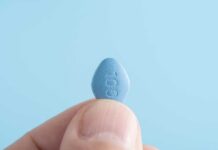
Federal records show Inventia Healthcare Limited recalled 25-milligram chlorthalidone tablets after they failed “dissolution specifications,” a key lab test that checks how a pill breaks down inside the body.[4]
The recall covers 100-count and 1,000-count bottles, lots RISA24001 and RISB24002, with an April 2027 expiration date, for a total of 11,460 bottles distributed nationwide by Rising Pharma Holdings.[1]
Chlorthalidone is a long-used water pill that helps lower blood pressure and reduce fluid buildup.[1]
Failed dissolution does not mean the drug is toxic; it means the tablet may not dissolve as designed once swallowed.[2] If a pill dissolves too slowly or not fully, less active drug reaches the bloodstream, so a patient may get a weaker effect than their doctor intended.[2]
For someone taking chlorthalidone to control blood pressure every day, that weaker effect could translate into numbers creeping up and swelling returning, even though they are “taking their meds.”[4]
Why The Food and Drug Administration Treats Dissolution Like A Big Deal
Dissolution failures sit inside a broader category called “quality assurance deviations,” which research shows now account for almost half of all drug recalls handled by the Food and Drug Administration.[11]
Another Food and Drug Administration document for industry training even singles out failed dissolution as a top recall trigger in recent years.[13]
The message is clear: if a pill does not behave as expected in a test tube, regulators act before waiting to see harm in real patients, because high blood pressure and heart disease already carry heavy risk.
The Food and Drug Administration sorts recalls into Class I, II, or III, based on how likely they are to cause serious harm or death.[10] In this chlorthalidone case, the recall has not yet been given a class in public records.[1] That gap matters.
Without a clear label, patients and doctors are left to guess whether this is closer to a container defect or a true threat to health. In this case, agencies should define the risk plainly if they expect millions of Americans to trust the process.
What Patients Are Told To Do, And What They Actually Need
Public guidance so far stays vague. Reports advise people to check their bottle’s lot number and to talk with a pharmacist or doctor before making any changes.[1]
The Food and Drug Administration’s own consumer page on recalls also tells patients to match lot numbers and seek advice, not to panic and stop medicine on their own.[14]
That is sensible: suddenly quitting blood pressure pills can be more dangerous than a possible drop in potency, especially for older adults or those with heart failure.[2]
Still, this recall highlights how little practical help patients get when quality problems emerge. There is no detailed list of warning signs to watch for, no clear instruction on how to return pills, and no estimate of how much the pill’s effect might fall.[1]
From this viewpoint, which values personal responsibility and transparent government, this is a weak spot. Citizens cannot make informed choices if agencies warn about a problem yet refuse to specify the likely magnitude of the risk.
The Bigger System: Precaution, Paperwork, And Public Trust
Drug recall data over the last decade show that many recalls are never linked to documented patient injury; they arise from tests, inspections, and paperwork that flag potential future problems.[11]
That includes dissolution failures, where companies often recall batches because lab numbers fall outside strict limits rather than because doctors see real-world failures.[8]
This chlorthalidone case fits that pattern. As of now, there are no public reports of specific patients harmed by these lots, only the possibility that their blood pressure control might be weaker than planned.[4]
FDA recalls 11,460 bottles of Chlorthalidone after dissolution failures threaten drug effectiveness, prompting a voluntary recall by Inventia Healthcare. What this means for patients and clinicians, and how safety testing squares with access to essential meds. pic.twitter.com/c2BANZm4iV
— Azat TV (@azattelevision) June 22, 2026
Some critics see this kind of recall as overcautious and disruptive, but there is another way to view it. When a foreign manufacturer voluntarily pulls product and admits a manufacturing issue, it shows the system can work without heavy-handed force.[4]
At the same time, America depends more and more on overseas plants for essential drugs.
That reality should push regulators to be extra serious about basic things like whether a pill dissolves, while also demanding clearer, plainer communication so ordinary patients are not left guessing.
Sources:
[1] Web – Thousands of bottles of blood pressure medication recalled nationwide
[2] Web – FDA Announces Recall of Common Blood Pressure Medication
[4] Web – The recall applies to 100- and 1,000-tablet bottles of Chlorthalidone …
[8] Web – Blood pressure medication recalled nationwide over manufacturing …
[10] Web – More than 11K bottles of blood pressure drug recalled
[11] Web – Drug Recall Report – Washington State Local Health Insurance
[13] Web – The FDA recalled 11,460 bottles of chlorthalidone tablets, USP, 25 …