

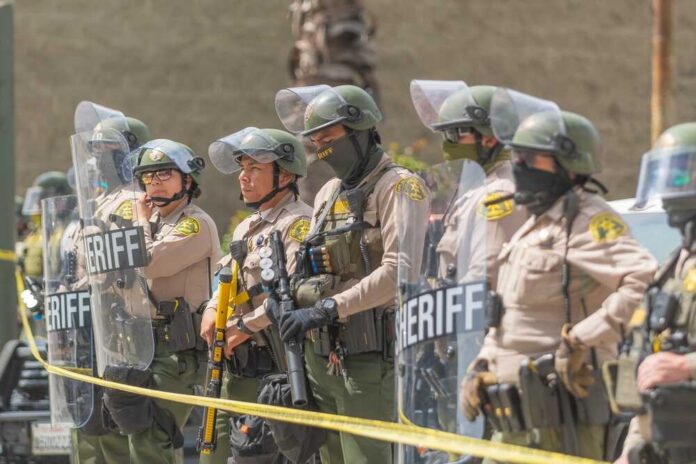
Charlotte’s police chief wants a 9 p.m. citywide curfew for all minors to stop teen “takeovers” before someone gets killed.
At a Glance
- Police asked for a 9 p.m. curfew for everyone under 18, with clear exceptions.
- Recent large youth gatherings escalated into fights and a shooting that hurt two people.
- The City Council’s Safety Committee moved the plan forward to a full vote.
- Leaders say a single curfew is easier to enforce and meant to prevent summer violence.
Police push a single standard after violent teen gatherings
The Charlotte-Mecklenburg Police Department asked the City Council to adopt a 9 p.m. curfew for anyone under 18 across the city. The request includes exceptions for work, school, sports, errands, and when a teen is with a parent.
The push follows mass youth meetups that turned chaotic, including an Uptown shooting that injured two people. Police said at least one accused shooter is a high school student, which sharpened the urgency around the proposal.
Chief Estella Patterson said a universal rule beats the current tiered curfew that changes by age and time. Officers can act faster when the line is clear. That helps disperse crowds before they tip into violence. She framed the measure as a summer safety step to protect teens from becoming both victims and offenders.
She also urged quick action, warning that the trend can turn deadly if ignored. The request sets a bright line while leaving room for normal family and school life.
City leaders advance the plan while debate grows
The City Council’s Safety Committee unanimously advanced the curfew change to the full council. That vote shows early political backing and puts the decision on a short track. Supporters point to recent incidents at parks and entertainment areas where hundreds gathered and fights broke out.
Police also reported taking a gun from a 16-year-old at one scene, which raised alarms for parents and businesses that rely on safe nights out during the summer rush.
Some council members and residents worry about overreach. They ask whether a citywide curfew will stop the worst actors or only move meetups elsewhere.
They also raise fairness concerns about how officers decide who is exempt and who is not. Police leadership answered that a simpler rule reduces confusion and helps avoid uneven calls on the street. They also stressed that the aim is to send teens home, not send them into the justice system pipeline.
What the rule would change on the ground
Officers would be able to break up unsupervised teen crowds after 9 p.m. without parsing different age windows. Parents could still send a teen to a job, a game, or a store run. Teens with a chaperone remain fine.
The clean standard makes it easier to train new officers and to brief neighborhoods and venues. That clarity also helps businesses set expectations at closing time and helps event staff plan exits before loose groups form in parking lots.
Charlotte City Council appears on track to pass a 9 p.m. curfew for kids under 18. Councilmembers JD Mazuera Arias and Renee Johnson voiced opposition to the changes in their current form. But most councilmembers appear on board with Chief Estella Patterson's request. Chief…
— Joe Bruno (@JoeBrunoWSOC9) August 10, 2026
Common-sense policing says clear lines and early action can cut risks in hot spots. The facts support the need for a tool that helps officers act before a crowd turns.
Still, claims that a 9 p.m. curfew will reduce juvenile crime across the board go beyond the evidence in hand. Results depend on even enforcement and on parents, schools, and churches backing the norm at home.
The open questions that will decide success
The core facts are firm: police asked for a 9 p.m. curfew, tied it to violent teen gatherings, and won a key committee vote. The next test is execution. The city should track where and when officers use the rule, how many teens go home safely, and whether guns, assaults, and fights drop in the hours after curfew.
Leaders should also watch for displacement, where crowds shift to new spots or earlier hours, and adjust with targeted outreach and patrols if that shows up.
Sources:
abcnews.com, wccbcharlotte.com, wfae.org, youtube.com