

Fourteen newborns died in minutes when fire and smoke swept a nursery at Islamabad’s largest public hospital, and the first questions are about power, oxygen, and accountability.
Story Snapshot
- Officials confirmed 14 infants died after a dawn nursery fire in Islamabad.
- Rescuers saved at least one baby as smoke filled the ward.
- Leaders ordered an immediate inquiry into the cause and response.
- Reports point to an air conditioner fault amid oxygen-rich equipment.
What Happened Inside the Nursery
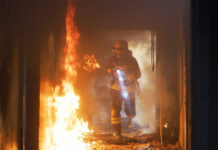
Officials said the blaze started early Wednesday in the nursery of Pakistan Institute of Medical Sciences in Islamabad. Hospital leaders and the federal health minister confirmed 14 infant deaths.
At least one baby was pulled out alive. Crews fought thick smoke and heat while parents waited outside for news. The ward held more than a dozen newborns when the fire began, and staff faced seconds, not minutes, to move them. The government announced an inquiry the same day.
A fire erupted early Wednesday at a nursery in a major government hospital in Pakistan's capital, Islamabad killing 14 newborns, according to officials.https://t.co/hB86xKwmdc pic.twitter.com/vnFscmGiXT
— CBS News (@CBSNews) August 26, 2026
Rescuers and hospital staff said smoke overtook the floor fast, which can be more lethal than flames. Newborns rely on incubators and oxygen lines that turn a small spark into a major event.
Reporters on the scene described families lining corridors as teams carried tiny bodies out under sheets. A senior official said one infant survived. That small rescue cannot soften the blow, but it shows staff fought to the edge of danger to pull children out.
Why Neonatal Units Are So Vulnerable
Neonatal rooms hold oxygen, electrical heat sources, and many plugs on one circuit. Babies cannot self-rescue, and moving them takes time and training. Fire science for neonatal care units favors “defend in place,” which means quick compartment doors, smoke control, and short moves behind barriers.
When doors, alarms, or compartmentation fail, smoke spreads fast and beats people to the exit. Studies and guidance across South Asia warn about overloaded circuits and aging gear in these settings.
Regional history shows the pattern. Investigations in nearby countries linked deadly ward fires to constant life-support loads, weak maintenance, and missing fire checks.
Experts push simple steps that work: medical grade wiring, strict load limits, closed doors to slow smoke, and staff drills that focus on two-minute moves.
These are not fancy fixes. They are basic discipline under pressure. When leaders skip audits or defer upgrades, the risk shifts onto the sickest patients.
What Authorities Are Saying Now
National and city officials ordered a formal probe to find the ignition source, track the smoke path, and time the response. Media reports cite an air conditioner fault as a likely cause, with oxygen-rich lines feeding the fire.
That pairing is common in ward fires and demands strict electrical standards. The call for answers is right. The families deserve clear cause, named fixes, and deadlines to carry them out, not vague talk or slow committees.
The next test is follow-through. Leaders must release the timeline, name any safety lapses, and set rapid repairs. They should certify circuits, replace suspect air conditioners, add compartment barriers, and run unannounced drills.
Hospitals can do this within weeks, not years. Public trust rises when facts, not spin, lead the process. Smart governance treats fire safety like infection control: measured daily, audited monthly, and funded before disaster strikes.
Common Sense Reforms That Save Lives
Hospitals should start with a load map of every nursery outlet and drop anything not medical grade. Oxygen lines need physical separation from heat sources and plugs. Doors must close and latch. Alarms must ring on the floor and at a staffed desk.
Staff need grab-and-go kits for baby transfer and clear roles for smoke control. None of this is expensive. It is deliberate, checklisted work that turns chaos into a plan when seconds matter.
Today's tragedy at PIMS Hospital, Islamabad is beyond heartbreaking. We already have strong laws such as the Islamabad Fire Safety Act 2010 and Building Codes of Pakistan 2016, which cover NFPA safety standards for every scenario. These laws exist and are in force. (1 of 3).
— Sheikhoo (@Nedian_shaikh) August 26, 2026
Policymakers should tie funding to proof of drills, logbooks, and third-party checks, reward units that pass surprise tests, penalize repeat failures and publish scores so families can see which wards are ready.
Pressure works when backed by transparent data. Parents trust hospitals to be safe. A nursery should be the best-protected room in any building. If it is not, fix it before nightfall, not after the next siren.
Sources:
apnews.com, npr.org, aljazeera.com, nytimes.com, bbc.com, youtube.com