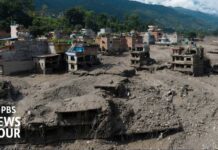

Thirty people died in minutes when a mountain of garbage collapsed onto sleeping families on Conakry’s edge.
Story Snapshot
- Heavy overnight rain triggered a landfill collapse in Guinea’s capital, killing 30 people.
- The waste mound buried tents and shacks near the Dar Es Salam landfill around 2 a.m..
- Officials had moved to close the site due to safety risks before the slide.
- Rescuers reported additional injuries as leaders rushed to the scene.
A Deadly Slide In The Dark
Guinea’s government said a towering heap of waste gave way after heavy rains pounded Conakry overnight, sweeping garbage and mud into nearby shelters at about 2 a.m. The slide struck the Dar Es Salam landfill area in the Gbessia commune, where informal homes crowd the dump’s edge.
Authorities reported 30 dead, six people seriously hurt, and 16 with lighter injuries. Rescue teams dug through unstable debris while families searched for relatives in the muck and twisted metal.
Prime Minister Amadou Oury Bah visited the site to direct the response and assess damage. The scene showed the force of the collapse: a carved face of waste, scattered tin sheets, and shoes half-buried in black sludge.
First responders worked between fresh rain bands. They paused often because the slope still shifted. Such hazards make rescue slow and risky, as another slough could trap crews in the same mass that crushed the victims.
Rescuers hunt for survivors after a landslide at a landfill in Guinea's capital killed 30 people. Heavy rains overnight prompted the collapse of a massive mound of waste that engulfed nearby tents and shacks https://t.co/5PaVINmF4g pic.twitter.com/z4vwxZNqZA
— Reuters (@Reuters) August 24, 2026
The Warning Everyone Knew
Officials had already flagged Dar Es Salam as unsafe and began the process to shut it down. The waste stream was supposed to move outside Conakry. People living at the edge had been told to leave because the site could fail.
That message came before the slide, which strengthens the view that the danger was known, even if the rain was the trigger. Governments must not issue warnings and then let risk sit until tragedy arrives.
Wire reports describe the landfill as the largest in the capital, a magnet for people who sort scrap to earn a living. When space is tight and jobs are scarce, families settle where they can, even in danger zones.
That hard truth demands simple, firm rules: no homes within a real buffer zone; drainage that works under extreme rain; and steady enforcement. When those basics slip, nature does not forgive. The record here shows rain plus exposure equals mass death.
Rain Was The Spark, Not The Fuel
Heavy storms often trigger dump failures. Water adds weight, liquefies layers, and pushes slopes past the point of stability. That is the spark. The fuel is poor siting, over-tall waste stacks, weak drainage, and people living within the fall line.
Reports from similar disasters across Africa say the same thing: open dumps grow into “garbage mountains,” then fail in the rainy season. The pattern is old and preventable with basic engineering and strict land-use control.
At least 30 people have died after a landslide hit a landfill near Guinea’s capital, Conakry. Rescue teams are searching for survivors trapped under the debris, days after authorities announced plans to close the dangerous site.#Guinea #Conakry #Landslide #Africa #BreakingNews pic.twitter.com/EX0y49aECl
— FOLIN TV NEWS (@FOLINTV) August 24, 2026
Common sense says stop pretending open dumps are landfills. A real landfill controls slope angle, compaction, surface water, and gas. It records lifts and keeps people out of harm’s way. It does not loom over shacks. A closure order must not be a press quote; it must be a locked gate and a patrol car.
What Happens Next
Rescuers will likely work until they finish recovery and shore up the slope. Health teams will monitor for infection from contact with waste and floodwater. The government will face hard choices on housing for the displaced.
The country should release a simple, public list of the dead, the injured, and where families can claim support. That one act builds trust. Reuters already reported the toll and the injury split. The public deserves the same clarity at home.
Leaders can turn this loss into a line in the sand: no more informal homes inside a fixed buffer; no more vertical waste piles; permanent drainage; and fast relocation of waste handling. These are not fancy plans.
They are checklists with dates, names, and photos when each step is done. If a city can collect trash, it can grade a slope and dig a ditch. If it can issue a closure, it can move the gate and enforce the line. That is how tragedies like this one end.
Sources:
reuters.com, english.ahram.org.eg, apnews.com, bbc.co.uk, instagram.com