
America just got a 4.2% wake-up call that says: energy shocks can hit your wallet faster than Washington can spin them.
Story Snapshot
- Headline inflation jumped to 4.2% in May, the highest since 2023, ending the “it’s all fixed” storyline.
- More than 60% of the monthly price jump came from energy, with gasoline up over 40% in a year.
- Core inflation was lower at 2.9%, showing the worst pain is at the pump and in utility bills.
- Behind the averages, households that drive more and earn less are getting hit the hardest.
Inflation Just Broke Out Of Its Comfort Zone
The Bureau of Labor Statistics reported that the Consumer Price Index for all urban consumers rose 4.2% over the 12 months ending in May, the highest rate since April 2023.[2] That is a sharp move from 3.8% in April and 2.4% back in January.[2]
Month to month, prices climbed 0.5% in May on a seasonally adjusted basis, after a 0.6% gain in April, so this is not just a math trick with last year’s base.[8] For families, that means paychecks are stretching less every single month.
Inflation is back above 4%.
New BLS data shows consumer prices rose 0.5% in May, pushing the annual inflation rate to 4.2% as higher energy costs added pressure across the economy.
After months of cooling, inflation is now at its highest level since April 2023. pic.twitter.com/AewXep1zyr
— FOX Business (@FoxBusiness) June 10, 2026
Media outlets across the spectrum repeated the same headline number and pointed to the same villain: energy.[1][4] The Consumer Price Index report itself says that energy accounted for over sixty percent of the monthly all-items increase.[2][8]
Independent trackers like Trading Economics confirm that energy prices rose 3.9% in May alone and 23.5% over the year.[4][10] That kind of spike is not a rounding error; it is a transfer of real money from drivers and homeowners to fuel suppliers and foreign producers.
Energy Prices Took The Wheel And Dragged CPI Higher
The detailed data show how extreme the energy shock has become. The energy index is up 23.5% over the past year, while gasoline prices have exploded by about 40.5% and fuel oil by nearly 59%.[4][10]
The Joint Economic Committee of Congress reports similar figures, with energy inflation at about 23.5% from May 2025 to May 2026.[6][10] CBS and other outlets link these jumps to the Iran war and the closure of the Strait of Hormuz, which has disrupted global oil flows.[1][4]
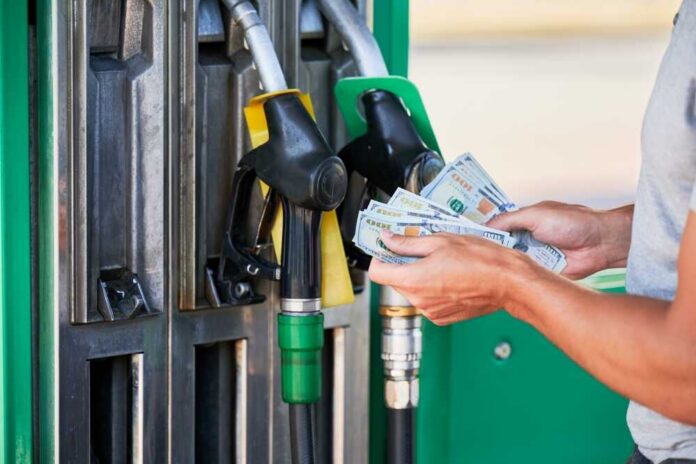
These are not abstract geopolitical moves for ordinary people. Higher oil prices flow straight into gasoline, diesel, jet fuel, and home heating costs. That shows up for commuters, small contractors, truckers, and anyone who lives in a colder climate or drives long distances.
From this view, this is what happens when foreign policy fails and supply chains rely on unstable regimes: families pay the price while decision-makers talk theory.
Core Inflation Tells A Softer Story, But Not A Safe One
Core inflation, which strips out food and energy, paints a calmer picture but not a perfect one. The Bureau of Labor Statistics reports that the “all items less food and energy” index rose just 0.2% in May and 2.9% over the year.[2][4]
Trading Economics shows the same 2.9% annual core rate, the highest since late 2025 but far below the headline 4.2%.[4][6] That gap is why some analysts say the current spike is more about oil than about a broad inflation spiral.[8][1]
But the rest of the basket is not flat. Food prices are up about 3.1% over the year, and shelter is up around 3.4%.[4][6] The Joint Economic Committee puts food inflation at just over 3% as well.[6][10]
That means rent, groceries, and many services still creep higher even before you touch the gas pump. From a kitchen-table point of view, “only 2.9% core” still means a slow squeeze on people whose wages are not keeping up.
Why The Official Average May Not Match Your Reality
The Consumer Price Index measures prices paid by urban consumers for a specific market basket of goods and services.[5][2] That basket is useful for tracking trends over time, but it is, by design, an average.
A family in a suburb with two cars and a long commute lives a different inflation story than a retired couple in a walkable town.
Someone who rents may feel shelter inflation more than a homeowner with a fixed-rate mortgage, while a rural worker may feel fuel costs more than restaurant prices.
Critics often use that gap between the index and lived experience to question the official number. Conservative lawmakers on the Joint Economic
Committee stresses how energy and shelter price hikes hit working- and middle-class families hardest, even when the headline looks “manageable.”[6]
On the flip side, some commentators lean on core inflation to claim the problem is overblown. Both sides can cherry-pick. The honest view is this: the 4.2% figure is real, but it is not the whole story for every household.
What This Means For Policy, Markets, And Your Next Bill
Markets went into the May report braced for a high number, and they got it. Trading Economics notes that the 4.2% figure matched forecasts and marks the third straight monthly acceleration.[4]
Research groups like the Peterson Institute have warned for months that inflation could run above 4% by the end of 2026, driven by large government deficits, a tighter labor market, and loose monetary policy.[9] That call now looks less theoretical and more like the path we are already on.
For the Federal Reserve, this mix is awkward. Headline inflation at 4.2% is double its 2% target, but core at 2.9% and stable expectations give officials cover to wait.[1][11]
Media reports suggest traders still expect the Fed to hold rates steady for now while it watches whether energy-driven inflation spills into wages and broader prices.[1][3]
From this standpoint, that is a risky bet. Energy shocks tied to foreign conflicts, big federal deficits, and easy money are not a recipe for stable prices or secure family budgets.
Sources:
[1] Web – Annual CPI inflation surges to 4.2% in May, the highest level since …
[2] Web – United States Inflation Rate – Trading Economics
[3] Web – Consumer Price Index Summary – 2026 M05 Results
[4] Web – Inflation topped 4% in May as CPI surged to its highest level in more …
[5] Web – United States Core Inflation Rate – Trading Economics
[6] Web – CPI Home : U.S. Bureau of Labor Statistics
[8] Web – Inflation in May 2026 (CPI YoY) Odds & Predictions – Kalshi
[9] Web – May CPI Report: Energy-Driven Inflation Is Contained, for Now
[10] Web – Annual inflation rose to a three-year-high of 4.2% in May … – …
[11] X – The Consumer Price Index rose last month at a 4.2% annual rate …