

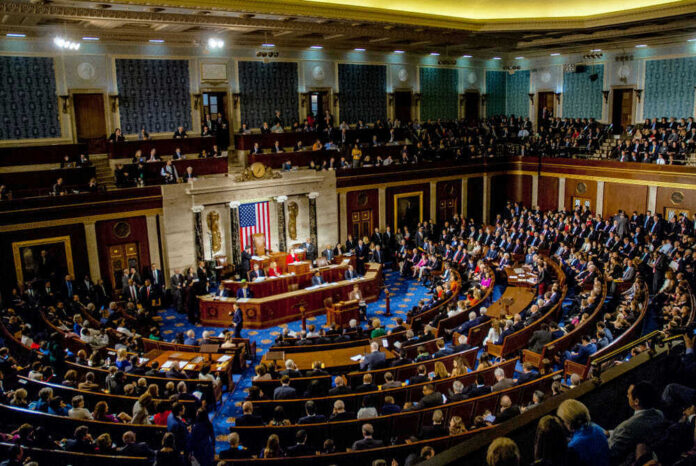
Congress just took a visible step against one of Washington’s most stubborn habits: lawmakers buying stocks while they write the rules.
Quick Take
- The House passed the Stop Insider Trading Act, which bars members of Congress, their spouses, and dependent children from buying individual stocks while in office.
- The bill still allows existing holdings and sale activity with notice, so it is a restriction, not a full divestment rule.
- Supporters cast it as a trust repair measure. Critics say it leaves too many loopholes to count as a real fix.
- The Senate outcome is uncertain, so the House vote may matter more as a signal than as final law.
The House Chose a Narrow But Real Restriction
The House approved the Stop Insider Trading Act after years of complaints that members of Congress can profit from access ordinary people never get.
The bill does not force lawmakers to sell every share they own. It draws a harder line in one place: no new purchases of individual stocks by members, spouses, or dependent children.
BREAKING: The House has passed a bill banning members of Congress and their spouses from trading individual stocks in a 232-198 vote. pic.twitter.com/EAkvUYg7lp
— Breaking911 (@Breaking911) July 22, 2026
That narrow design explains both the praise and the backlash. Supporters say the rule attacks the most visible conflict of interest without forcing total divestment.
Critics answer that a law can look tough on paper and still leave room for timing games, family accounts, and the kinds of trades that keep suspicion alive.
Why Supporters Say the Bill Matters
Backers frame the measure as a direct response to public disgust with self-dealing. Chairman Bryan Steil said the bill would stop lawmakers from profiting off inside information, and Representative Jack Bergman said voters are right to be angry when politicians use information from office to “game the system.” That message lands because it is simple: if members write the rules, they should not buy the stocks those rules can move.
The political appeal is obvious. Congress has spent years trying to manage this issue through disclosure and after-the-fact reporting. The Stop Insider Trading Act shifts the debate toward prevention. Instead of asking the public to trust that lawmakers will police themselves later, it tries to stop the questionable purchase before it happens.
Why Critics Say It Stops Short
The strongest criticism is also the simplest. The bill does not ban all stock ownership, and it does not ban all trading. Members can keep what they already own, and the measure still allows sales with advance notice.
That means the core conflict does not disappear. It only changes shape. A member can still benefit from a portfolio already in place, even if new buys are off limits.
The other weak spot is scope. The president and vice president are not covered, which makes the reform look partial rather than sweeping. Critics also point out that the long-standing STOCK Act already bars lawmakers from using nonpublic information for private gain. From that view, the House bill is not a clean answer to corruption. It is a stricter rule layered on top of an older one.
🇺🇸 BREAKING: The U.S. House has officially passed the Stop Insider Trading Act, banning Congress from buying stocks, in a 232 to 198 vote.
Under the bill:
– Members of Congress, their spouses, and dependent children would be banned from purchasing publicly traded stocks while… pic.twitter.com/BtVdvzAjF6
— Trump Supporter RV🇱🇷 (@TrumpSupportRV) July 23, 2026
That is why the debate keeps circling back to trust. Supporters say trust requires a bright-line ban on buying individual stocks. Opponents say real trust would require deeper reform, including broader ownership limits or full divestment. Both sides are reacting to the same problem. They disagree on how much government restraint is enough to make the public believe Congress is playing fair.
The Bigger Fight Is Still Ahead
The House vote is important, but it is not the final word. The Senate can slow or reshape the bill, and any final version could look different from the House-passed measure.
That matters because this issue has a habit of producing symbolic wins that never fully close the gap between public ethics and private gain. The result is a reform fight that feels urgent, but also unfinished.
For readers trying to judge the bill, the answer is mixed. The House did pass a real restriction, and that is more than talk. But the law still leaves existing holdings, sale timing, and exempt offices in place. So the bill is best seen as a guardrail, not a full ban. It narrows the road. It does not close it.
Sources:
cbsnews.com, bostonglobe.com, signalcongress.com, livemint.com, reuters.com, facebook.com, thehill.com, en.wikipedia.org, heritageaction.com, mikejohnson.house.gov